

A range oil concentration check is the routine inspection that tells a steel trap owner whether the oil bath inside the bullet trap still has enough strength to suppress dust, cool fragments, and cut down on ricochet. For commercial ranges, law enforcement facilities, and military training centers that rely on steel trap systems, skipping this check is one of the fastest ways to let lead dust creep back into the air.
Direct answer: A range oil concentration check measures how saturated the oil bath is inside a steel bullet trap. Technicians sample the oil, compare it against a baseline, then top it off or replace it so the trap keeps suppressing dust and fragment ricochet.
What Is a Range Oil Concentration Check?
A range oil concentration check is a short diagnostic step performed on steel trap systems. Specifically, a technician opens the trap housing, samples the oil bath, and measures how much lead dust and fragment residue it already holds. In addition, the inspection confirms whether the oil still has the viscosity and coverage needed to catch incoming rounds safely.
Because steel traps rely on oil to cushion bullet impact and trap airborne particles, a weak or overloaded bath stops doing its job quietly. As a result, ranges that skip this check often notice more dust, more ricochet noise, and higher lead readings during air monitoring long before anyone suspects the trap itself.
Why Oil Concentration Matters for Steel Trap Systems
Oil inside a steel trap does three jobs at once: it suppresses dust, cools fragments on impact, and reduces dangerous ricochet back toward the firing line. Therefore, when concentration drops, all three functions weaken at the same time, not just one.
Consequently, lead dust that would normally stay trapped in the oil bath becomes airborne, which raises exposure risk for shooters and staff. Furthermore, a saturated or thin oil bath lets bullet fragments bounce rather than settle, which increases wear on the trap body and nearby baffles. In particular, ranges with high round counts, like law enforcement qualification courses, see this wear accelerate quickly.
Similarly, corrosion risk climbs when oil concentration is off, since exposed metal inside the trap reacts with moisture and lead compounds. A well-maintained oil bath, by contrast, extends the working life of the entire steel trap assembly.
How Often Should Steel Trap Oil Maintenance Happen?
Most indoor ranges need a full oil concentration check every 30 to 90 days. However, the right interval depends heavily on round count, caliber mix, and how the trap was engineered.
For example, a private training center with moderate traffic might comfortably run on a quarterly schedule. In contrast, a high-volume law enforcement or military range often needs monthly checks because qualification courses push thousands of rounds through the trap in a short window.
Above all, round count matters more than the calendar. Consequently, many range operators pair oil checks with round-count logs so maintenance timing follows actual use rather than a fixed date. This approach also lines up naturally with other steel trap system maintenance tasks, such as emptying the front trough and bullet trap.
A hands-on range oil concentration check confirms the trap’s oil bath still suppresses dust and ricochet.
Step-by-Step Process for Checking Oil Concentration in Bullet Traps
Although every range layout differs slightly, professional crews generally follow the same sequence when they check and restore oil concentration in a steel trap. Below is the process in order.
- Shut down live fire and secure the firing line, then confirm the trap area is cold before opening any inspection panel.
- Visually inspect the oil bath for color, sludge, and fragment buildup to get an initial read on saturation.
- Pull a sample and measure oil concentration against a baseline reading from the previous service visit.
- Empty the front trough and remove accumulated lead fragments and jacket material, containing all waste for recycling.
- Top off or fully replace the oil when saturation is too low, then log the reading and round count for the next scheduled visit.
Signs Your Range Needs a Trap Oil Check Soon
Several warning signs usually show up before a range operator even schedules a range oil concentration check. For instance, louder or more frequent ricochet sounds near the trap often point to thin or depleted oil.
Likewise, a noticeable haze or dust buildup near the shooting stations can indicate the trap is no longer suppressing airborne lead as it should. In addition, visible rust or pitting on trap components is a strong signal that oil coverage has dropped and moisture is reaching bare metal.
Finally, if air monitoring results trend upward over several visits without an obvious cause, the trap’s oil bath is a logical place to check first. Addressing these signs early, rather than waiting for a scheduled date, usually prevents a small maintenance item from turning into a costly repair.
What Full Steel Trap System Maintenance Looks Like
A standalone oil check is useful, but most ranges get better results from a complete maintenance visit. Typically, this includes the oil concentration check alongside emptying the bullet trap and front trough, inspecting the trap body for wear, and cleaning the target track system.
Many providers, including Wynant Range Consulting, pair this trap work with full range cleaning that covers floors, walls, baffles, and shooter’s booths using HEPA vacuum equipment. As a result, the trap, the surrounding structure, and the air inside the range all get addressed in one visit instead of several scattered appointments.
Specifically, our technicians document oil readings, round counts, and lead waste volumes at every visit, which gives range owners a maintenance history they can show to auditors or insurers if needed. Staff are trained and certified to OSHA and EPA standards, which matters since both oil waste and recovered lead fall under hazardous material handling rules.
Oil Concentration Checks vs. Rubber Berm Cleaning: What’s the Difference?
Steel trap ranges and rubber berm ranges solve the same problem, bullet containment, in very different ways. Therefore, their maintenance needs differ too.
Steel traps rely on an oil bath, so the range oil concentration check is the central maintenance task. Rubber berm systems, by contrast, use granulated rubber as the backstop, so they need periodic processing instead of oil testing. Our rubber berm cleaning service uses a patented machine to separate usable rubber from lead, dust, and jacket fragments, then returns clean rubber to the range.
In other words, both systems need regular attention, but the method and schedule look different. Some facilities even run both backstop types in different bays, which means they need two distinct maintenance plans running side by side.
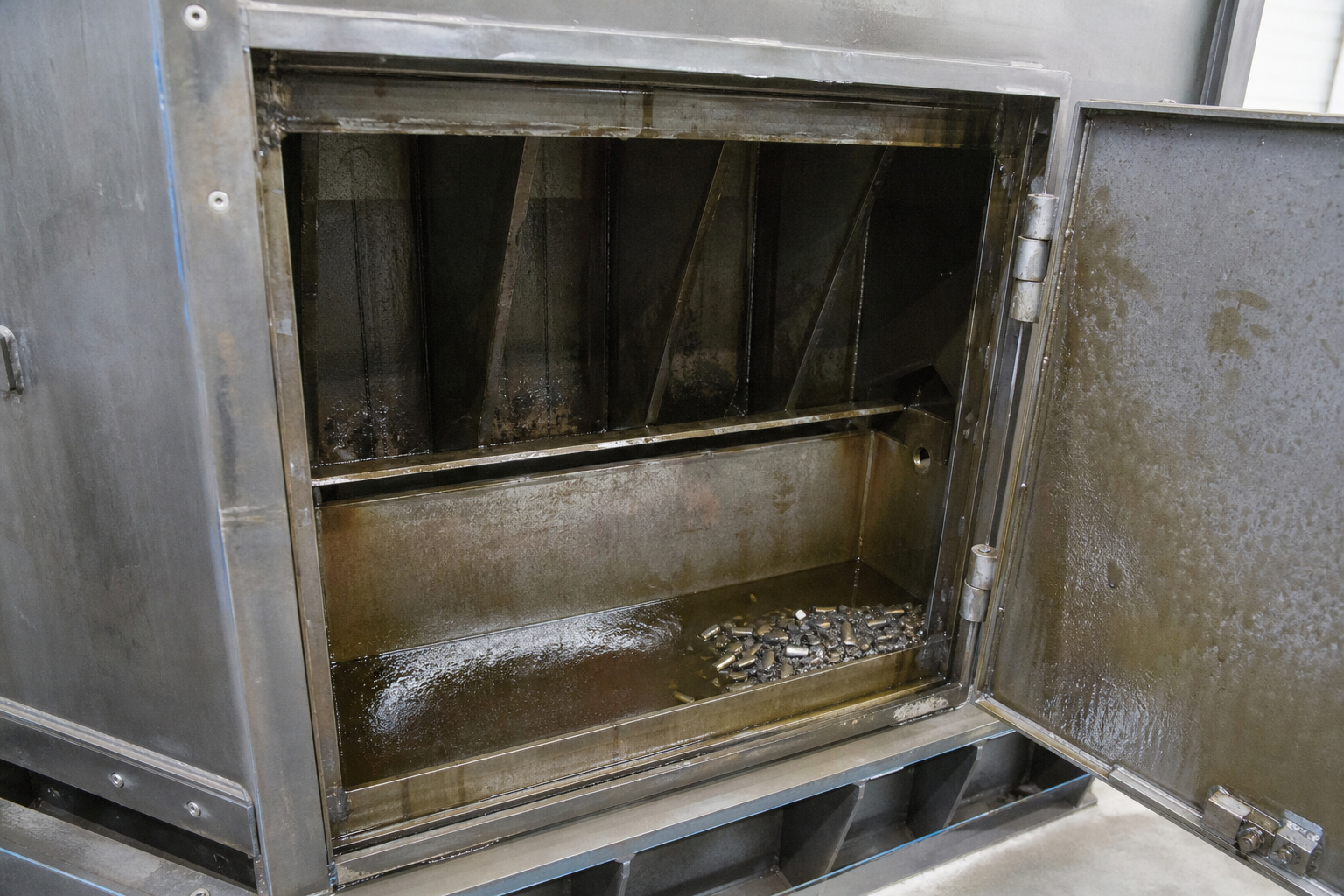
Fragment buildup like this is exactly what a routine oil concentration check is meant to catch early.
Lead Dust Exposure and the Role of Air Monitoring
Lead dust is the real hazard behind every trap maintenance task, including the oil concentration check itself. According to the Occupational Safety and Health Administration, airborne lead exposure in indoor firing ranges remains one of the most common workplace hazards cited at shooting facilities, which is why permissible exposure limits exist for employees working near traps and berms.
Meanwhile, the Environmental Protection Agency treats used trap oil and reclaimed lead as regulated waste, so disposal has to follow specific handling rules. Consequently, air monitoring and exposure testing are not optional extras; they confirm that oil maintenance and cleaning schedules are actually keeping airborne lead under control.
For background on how lead exposure affects the body over time, see this overview on lead poisoning from Wikipedia. Employee lead exposure safety plans, combined with routine testing, give range operators a documented way to show they are managing this risk responsibly.
Choosing a Provider for Range Oil Concentration Checks
Not every maintenance company treats oil concentration checks with the same level of detail. Therefore, it helps to ask a provider how they measure saturation, what they do with waste oil, and whether they document results for compliance purposes.
Wynant Range Consulting brings over 75 years of combined team experience to indoor rifle, pistol, and shotgun ranges across the Midwest and East Coast. Our crews handle steel trap maintenance, rubber berm processing, HEPA filter replacement, and air monitoring, so a range does not need to coordinate several vendors for related tasks. You can see examples of our process on the videos page before scheduling a visit.
Ultimately, the goal is simple: fewer surprises, documented maintenance history, and a range that stays compliant with OSHA and EPA expectations without constant guesswork.

Logging each range oil concentration check gives operators a clear maintenance history over time.
Frequently Asked Questions
What is a range oil concentration check?
A range oil concentration check is an inspection of the oil bath inside a steel bullet trap to confirm it still holds enough oil to trap lead dust and reduce ricochet. Technicians measure oil levels and saturation, then top off or replace oil as needed.
How often should a steel trap oil concentration check be performed?
Most indoor ranges need a check every 30 to 90 days, depending on round count and trap design. High-volume law enforcement or military ranges often need monthly checks.
Why does oil concentration matter in a bullet trap?
Oil suppresses dust, cools bullet fragments on impact, and limits dangerous ricochet inside the trap. Low oil concentration lets lead dust become airborne and increases wear on trap components.
What happens if a range skips oil concentration checks?
Skipping checks allows dust and fragment buildup that raises airborne lead levels and the risk of ricochet. Over time, this also accelerates corrosion and wear inside the steel trap.
Can range staff perform their own oil concentration checks?
Basic visual checks can be done in-house, but accurate saturation testing and safe disposal of contaminated oil usually require trained technicians. Professional crews also know the OSHA and EPA requirements tied to the waste oil.
How is oil concentration different from emptying the bullet trap?
Emptying the trap removes accumulated bullet fragments and spent lead from the trough, while an oil concentration check evaluates the oil itself. Both tasks are part of the same steel trap maintenance visit.
Does a rubber berm range need oil concentration checks too?
No, rubber berm backstops do not use an oil bath, so they rely on rubber berm processing instead of oil checks. Ranges that use rubber berms need routine rubber separation to pull lead and jacket fragments from the granulated rubber.
What does professional steel trap maintenance include?
It typically covers an oil concentration check, emptying the bullet trap and front trough, inspecting the trap body for wear, and documenting lead waste for recycling. Many providers also combine this with HEPA vacuum cleaning of the range.
How much does a range oil concentration check cost?
Cost depends on range size, trap type, and how often service is needed, so most providers quote after a site visit. Bundling the check with full range cleaning often reduces the per-visit cost.
What are common mistakes ranges make with trap oil maintenance?
The most common mistakes are waiting too long between checks, topping off oil without testing saturation, and disposing of used oil without following EPA guidelines. These shortcuts raise lead exposure risk and can trigger compliance problems.
Is lead exposure a risk during an oil concentration check?
Yes, disturbing trap oil and fragments can release lead dust, which is why trained technicians use personal protective equipment and HEPA controls. Air monitoring during the visit helps confirm exposure stays within safe limits.
Which areas does Wynant Range Consulting serve for trap maintenance?
Wynant Range Consulting serves indoor rifle, pistol, and shotgun ranges across the Midwest and East Coast. This includes commercial ranges, law enforcement facilities, military ranges, and private training centers.
Final Thoughts on Range Oil Concentration Checks
In short, a range oil concentration check is a small task with a big payoff: less airborne lead, less ricochet, and a longer working life for the steel trap itself. Therefore, operators who build this check into a regular maintenance schedule, rather than waiting for visible problems, consistently see steadier air monitoring results and fewer unplanned repairs.
Whether a facility runs a single steel trap or manages several bays alongside rubber berm backstops, pairing oil checks with full range cleaning and filter replacement keeps the whole operation compliant and safer for everyone on the line. To schedule a range oil concentration check or ask about combining it with broader maintenance, reach out to the team at Wynant Range Consulting directly.
