

Soil remediation for shooting ranges is the structured process of testing, excavating, and treating lead-contaminated soil around earthen berms, backstops, and range floors until lead levels fall within safe, regulated limits. Because spent ammunition sheds lead dust and fragments with every shot, soil and surface contamination builds up gradually, often unnoticed until testing reveals a problem.
For range operators, however, waiting until that point usually means higher cleanup costs and greater compliance risk. In addition, unresolved contamination can affect employees, customers, and the surrounding property. This guide walks through how the remediation process works, who typically performs it, and what to expect from a qualified provider such as Wynant Range Consulting (WRC).
Quick answer: Soil remediation for shooting ranges involves sampling soil for lead, excavating contaminated layers, separating lead and debris through specialized processing, and verifying clean results before the area is restored or returned to use. Most projects combine this work with rubber berm or steel trap maintenance for complete lead control.
What Is Soil Remediation for Shooting Ranges?
Soil remediation for shooting ranges is the testing-driven process of identifying lead-contaminated ground, removing it, and treating it until it meets safety thresholds set by regulators. Specifically, it addresses the soil and surface dust that collects around berms, backstops, and traps rather than the rubber or steel components themselves.
For outdoor ranges, this often means digging into the berm itself. For indoor facilities, the comparable work covers floor cracks, drainage channels, and the ground beneath shooting lanes where lead dust has settled over years of use. As a result, remediation and standard range cleaning frequently overlap, even though they target different materials.
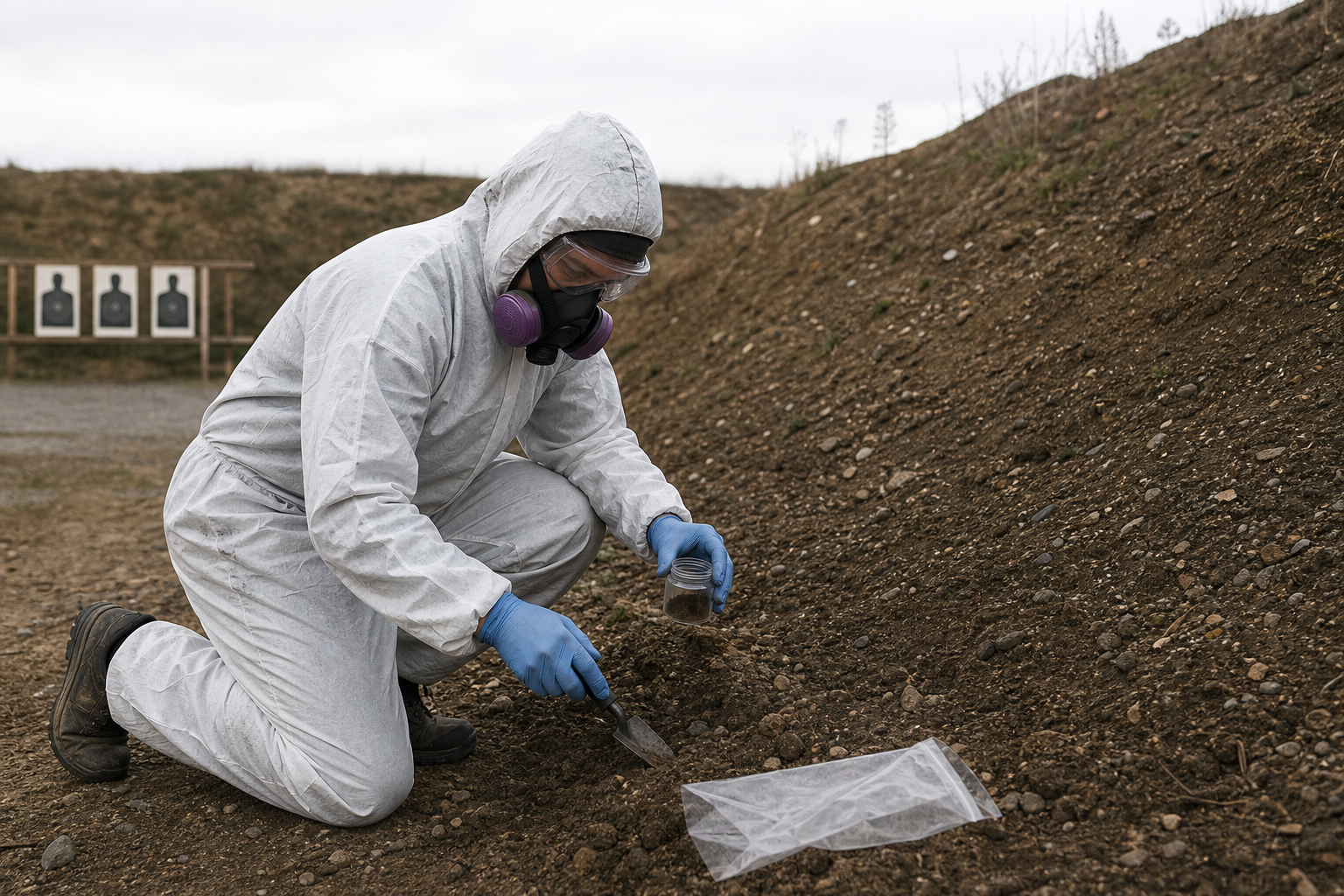
Soil sampling is the first step in any soil remediation for shooting ranges project.
Why Lead-Contaminated Range Soil Needs Treatment
Lead is a toxic metal, and repeated exposure carries documented health risks, particularly for employees who spend hours near firing lines. According to Wikipedia’s overview of lead poisoning, even low-level chronic exposure can affect the nervous system over time. Consequently, range operators carry both a legal and practical obligation to manage contamination before it spreads.
Untreated soil contamination does not stay contained, either. Rainwater can carry lead particles into surrounding groundwater, while dry conditions allow dust to become airborne. In contrast, a facility that treats soil proactively avoids these downstream problems and keeps compliance records clean during inspections.
Signs Your Range Needs Soil Remediation Services
Several warning signs suggest a range should schedule remediation. Visible gray or metallic dust near backstops, discoloration in soil or flooring, and rising results from air monitoring are all common indicators. Similarly, if a facility hasn’t tested soil or surface lead levels in over a year, that gap itself is a risk factor worth addressing.
For a closer look at related warning signs across an entire facility, WRC’s lead contamination removal services guide breaks down what inspectors and insurers typically look for during a site review.
The Soil Remediation Process: Step by Step
Although every site differs slightly, most soil remediation for shooting ranges projects follows the same general sequence. Understanding each step helps operators plan downtime and budget accordingly.
- Site assessment and soil sampling. A technician collects soil samples from backstops, berms, and range floors and sends them for lab testing to measure lead concentration and determine how far contamination has spread.
- Excavation of contaminated soil. Crews remove lead-impacted soil layers from the backstop, berm, and surrounding floor areas using contained equipment that limits dust release into the air.
- Lead separation and reclamation. Excavated soil is run through specialized processing equipment that separates lead fragments, bullet jacket material, and debris from clean, reusable soil or fill.
- Verification testing. The treated soil is re-tested to confirm lead concentration falls below the applicable regulatory threshold before it is approved for reuse or release from the site.
- Backfill and site restoration. Approved soil is returned as backfill, or clean fill is brought in, and the range area is restored so operations can resume safely and on schedule.
Above all, verification testing matters most. Skipping this step leaves a facility unable to prove the work actually resolved the contamination, which can create problems during future inspections or audits.
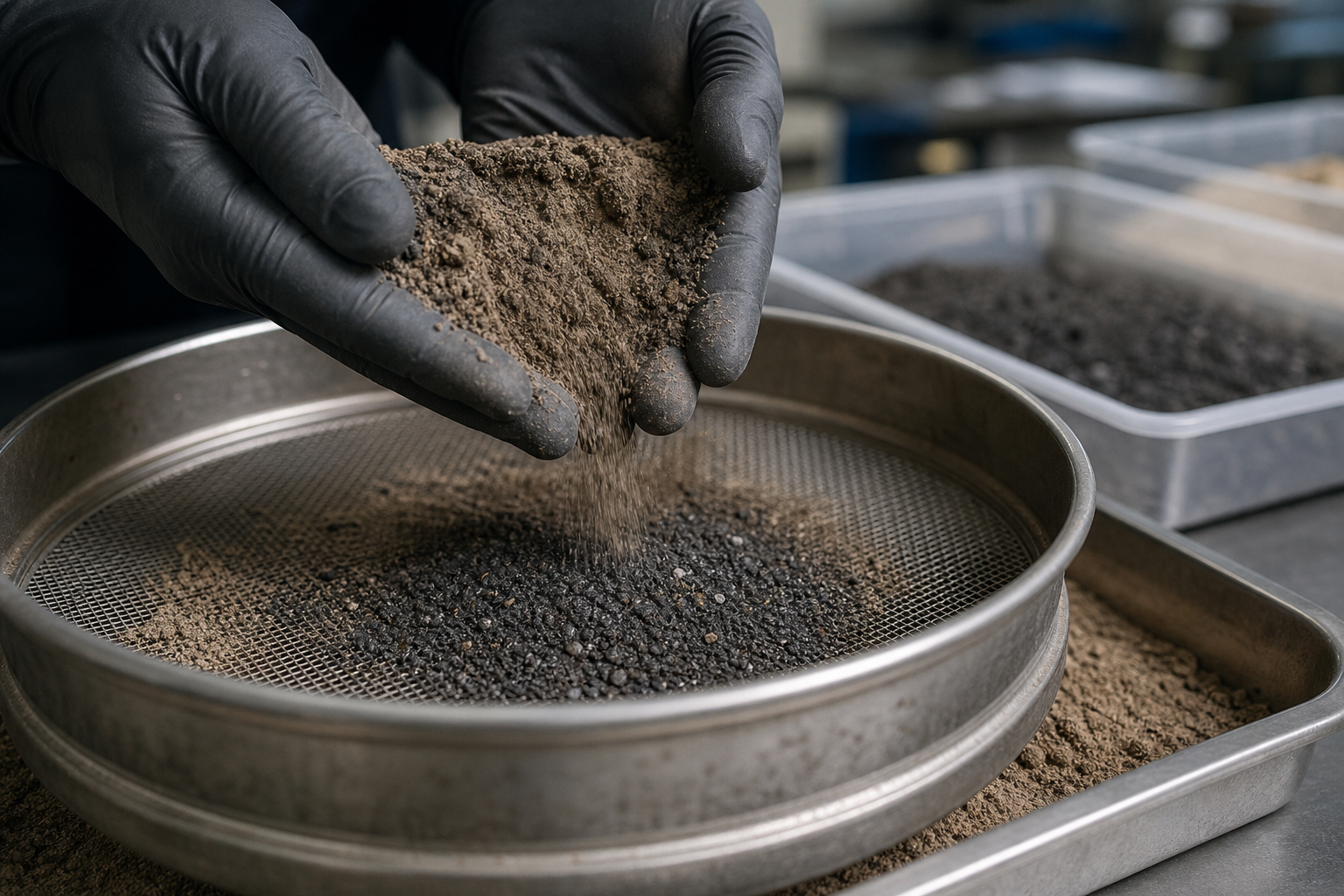
Screening separates reclaimable lead from clean soil during processing.
How Soil Work Connects to Rubber Berm and Steel Trap Maintenance
Soil remediation rarely happens in isolation. Indoor ranges with granulated rubber backstops, for example, need the rubber itself processed separately from any ground-level contamination. WRC’s patented machine separates usable rubber from lead, dust, and jacket fragments, returning clean rubber to the range while hazardous material is pulled out for recycling. For more detail on that process, see the rubber berm maintenance guide.
Steel trap ranges face a related but distinct challenge, since maintenance there focuses on oil concentration checks and emptying bullet traps and front troughs rather than soil excavation. Even so, both systems can allow lead dust to settle into surrounding floors and cracks over time, which is why many facilities schedule soil-style remediation alongside trap or berm servicing. WRC’s complete guide to indoor range lead remediation covers how these services fit together.
OSHA and EPA Standards for Range Soil Contamination
Regulatory compliance drives much of the urgency around soil remediation. OSHA’s lead standard, found in 29 CFR 1910.1025, sets a permissible exposure limit of 50 micrograms of lead per cubic meter of air averaged over an eight-hour shift, according to the OSHA lead standard overview. This threshold is a key reason facilities conduct air monitoring alongside soil testing.
The EPA’s lead guidance addresses soil, water, and disposal requirements separately from workplace air exposure. Therefore, a range operator working toward full compliance typically needs to satisfy both agencies’ requirements, not just one. Staff trained and certified to OSHA and EPA standards, such as WRC’s team, are generally better positioned to navigate both sets of rules without gaps in documentation.
Choosing the Right Soil Remediation Partner
Not every environmental contractor understands the specific demands of a firing range. Range soil often contains concentrated lead fragments and jacket material mixed with granular media, which standard excavation crews aren’t always equipped to separate efficiently. For that reason, experience with range-specific equipment matters.
Wynant Range Consulting brings over 75 years of combined team experience to indoor rifle, pistol, and shotgun range projects across the Midwest and East Coast. Its services extend beyond soil work to lead recycling, indoor lead mining, rubber berm processing, steel trap maintenance, and air monitoring, which allows a single provider to coordinate a full remediation plan rather than piecing together multiple vendors. For specific details on reclamation methods, see WRC’s lead reclamation services page.
Soil Remediation Costs, Timeframes, and What to Expect
Costs for soil remediation for shooting ranges vary based on contamination depth, square footage, and whether excavated material qualifies as hazardous waste. As a result, most providers quote after an on-site assessment rather than offering flat pricing. The table below outlines general scope categories to help with planning conversations.
| Remediation Scope | Typical Duration | Relative Complexity |
|---|---|---|
| Single bay or lane, localized testing | 1 to 3 days | Low |
| Full backstop or berm excavation | 3 to 7 days | Moderate |
| Facility-wide remediation with disposal coordination | 1 to 2 weeks | High |
Facilities that schedule remediation proactively, rather than reactively, generally face lower costs overall. In particular, pairing soil work with routine HEPA filter replacement and target track cleaning helps prevent contamination from reaching the level that triggers large-scale excavation in the first place.
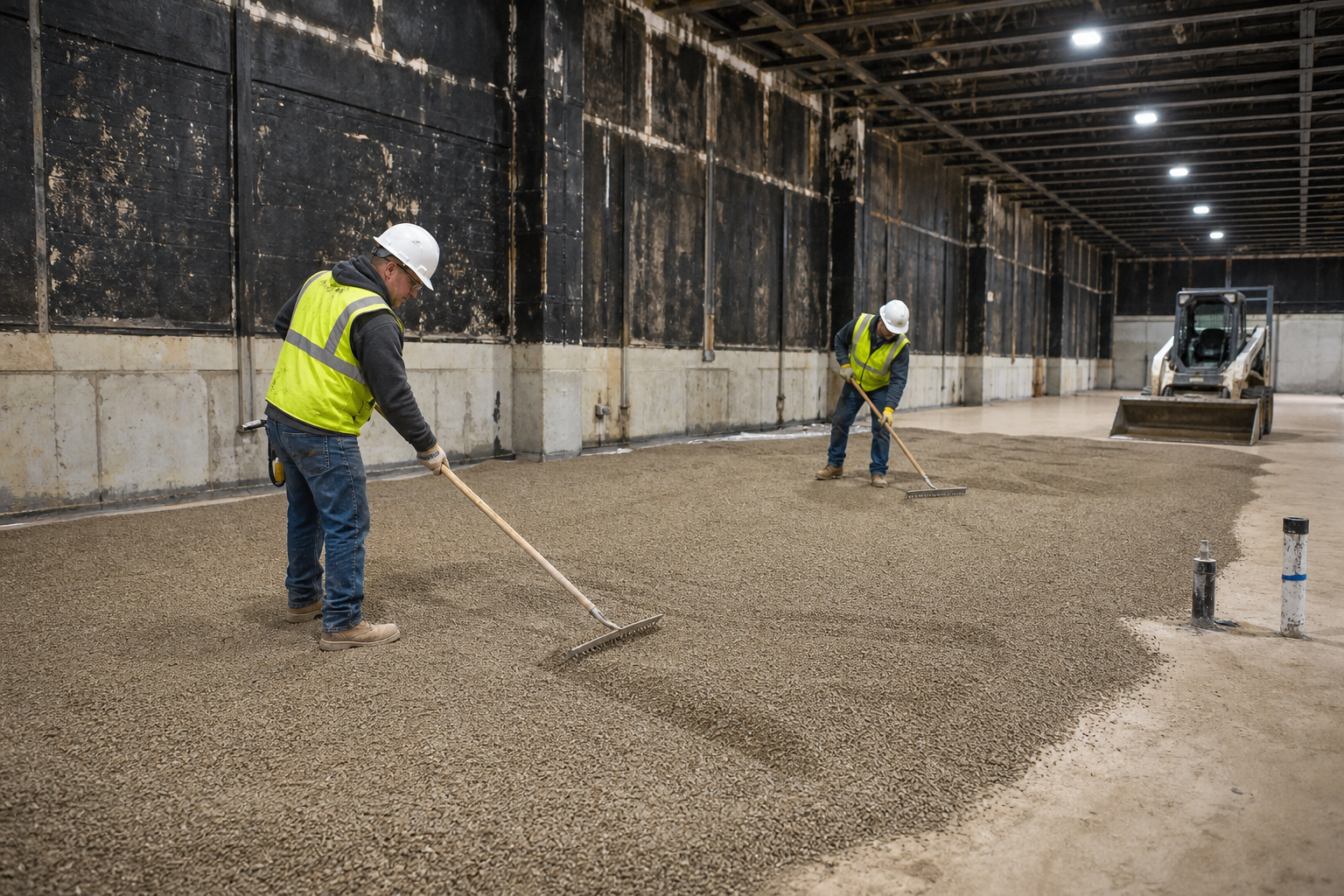
Restoration completes the soil remediation for shooting ranges process before the area reopens.
Frequently Asked Questions About Soil Remediation for Shooting Ranges
What is soil remediation for shooting ranges?
Soil remediation for shooting ranges is the process of testing, excavating, and treating soil contaminated with lead from spent ammunition so it meets environmental and worker safety thresholds. It typically includes sampling, removal, lead separation, and verification testing.
How does soil remediation differ from rubber berm cleaning?
Rubber berm cleaning processes granulated rubber backstop material to separate reusable rubber from lead and debris, while soil remediation targets earth, floor dust, and ground-level contamination. Many indoor ranges need both services working together for full lead control.
Why does lead accumulate in range soil and flooring?
Every round fired deposits lead dust, jacket fragments, and primer residue that settle into soil, cracks, and porous flooring over time. Without regular cleaning, this buildup can migrate into surrounding ground and air.
How often should a range schedule soil remediation?
Frequency depends on round volume, but most active ranges benefit from annual testing with remediation performed whenever lead levels exceed safe thresholds. High-traffic commercial and law enforcement ranges often need more frequent checks.
Is lead-contaminated range soil considered hazardous waste?
Lead-contaminated soil can be classified as hazardous waste under federal and state regulations once it exceeds specific concentration limits. Proper testing determines the classification and the required disposal or recycling method.
How much does soil remediation for shooting ranges cost?
Costs vary widely based on contamination depth, square footage, and disposal requirements, so most providers quote after an on-site assessment. Ranges that schedule regular maintenance generally spend less than those addressing years of neglected buildup.
How long does the soil remediation process take?
A single bay or small area may take one to a few days, while full-range remediation projects can take one to two weeks depending on scope. Testing and verification add time but are essential for compliant results.
What OSHA and EPA standards apply to range soil contamination?
OSHA’s lead standard under 29 CFR 1910.1025 sets worker exposure limits, while EPA guidance addresses lead in soil, water, and waste disposal. Range operators should follow both sets of rules to stay compliant.
Can treated soil be reused after remediation?
In many cases, soil that tests below regulatory lead thresholds after treatment can be reused as backfill on site. Soil that remains above safe limits must be disposed of through licensed hazardous waste channels instead.
What is indoor lead mining and how does it relate to soil remediation?
Indoor lead mining is the recovery of spent lead from traps, berms, floors, and surrounding soil inside an indoor range facility. It works alongside soil remediation to recover value from recyclable lead while clearing contamination.
What happens to the lead recovered during remediation?
Recovered lead is typically separated from debris and sent to certified recycling facilities rather than landfills. This reduces disposal costs for the range and keeps lead out of the broader waste stream.
Do indoor ranges need soil remediation, or just rubber berm and steel trap maintenance?
Indoor ranges with rubber berms or steel traps still accumulate lead dust on floors, in cracks, and around booths, which can require soil-style remediation beneath the range surface. A full assessment determines whether ground-level treatment is needed in addition to trap or berm service.
What are common mistakes range owners make with lead contamination?
Common mistakes include relying only on dry sweeping, skipping periodic air and soil testing, and delaying remediation until lead levels become a compliance problem. These shortcuts often increase long-term cleanup costs and safety risk.
How do I know if my range needs soil remediation?
Visible dust buildup, elevated air monitoring results, or soil and surface test results above regulatory limits are the clearest signs remediation is needed. A professional assessment is the most reliable way to confirm the scope of work required.
Which areas does Wynant Range Consulting serve for soil remediation?
Wynant Range Consulting serves indoor rifle, pistol, and shotgun ranges across the Midwest and East Coast, including commercial ranges, law enforcement facilities, military ranges, and private training centers.
Final Takeaways on Soil Remediation for Shooting Ranges
Soil remediation for shooting ranges is not a one-time fix but an ongoing part of responsible range ownership. From initial testing through excavation, lead separation, and verification, each step protects employees, customers, and the surrounding environment from preventable lead exposure. In addition, pairing this work with rubber berm processing, steel trap maintenance, and air monitoring gives operators a more complete compliance picture than any single service alone.
Ultimately, ranges that treat soil remediation as routine maintenance rather than an emergency response tend to spend less and stay compliant more consistently. Facilities ready to schedule an assessment or discuss a remediation plan can reach Wynant Range Consulting directly, or review the firm’s full range of services before making a decision.
