

Midwest shooting range services are the cleaning, maintenance, and safety work that keeps indoor ranges in the region operating cleanly and in line with OSHA and EPA expectations. Every round fired adds lead dust and fragments to the air, the floor, and the backstop. Without a plan, that buildup raises exposure risk and downtime.
Quick answer: A complete program covers berm or trap cleaning, HEPA vacuuming, filter replacement, air monitoring, and a lead exposure safety plan. Rubber berm ranges benefit most from processing, which returns clean rubber instead of just removing bullets.
What Is Midwest Shooting Range Services Work?
Midwest shooting range services are specialized offerings for indoor rifle, pistol, and shotgun ranges. They address lead, dust, and contamination in the shooting area, the trap, and the air handling system. Providers such as Wynant Range Consulting focus on this niche for commercial ranges, law enforcement facilities, military ranges, and private training centers.
In addition, regional weather matters. Cold winters keep ranges sealed and ventilated indoors for long stretches, so air quality and filter performance deserve steady attention.
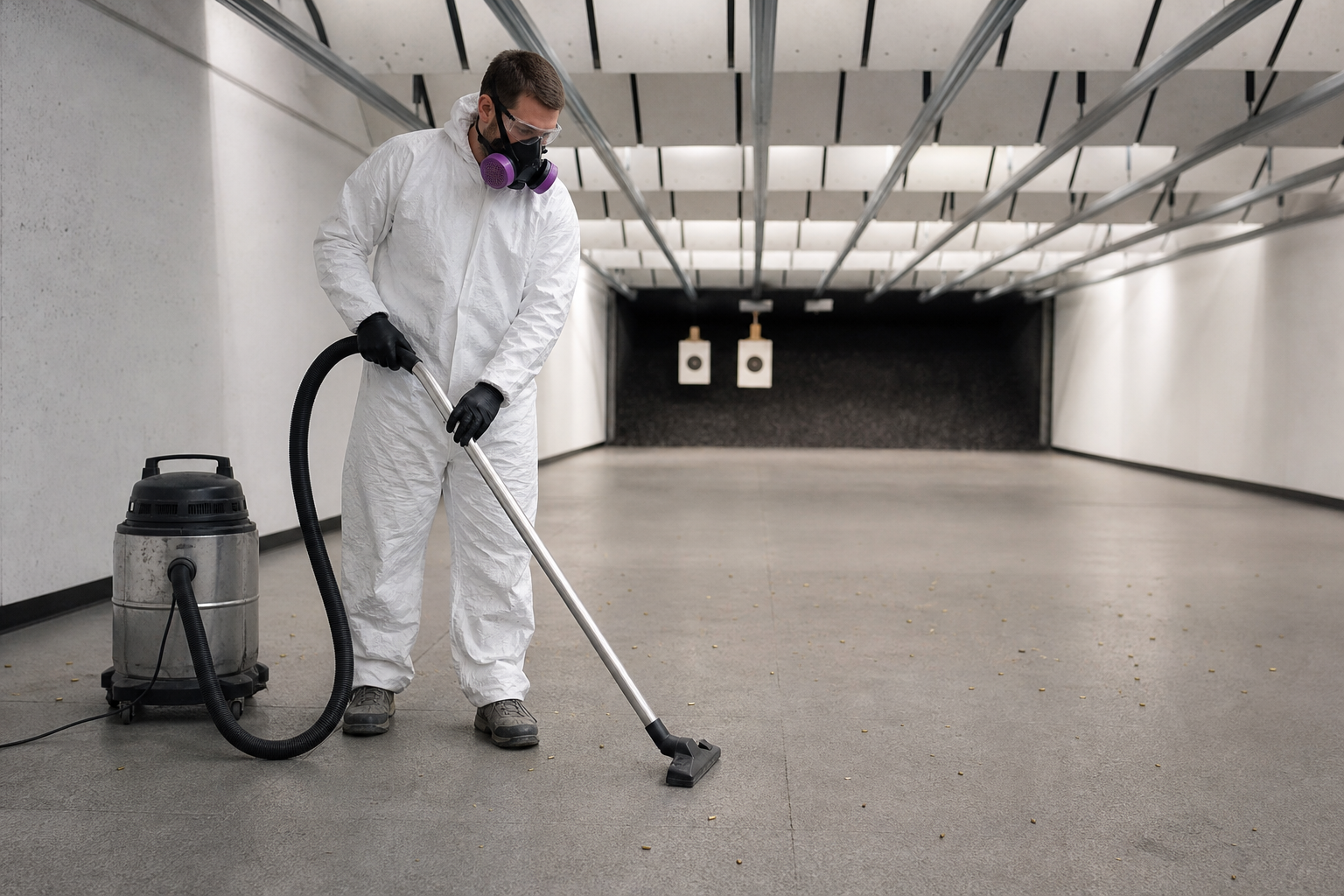
HEPA vacuuming is a core part of midwest shooting range services for indoor lanes.
Why Indoor Ranges Need Professional Lead Control
Lead dust settles on floors, benches, and equipment. It can also travel on clothing and skin. Therefore, OSHA sets workplace rules for lead exposure, and the Occupational Safety and Health Administration publishes guidance for employers. The U.S. Environmental Protection Agency addresses lead waste handling and disposal.
As a result, many operators bring in trained crews rather than relying on staff cleaning alone. For a deeper look at the value, read whether professional range cleaning is worth it for gun ranges.
Core Services for Indoor Ranges
Rubber Berm Cleaning and Processing
A rubber berm is a backstop made of granulated rubber that catches bullets. Wynant Range Consulting uses a patented machine to process the rubber. It separates usable rubber from lead, dust, jacket fragments, and other contaminants. Clean rubber returns to the range, while hazardous material is removed for recycling and disposal.
In contrast, some companies remove bullets and return most of the remaining material. Processing aims to recover more lead and cut downtime. Learn more on the rubber range cleaning page.
Steel Trap System Maintenance
Steel trap upkeep includes checking oil concentration and emptying bullet traps and front troughs. Target track cleaning keeps moving parts reliable. Consistent care also helps reduce dust and ricochet.
Full Range Cleaning and HEPA Vacuuming
Range cleaning covers floors, walls, baffles, traps, and shooters’ booths. HEPA vacuums capture fine particles that ordinary vacuums release back into the air. See the full range cleaning service overview.
Filter Replacement
HEPA filters, filter bags, and pre-filters wear out under constant dust loads. Replacement timing depends on round counts and your ventilation design. Overloaded filters reduce airflow and weaken lead control.
Lead Recycling, Mining, and Soil Remediation
Recovered lead has value and should not simply go to a landfill. Lead recycling and reclamation, indoor lead mining, and soil remediation turn a liability into a managed process. Soil work applies where outdoor areas or runoff zones have been affected. For a provider comparison, see this guide to lead recycling at shooting ranges.
Air Monitoring and Employee Safety Plans
Cleaning only works if you can measure the result. Air monitoring and exposure testing show how much lead is present where people work and shoot. A lead exposure safety plan then sets procedures, protective equipment, and hygiene practices for employees.
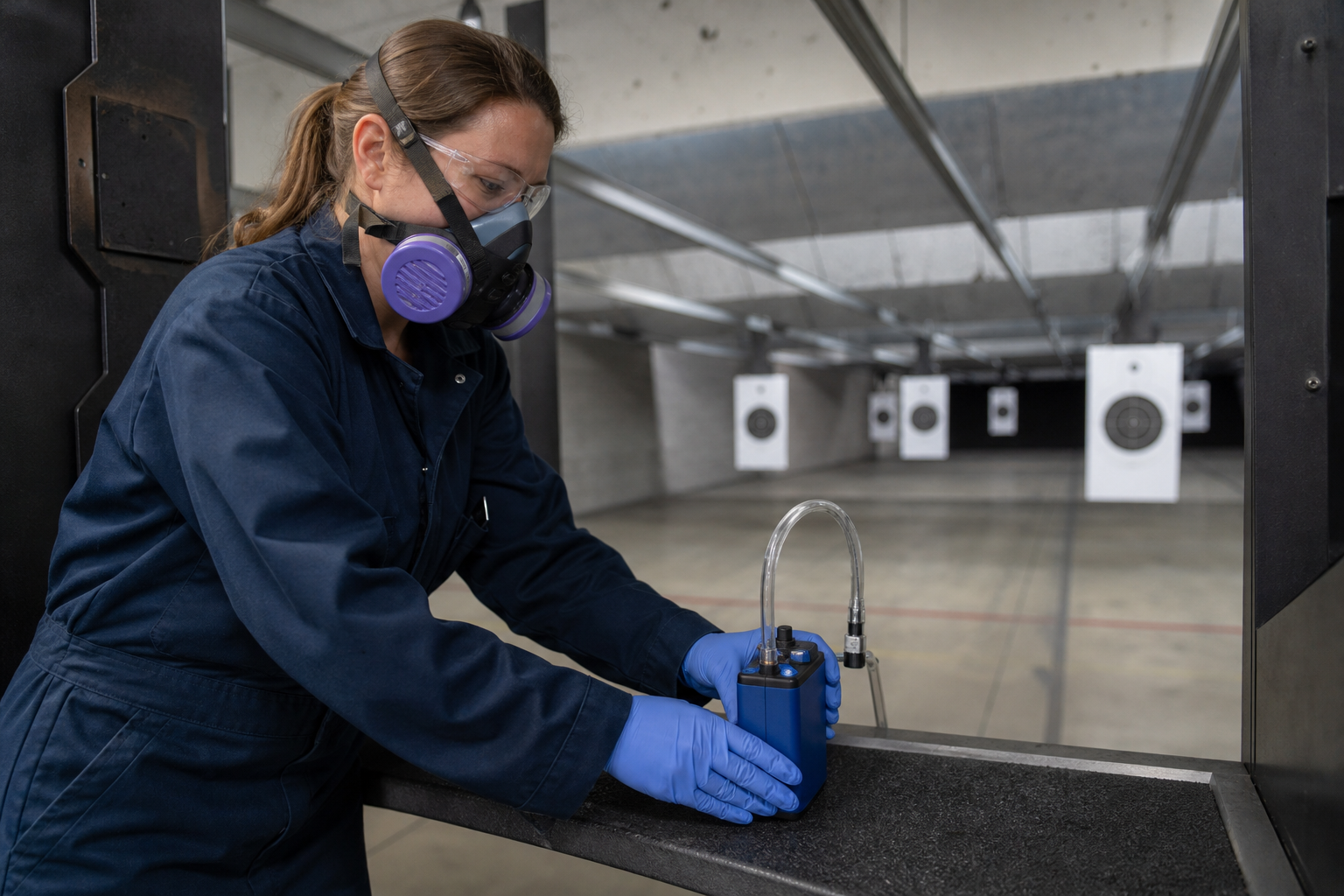
Air monitoring confirms whether cleaning and ventilation are working.
How to Plan Range Service in the Midwest
Follow these steps to prepare for a professional visit:
- Identify whether your range uses a rubber berm or steel trap, and count lanes and firing positions.
- Gather round counts, past cleaning dates, and filter replacement logs.
- Request air monitoring to establish a baseline for exposure.
- Schedule a closure window long enough for complete cleaning.
- Set a recurring plan for filters, traps, target tracks, and your safety plan.
Choosing a Regional Range Cleaning Provider
Use these criteria to compare providers:
| Question to ask | Why it matters |
|---|---|
| Is rubber processed or only picked over? | Processing removes fine lead and dust from reused rubber. |
| Are staff trained to OSHA and EPA standards? | Compliant handling protects workers and your facility. |
| What happens to recovered lead? | Recycling and proper disposal reduce long-term liability. |
| Is air monitoring offered? | Testing verifies that results hold up after cleaning. |
Wynant Range Consulting serves the Midwest and East Coast, and its team reports over 75 years of combined experience. Its stated approach is simple: you shoot, they clean.
Frequently Asked Questions
What are midwest shooting range services?
They are specialized cleaning, maintenance, and safety services for indoor ranges in the Midwest. They include berm and trap cleaning, HEPA filter replacement, air monitoring, and lead recycling.
How does rubber berm processing differ from standard lead removal?
Standard removal pulls out bullets and returns most other material. Processing separates lead, dust, and jacket fragments from the rubber so clean rubber can go back into the range.
Is the cleaned rubber reused in the trap?
Yes. After processing, clean rubber is returned to the range. Lead and other hazardous material are removed for recycling and disposal.
How is lead from a range recycled or disposed of?
Recovered lead is sent for recycling, and other hazardous waste is removed for proper disposal. Handling must follow EPA and OSHA requirements.
How often should range filters be replaced?
There is no single schedule. Frequency depends on round counts, ventilation design, and manufacturer guidance, so many ranges set a routine with their service provider.
What does steel trap maintenance include?
It includes checking oil concentration and emptying the bullet traps and front troughs. Target track cleaning is often done at the same visit.
Do you provide air monitoring and exposure testing?
Yes. Wynant Range Consulting offers air monitoring, exposure testing, and lead exposure safety plans for employees.
What types of ranges do you serve?
The company serves indoor rifle, pistol, and shotgun ranges. Customers include commercial ranges, law enforcement, military, and private training centers.
Which areas do you serve?
The team serves indoor ranges across the Midwest and East Coast of the United States.
Why does lead dust matter at an indoor range?
Lead dust can be inhaled or carried on skin and clothing. Controlling it protects employees, shooters, and families.
What is a common mistake range owners make?
A common mistake is delaying cleaning until dust or ricochet becomes obvious. Planned maintenance is usually safer and less disruptive.
How do I schedule service?
Call (252) 764-1809 or use the contact form to discuss your range. Work hours are 9 AM to 5 PM, Monday through Saturday.
Conclusion
Reliable midwest shooting range services combine thorough cleaning, trap and filter upkeep, air monitoring, and a written safety plan. Rubber berm processing, steel trap care, and lead recycling each reduce contamination in different ways. To discuss your range, call (252) 764-1809 or reach out through Wynant Range Consulting.
