
Private training center range cleaning is the professional removal of lead dust, bullet fragments and other contaminants from an indoor shooting range. For a private training center, it protects instructors, students and staff while keeping the range running smoothly. This guide explains what the service covers, how often to plan it, and what to ask a provider.
Quick answer: Private training center range cleaning covers the trap or rubber berm, floor, walls, baffles, shooter’s booths and air filtration. Schedule it by round count and air results, not by waiting for visible buildup.
What Is Private Training Center Range Cleaning?
It is a set of cleaning and maintenance tasks that remove lead and debris from a range used for training. Each shot sends lead dust, copper jacket pieces and powder residue into the air and onto surfaces. Over time, that material settles on floors, baffles and equipment.
Private training centers often run heavy, scheduled classes. Therefore, buildup can happen faster than owners expect. Regular service keeps exposure down and equipment working as intended.
Why Training Ranges Need Regular Attention
Lead exposure is a recognized workplace hazard. The Occupational Safety and Health Administration (OSHA) sets rules for lead in the workplace, and the U.S. Environmental Protection Agency (EPA) addresses lead waste and disposal. Range owners are responsible for protecting employees and handling waste properly.
In addition, a dirty range performs worse. Excess dust irritates shooters, and worn or contaminated backstops can increase ricochet. For a deeper look at the payoff, read the benefits of indoor shooting range cleaning.
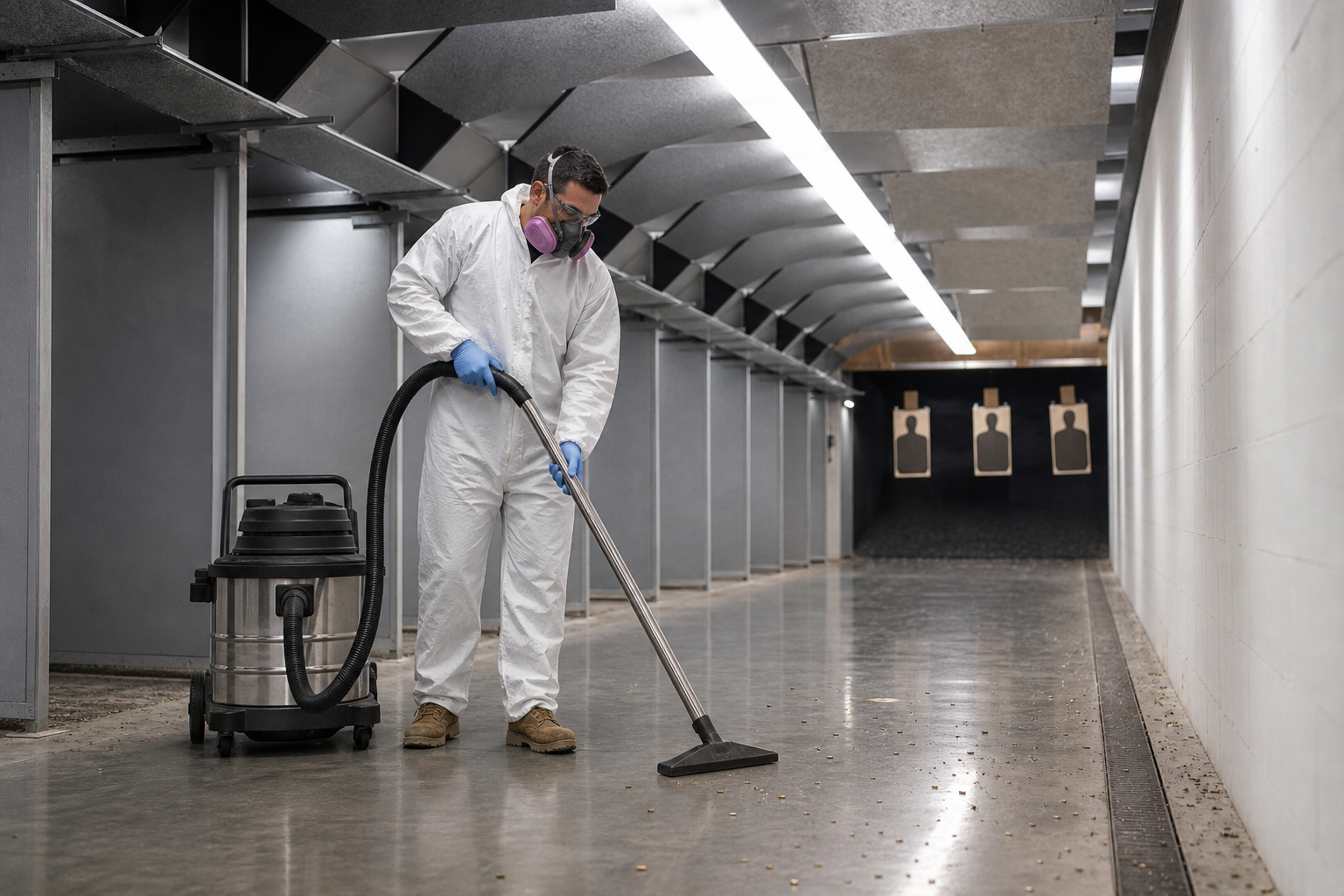
Private training center range cleaning often starts with HEPA vacuuming of floors, booths and baffles.
What Does Indoor Range Cleaning Include?
A full service addresses every surface where lead can collect. Specifically, Wynant Range Consulting lists these services for indoor rifle, pistol and shotgun ranges:
- Cleaning of floors, walls, baffles, traps and shooter’s booths
- HEPA vacuum cleaning of the range and shooting area
- Target track cleaning
- HEPA filter, filter bag and pre-filter replacement
- Air monitoring, exposure testing and employee lead exposure safety plans
You can see the full scope on the range cleaning service page.
Rubber Berm vs. Steel Trap Cleaning
Your trap type decides the method. The table below compares the two common systems.
| System | Typical work |
|---|---|
| Rubber berm | Process the rubber to separate lead, dust and jacket fragments; return clean rubber |
| Steel trap | Check oil concentration; empty the bullet trap and front trough |
Why Rubber Processing Matters
According to the company, its patented machine processes granulated rubber and sends clean rubber back to the range. Lead and other hazardous material are removed for recycling and disposal. This differs from methods that simply pull out bullets and return most of the remaining material. Learn more about rubber range systems.
Steel Trap Upkeep
Steel traps need routine checks. Oil concentration should be verified, and the trap and front trough should be emptied on a regular basis. As a result, bullet fragments and spent material do not accumulate.
How Often Should a Training Range Be Serviced?
No universal interval fits every facility. Round count, class schedule, ventilation design and air test results all matter. However, a few signals suggest it is time to act:
- Visible dust on surfaces soon after cleaning
- Rising ricochet or fragment complaints
- Filters that look loaded or airflow that has dropped
- Air or exposure test results that concern you
Filter replacement should follow the manufacturer’s guidance for your ventilation system. For a cost-versus-value view, see whether professional range cleaning is worth it.
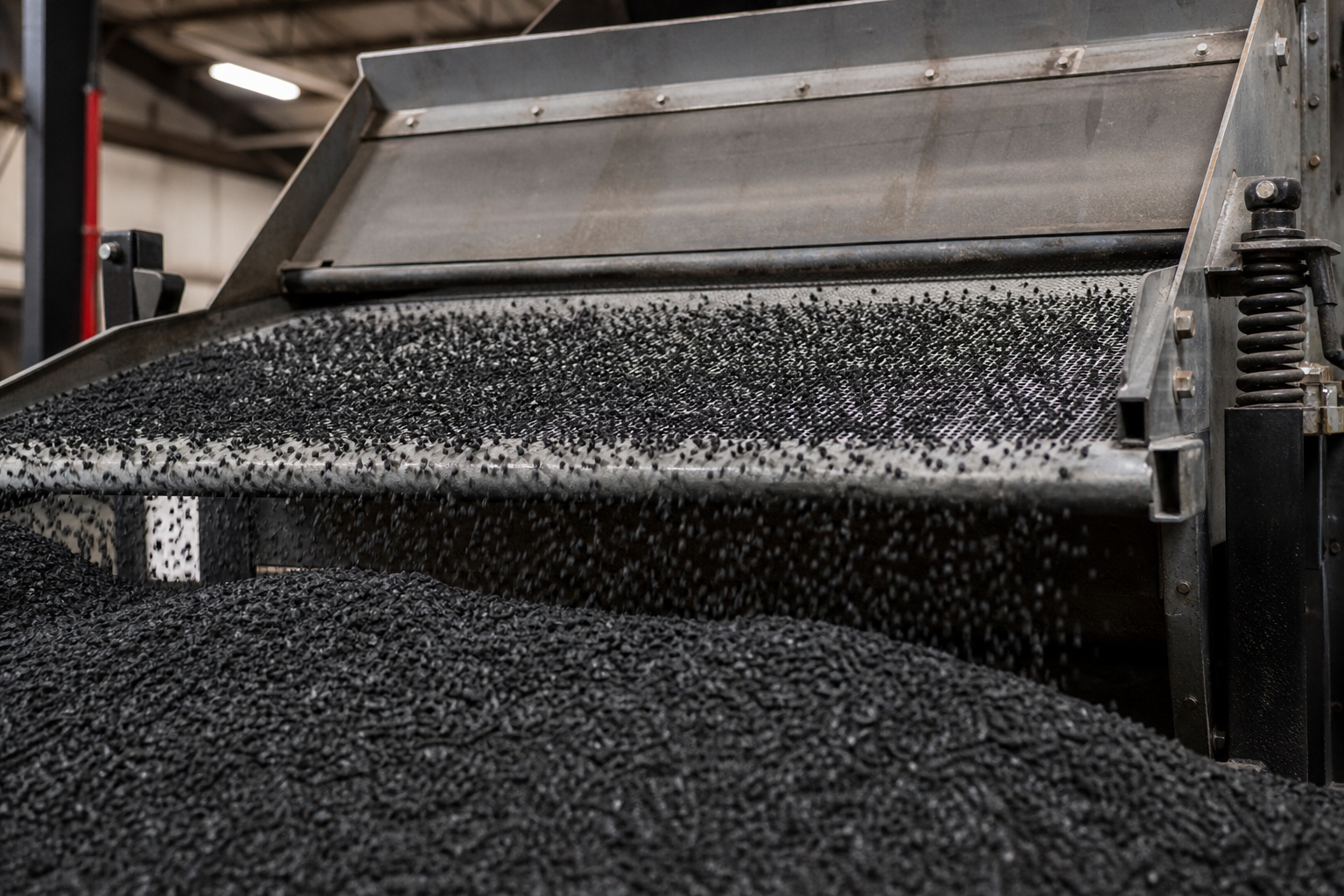
Processing separates reusable rubber from lead and contaminants.
How to Plan Range Cleaning Step by Step
- Identify whether your range uses a rubber berm or a steel trap.
- Review round counts, shooter traffic and your last cleaning and filter dates.
- Check filter condition and record any air monitoring results or dust and ricochet issues.
- Contact a provider with your range type, size and goals so the work can be scoped.
- Schedule a closure window, then set a recurring service and testing plan.
Choosing a Range Cleaning Provider
Ask about training, certifications, disposal practices and what happens to your rubber. Wynant Range Consulting serves private training centers, commercial ranges, law enforcement facilities and military ranges across the Midwest and East Coast. The site states its staff are trained and certified to OSHA and EPA standards and that the team has over 75 years of combined experience.
To discuss your range, call (252) 764-1809 or use the contact form. Hours are 9 AM to 5 PM, Monday through Saturday.
Frequently Asked Questions
What is private training center range cleaning?
Private training center range cleaning is the professional removal of lead dust, bullet fragments and contaminants from an indoor range. It covers the floor, walls, baffles, traps and shooter’s booths.
How does rubber berm processing differ from standard cleaning?
Processing separates usable rubber from lead, dust and jacket fragments, then returns the clean rubber to the range. Standard cleaning may remove only bullets and return most other material.
Is the cleaned rubber reused in the trap?
Yes. Wynant Range Consulting states that clean rubber goes back to the range. Hazardous material is removed for recycling and disposal.
How are lead and hazardous materials handled?
Removed lead and hazardous material go to recycling and disposal. Lead recycling and reclamation are part of the services offered.
How often should HEPA filters be replaced?
There is no single schedule. Follow the filter and ventilation manufacturer’s guidance and adjust for round count and pressure readings. A service provider can help set the interval.
What does steel trap maintenance include?
It includes checking oil concentration and emptying the bullet trap and front trough. Target track cleaning is often done at the same visit.
Do you provide air monitoring and exposure testing?
Yes. Air monitoring, exposure testing and lead exposure safety plans for employees are offered.
Which areas are served?
Wynant Range Consulting serves indoor rifle, pistol and shotgun ranges throughout the Midwest and East Coast.
How can a training center reduce dust and ricochet?
Keep the berm or trap clean, remove debris from baffles and floors, and maintain filtration. Clean rubber and routine servicing help limit dust and fragments.
What is a common mistake when scheduling range cleaning?
Waiting until dust or visible debris builds up is common. Planning service around round count and air results is more reliable.
How do I schedule private training center range cleaning?
Call (252) 764-1809 or use the contact form to describe your range. Hours are 9 AM to 5 PM, Monday through Saturday.
Conclusion
Private training center range cleaning reduces lead dust, limits ricochet and supports safer operation for staff and students. Know your trap type, track usage and air results, and keep filters current. When you are ready to plan service, contact Wynant Range Consulting to discuss your range.
