
Pre-filter replacement services keep the first stage of an indoor range’s ventilation system working, so the expensive HEPA filters behind it last longer. Consequently, range operators who skip this step often see weaker airflow, more dust, and higher maintenance bills. Finally, this guide explains what the service covers, when it is needed, and how to plan it.
Quick answer: Pre-filters are coarse filters that catch larger dust and debris before air reaches the HEPA stage. Replace them when inspection or pressure readings show they are loaded, and have trained technicians handle the used filters because they can hold lead dust.
What Are Pre-Filter Replacement Services?
Pre-filter replacement services are professional maintenance visits that remove and replace the coarse first-stage filters in a range’s air-handling system. A technician inspects the filter bank, swaps the used media, and contains the old filters for proper disposal.
Indoor ranges move air from behind the shooter toward the bullet trap. That air carries powder residue, lead dust, and bullet fragments. The pre-filter catches the larger particles first. As a result, the finer HEPA filter sees a cleaner airstream.
Why Range Pre-Filters Matter
A HEPA filter is built to capture very fine particles. According to the U.S. Environmental Protection Agency, true HEPA filters are rated to capture at least 99.97 percent of particles at 0.3 microns. Clogging them early with large debris wastes that capacity.
Pre-filters are cheaper and easier to change. Therefore, replacing them on time protects the costlier components. In addition, steady airflow helps carry airborne lead away from the shooter’s breathing zone.
Pre-Filter vs. HEPA Filter vs. Filter Bag
| Component | Role | Position |
|---|---|---|
| Pre-filter | Catches larger dust and debris | First stage |
| HEPA filter | Captures very fine particles, including fine lead dust | Final stage |
| Filter bag | Holds collected material in vacuum or collector units | Collection stage |
For a deeper look at the collection stage, see this full HEPA and filter bag replacement guide.
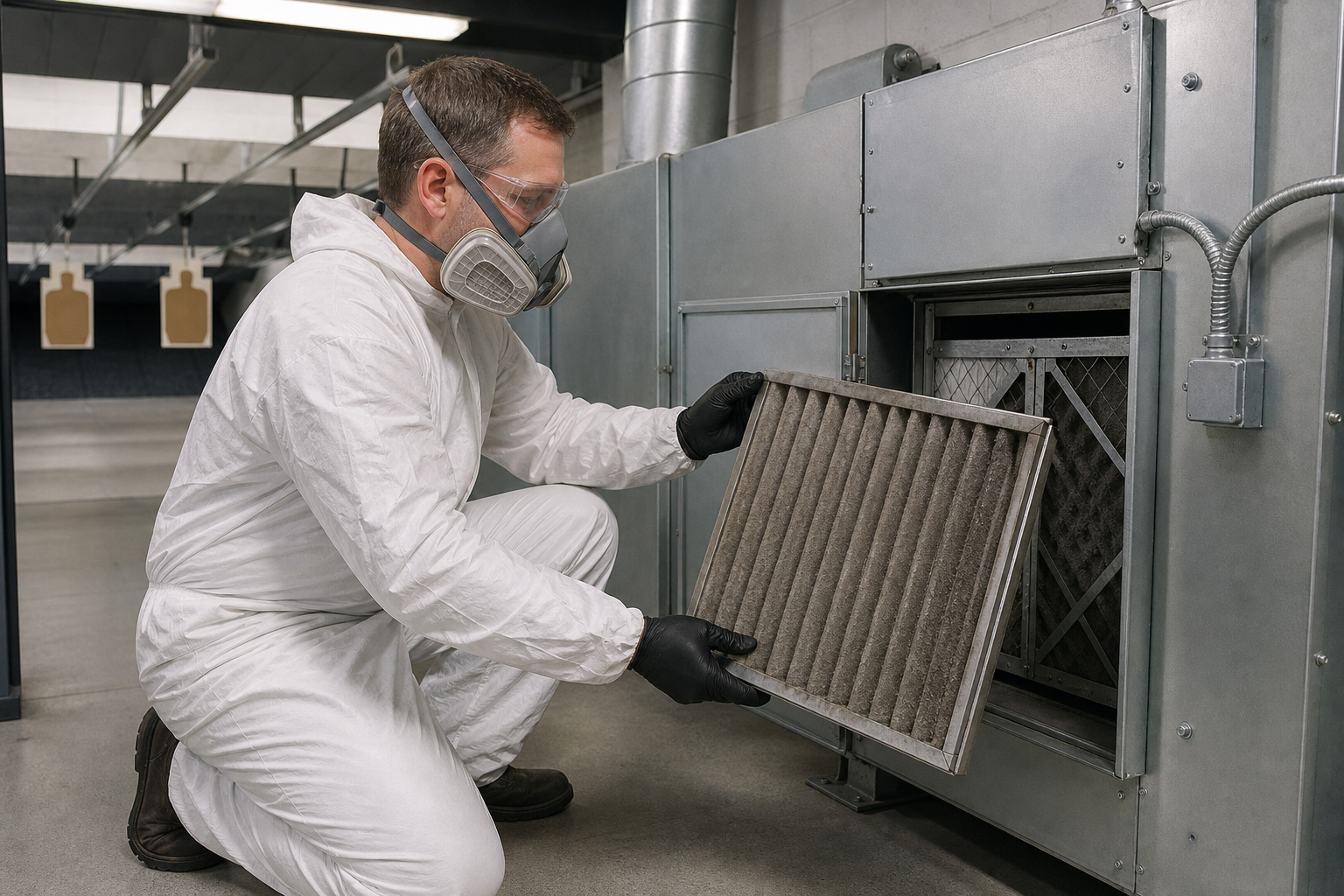
A technician removes a loaded pre-filter as part of pre-filter replacement services.
How Often Should Range Filters Be Replaced?
No single interval fits every range. Shooting volume, caliber mix, ammunition type, and system design all change how fast filters load. Consequently, the manufacturer’s guidance and your own readings should set the schedule.
Signs a Pre-Filter Is Due
- Visible dust loading or discoloration on the media
- Rising pressure drop across the filter stage
- Weaker airflow at the firing line
- Torn, sagging, or poorly seated filters
- More dust settling in booths and on floors
Pressure readings are especially useful. They show loading before it is obvious by eye, so you can plan the work instead of reacting to a problem.
What a Professional Filter Replacement Visit Includes
Used range filters can hold lead. The Occupational Safety and Health Administration regulates worker lead exposure, so handling matters as much as the swap itself. Trained technicians use protective equipment, limit dust release, and seal old filters in containment.
Wynant Range Consulting lists HEPA filter, filter bag, and pre-filter replacement among its services for indoor rifle, pistol, and shotgun ranges. The company states its staff are trained and certified to OSHA and EPA standards and serve the Midwest and East Coast.
Steps to Schedule Pre-Filter Replacement
- Inspect the filter bank. Check for dust loading, damage, and gaps, and note the pressure reading.
- Confirm specifications. Match the size, grade, and frame type so replacements fit the housing.
- Schedule during closed hours. This keeps shooters and staff out of the area during handling.
- Replace and contain old filters. Technicians bag used filters in sealed containers and install new ones.
- Verify airflow and log the work. Record readings and dates to guide the next service.
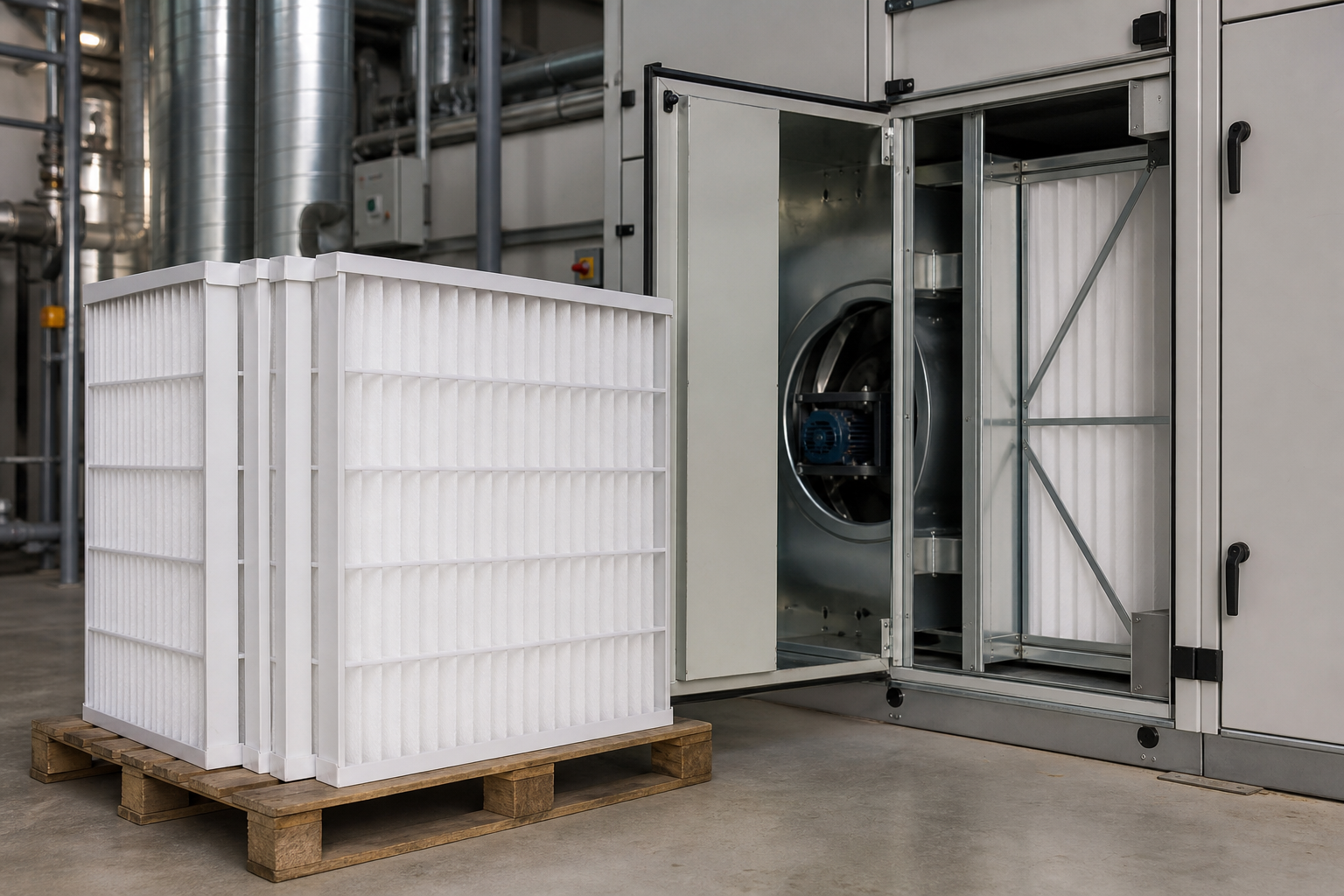
New filters staged and ready before the old ones are removed.
Combining Filter Work With Other Range Maintenance
Filter work pairs well with other closures. For example, many operators schedule it alongside range cleaning or berm service to limit downtime. Rubber berm care follows its own cadence, covered in this article on how often rubber berms should be maintained.
Filters also support wider contamination control. To understand the bigger picture, read about lead contamination removal services. Air monitoring and exposure testing can then confirm that controls are working.
Common Pre-Filter Mistakes to Avoid
- Running filters well past their useful life
- Installing the wrong size, leaving air gaps
- Throwing used filters in ordinary trash
- Ignoring pressure readings between visits
- Changing filters while the range is in use
Frequently Asked Questions
What are pre-filter replacement services?
Pre-filter replacement services remove and replace the coarse first-stage filters in a range’s ventilation system. They keep large particles away from the HEPA filters downstream.
Why does a shooting range need a pre-filter?
A pre-filter captures bigger dust and debris first. This extends HEPA filter life and helps the system hold steady airflow.
How often should range pre-filters be replaced?
There is no single schedule for every range. Frequency depends on shooting volume, ammunition type, and the manufacturer’s guidance, so many ranges set it by pressure readings and inspection.
What is the difference between a pre-filter and a HEPA filter?
A pre-filter is a coarse first stage that catches larger particles. A HEPA filter is a final stage that captures very fine particles, including fine lead dust.
What are signs a pre-filter needs replacing?
Common signs include visible dust loading, weaker airflow, rising pressure drop across the filter, and unusual dust near the shooting line. Any of these warrants an inspection.
Is old pre-filter material hazardous?
Used filters from a range can hold lead dust and should be handled as potentially hazardous. They need proper containment and disposal rather than ordinary trash.
Can range staff replace pre-filters themselves?
Some staff do, but handling lead-laden filters requires training, protective equipment, and exposure controls. Many operators hire trained, certified technicians instead.
Does Wynant Range Consulting replace pre-filters?
Yes. The company lists HEPA filter, filter bag, and pre-filter replacement among its maintenance services for indoor ranges.
Can pre-filter replacement be combined with other range services?
Yes. It is often scheduled with HEPA vacuum cleaning, filter bag replacement, or rubber berm cleaning to limit downtime.
How much do pre-filter replacement services cost?
Cost depends on system size, filter count, and site access. Contact the provider with your system details to get a quote.
What mistakes should ranges avoid with pre-filters?
Common mistakes include running filters past their useful life, using the wrong size, and skipping safe disposal. Ignoring pressure readings is another frequent error.
Which areas does the company serve?
Wynant Range Consulting serves indoor rifle, pistol, and shotgun ranges across the Midwest and East Coast.
Conclusion
Pre-filter replacement services protect HEPA filters, steady airflow, and the people who work and shoot in an indoor range. Inspect regularly, track pressure readings, and use trained technicians to handle lead-laden filters safely. To discuss your range, call Wynant Range Consulting at (252) 764-1809 (9 AM to 5 PM, Monday through Saturday) or visit wynantrangeconsulting.com to get in touch.
