

An emptying bullet traps service is a professional cleanout of the steel trap and front trough at an indoor range, removing spent bullets, fragments, and lead debris. Done on a regular schedule, it protects trap performance and lowers lead dust. This guide explains what the work involves, when it is needed, and how to choose a provider. By range leaning. Last updated: 2026-11-15.
Quick answer: A steel bullet trap should be emptied before buildup affects performance or raises lead exposure. Most ranges set the schedule by round count and inspection results, then pair emptying with oil checks and HEPA cleaning.
What Is an Emptying Bullet Traps Service?
It is a scheduled task in steel trap system maintenance. Trained technicians remove the bullets and fragments that collect in the trap and in the front trough at the base of the backstop. They then handle the collected lead so it can be recycled or disposed of properly.
The work matters because lead is a health hazard. The Occupational Safety and Health Administration (OSHA) regulates lead exposure for workers, and the U.S. Environmental Protection Agency (EPA) sets rules for hazardous waste handling.
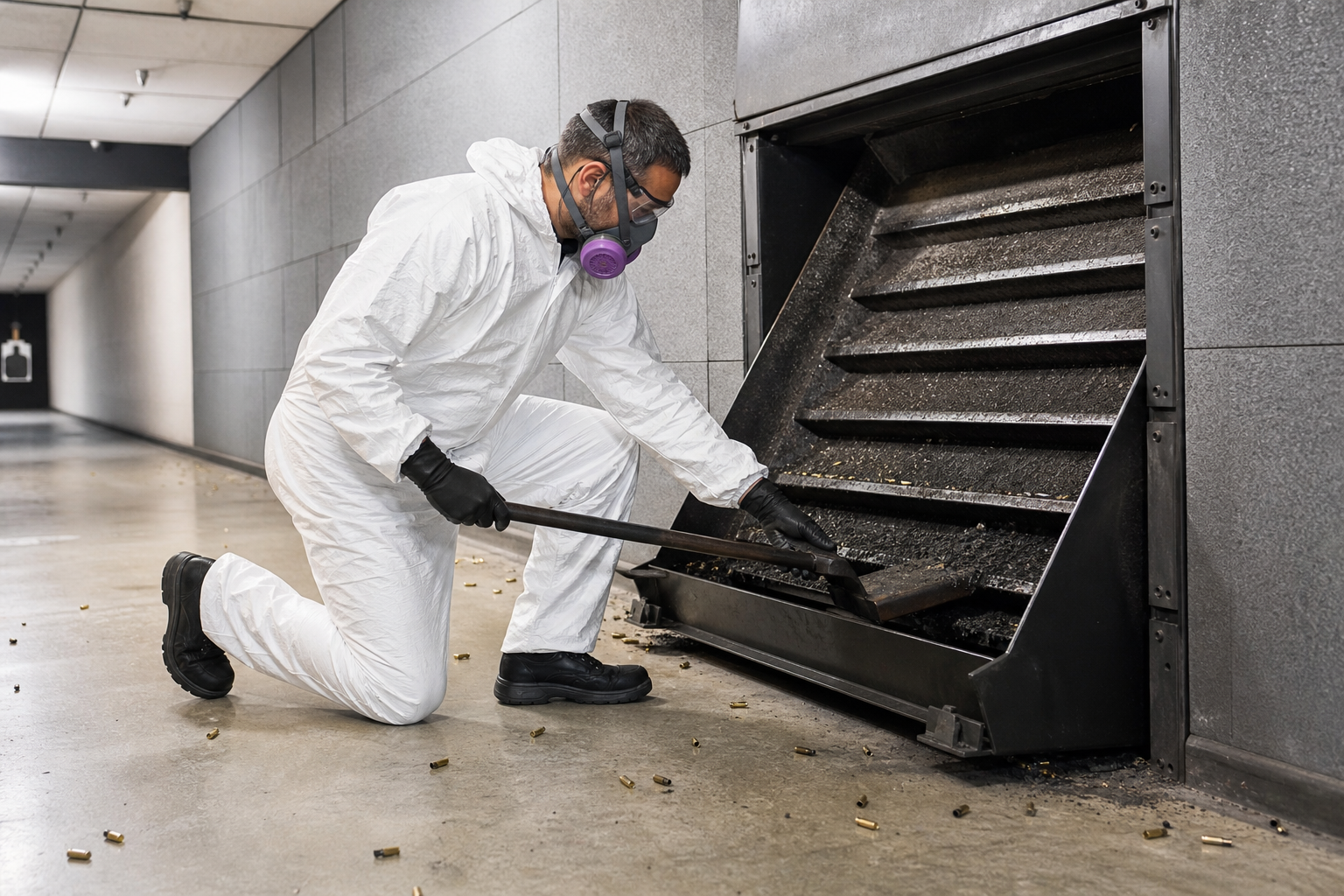
A trained technician carries out an emptying bullet traps service on an indoor steel trap.
Why Steel Traps Need Regular Cleanout
Every round fired adds material to the trap. Over time, fragments and jacket pieces pile up in the trough. As a result, the trap can work less effectively, and dust can spread through the shooting area.
Furthermore, neglected traps create more work for ventilation. Filters load faster and air quality becomes harder to control. Regular emptying therefore supports both safety and equipment life.
What Steel Trap Maintenance Typically Includes
- Emptying the bullet traps and the front trough
- Checking oil concentration in the system
- Cleaning target tracks
- HEPA vacuuming of the range and shooting area
- Removing and recycling or disposing of lead material
For more on the oil side of upkeep, see this steel trap oil concentration guide.
How Often Should Bullet Traps Be Emptied?
There is no universal interval. Round count, caliber mix, and trap design all affect how fast material builds up. Consequently, a high-volume commercial range will need visits more often than a small private facility.
A practical approach is to inspect the trap and trough on a set routine and record the buildup. Then use that record, along with the manufacturer’s guidance, to set a service schedule.
Steps to Prepare for a Bullet Trap Cleanout
- Inspect the trap, front trough, and floor, and note heavy buildup or pooled oil.
- Have the oil concentration checked so it can be adjusted during the visit.
- Schedule a closed window with no shooters or staff on the range.
- Confirm how lead will be removed, recycled, or disposed of, and request documentation.
- Follow up with HEPA cleaning and consider air monitoring.
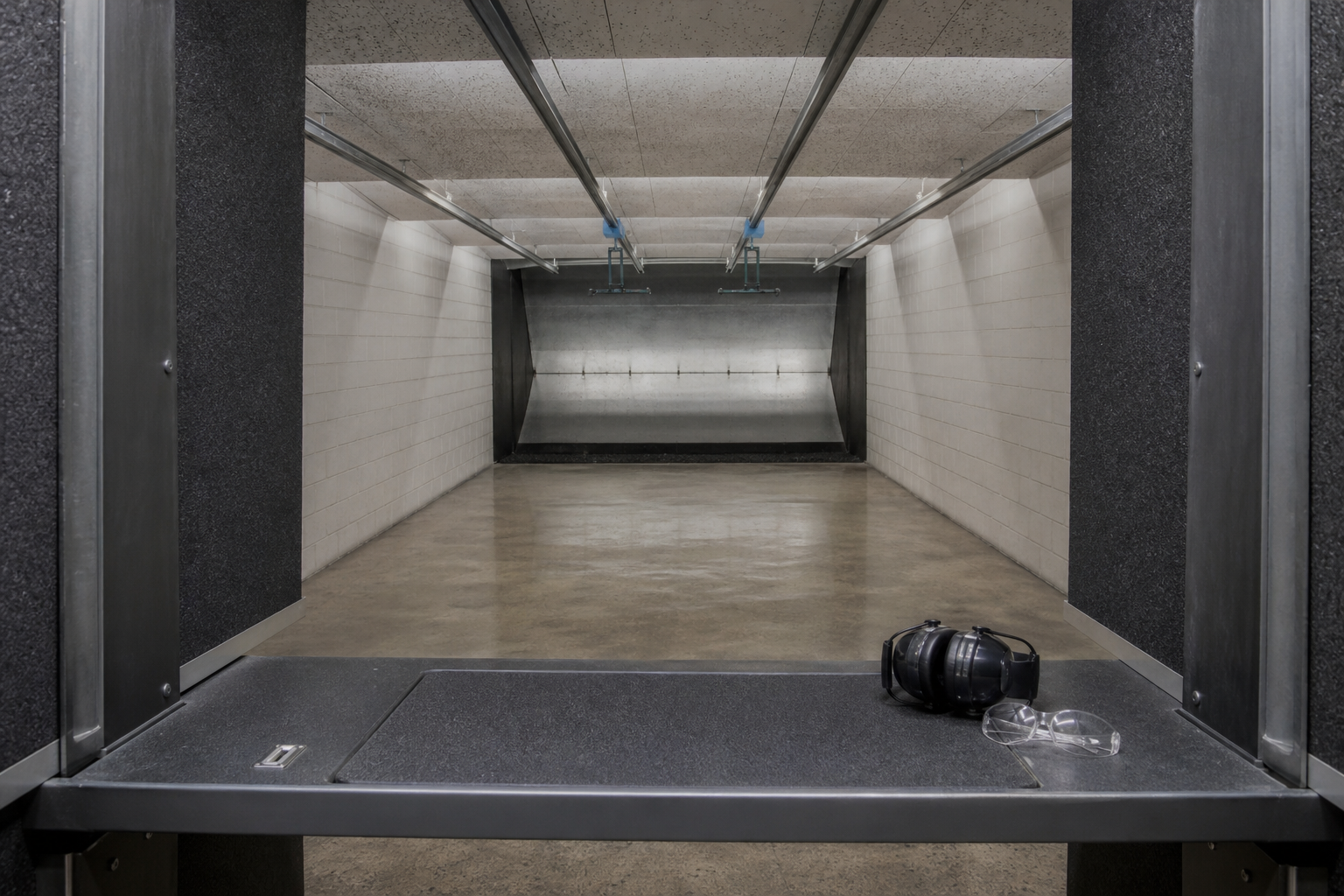
A serviced steel trap helps keep the lane cleaner and the air easier to manage.
Choosing a Range Cleaning Provider
Lead work calls for trained crews. Ask whether staff are trained and certified to OSHA and EPA standards. In addition, ask how collected material is handled and what records you will receive.
Also confirm that the provider understands your system. Steel traps and rubber berm ranges are cleaned differently, so a company that handles both is useful if you operate more than one type.
Wynant Range Consulting (WRC) specializes in indoor range cleaning for rifle, pistol, and shotgun ranges across the Midwest and East Coast. Its steel trap work includes oil concentration checks and emptying the bullet traps and front trough. The team also offers HEPA cleaning, filter bag replacement, air monitoring, exposure testing, and lead exposure safety plans. Learn more about range cleaning services or read how lead contamination removal works. You can also visit the WRC website for an overview.
Frequently Asked Questions
What is an emptying bullet traps service?
It is a professional service that removes spent bullets, fragments, and lead debris from a steel bullet trap and its front trough. The goal is to keep the trap working and reduce lead exposure.
Why do steel bullet traps need to be emptied?
Spent bullets and fragments build up inside the trap and trough. Too much buildup can affect trap performance and increase lead dust and ricochet risk.
How often should a bullet trap be emptied?
It depends on round count and trap design, so no single interval fits every range. Many operators set a schedule based on shooting volume and inspections.
What does steel trap maintenance include?
Typical work includes checking oil concentration and emptying the bullet traps and front trough. It is often paired with cleaning of the surrounding range.
Can I empty the bullet trap myself?
Some ranges handle basic tasks in house, but lead handling carries health and compliance duties. Trained, certified crews reduce exposure risk and keep records for waste handling.
What happens to the lead removed from the trap?
Recovered lead can be sent for recycling, and hazardous material is removed for proper disposal. Ask your provider to document where it goes.
How is trap emptying different from rubber berm cleaning?
Steel traps are emptied of bullets and debris, while rubber berm cleaning processes granulated rubber to separate lead from reusable rubber. The two systems need different methods.
Does oil concentration matter in a steel trap?
Yes. Checking oil concentration is part of steel trap upkeep and is usually done alongside emptying.
Should HEPA cleaning follow a trap emptying visit?
It is a good idea. Emptying a trap can disturb dust, so HEPA vacuuming of the range and shooting area helps remove what settles.
What should I ask before hiring a provider?
Ask about OSHA and EPA training, waste handling and documentation, experience with your trap type, downtime, and whether air monitoring is available.
Which areas does Wynant Range Consulting serve?
The company serves indoor rifle, pistol, and shotgun ranges throughout the Midwest and East Coast.
How do I schedule an emptying bullet traps service?
Call (252) 764-1809 or use the contact form on the website to discuss your range. Work hours are 9 AM to 5 PM, Monday through Saturday.
Conclusion
A well-timed emptying bullet traps service keeps steel traps working, limits lead dust, and supports safer conditions for staff and shooters. Set a schedule from your round count and inspections, pair it with oil checks and HEPA cleaning, and choose a certified provider that documents waste handling. To discuss your range, call WRC at (252) 764-1809 or use the contact form.
