

Target track maintenance is the routine cleaning, inspection, and lubrication of the rails, carriers, and cables that move targets on an indoor range. Done well, it keeps lanes running, limits lead dust buildup, and protects the people who work there. This guide covers what to do, how often to do it, and how to stay safe.
Quick answer: Vacuum the track with a HEPA vacuum, inspect moving parts, lubricate with approved product, and log the work. Never sweep or use compressed air, because both spread lead dust.
What Is Target Track Maintenance?
It is a scheduled set of tasks that keeps the target carrier system clean and working. The track sits in the airflow path of the lane, so dust and bullet fragments settle on it. Consequently, a neglected track can stall, wear unevenly, and hold contaminated dust.
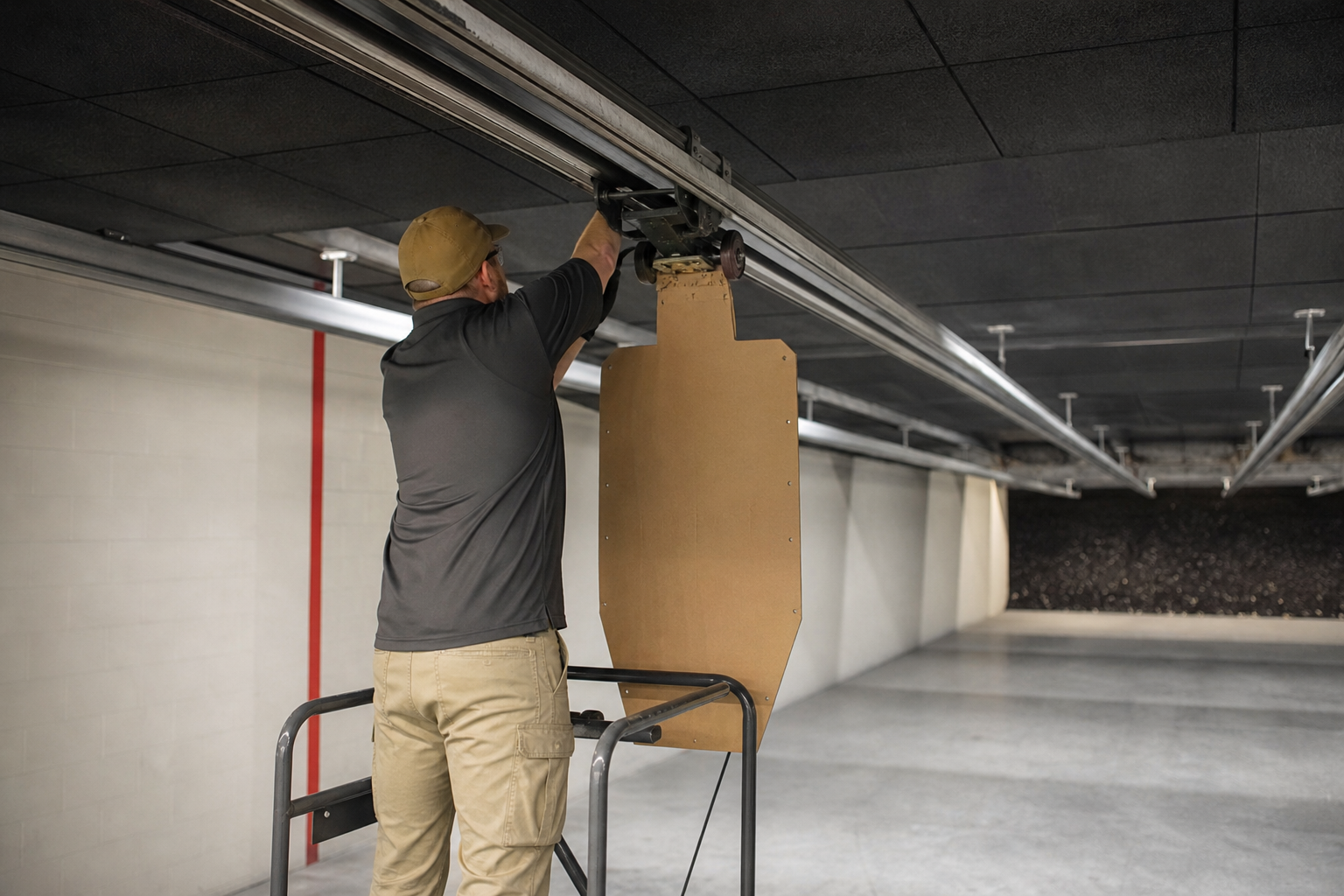
A target carrier track on an indoor lane, ready for inspection and cleaning.
Why Track Upkeep Matters for Safety and Uptime
Lead dust is a real health concern on indoor ranges. OSHA regulates workplace lead exposure, and the OSHA lead resources explain employer duties. Meanwhile, the EPA lead program covers waste and environmental rules.
Reliability matters too. A jammed carrier takes a lane out of service. In addition, worn cables and rollers can fail without warning, which costs time during training or league nights.
Core Tasks in Range Target Carrier Upkeep
Cleaning
Use a HEPA vacuum on the rail, carrier housing, and floor beneath. HEPA filters capture very fine particles, as explained in this overview of HEPA filtration. Dry sweeping is not acceptable, since it lifts dust into the breathing zone.
Inspection
Check rollers, belts, drive cables, limit switches, and wiring. Look for frayed strands, flat spots, and embedded fragments. Replace worn parts before they fail.
Lubrication and Testing
Apply only the lubricant the manufacturer approves. Too much attracts dust. Then run the carrier the full length of the lane and listen for noise or hesitation.
How to Clean and Service a Target Track Step by Step
- Close the lane and lock out power to the carrier. Confirm ventilation is running.
- Put on the respirator, gloves, and coveralls your lead exposure plan requires.
- HEPA vacuum the rail, housing, and surrounding floor.
- Inspect rollers, cables, belts, and wiring. Replace worn parts.
- Lubricate with approved product, test the full travel, and log the service.
How Often Should Tracks Be Serviced?
There is no single interval that fits every range. Round count, lane count, ventilation quality, and carrier type all matter. Therefore, start with a written schedule, then adjust it based on what each inspection finds.
| Range Use | Suggested Approach |
|---|---|
| High volume | Frequent visual checks and regular HEPA cleaning |
| Moderate volume | Scheduled cleaning with periodic inspections |
| Low volume | Cleaning on a set calendar plus checks when issues appear |
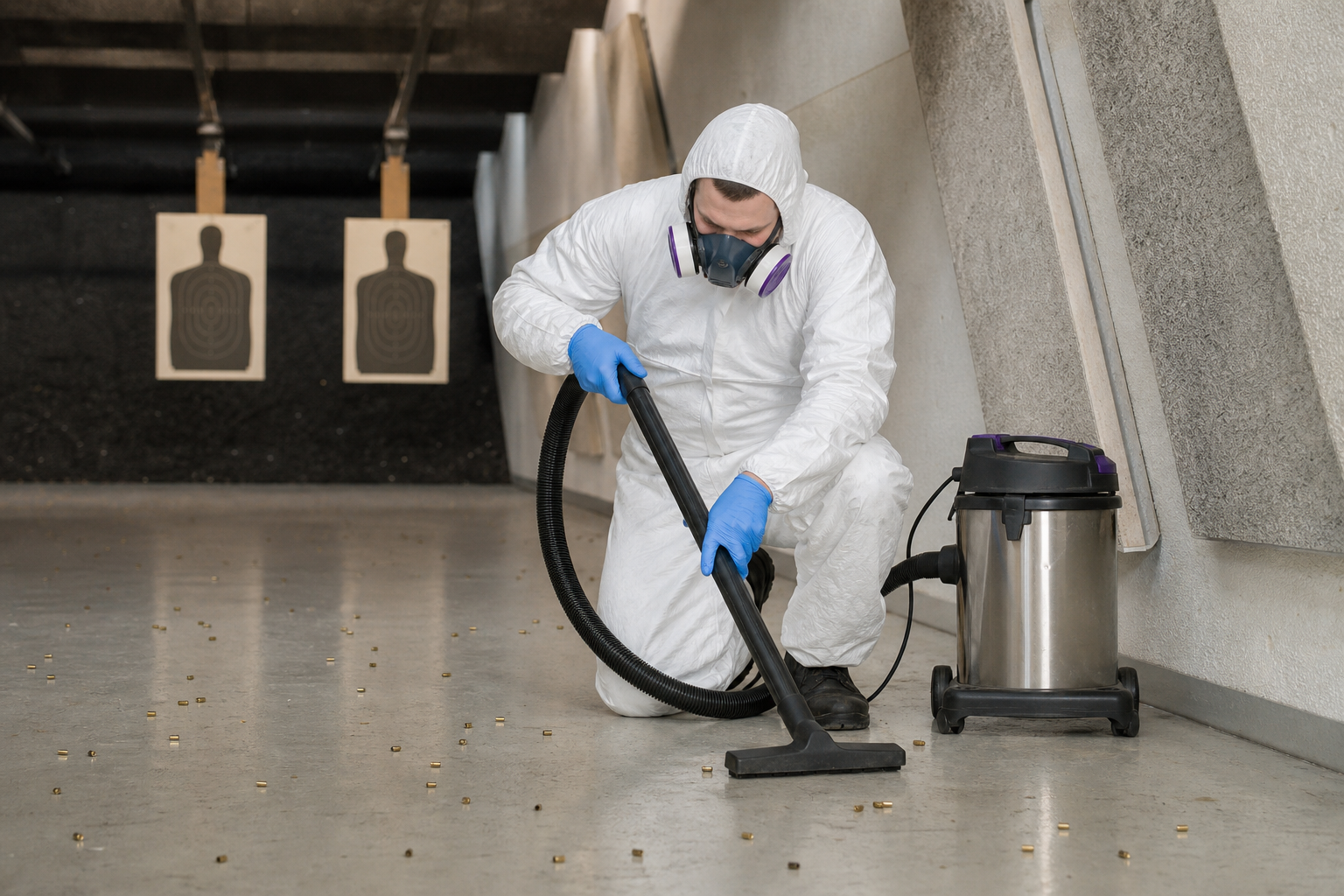
HEPA vacuuming is the safe way to remove lead dust from range surfaces.
Common Mistakes to Avoid
- Dry sweeping or blowing off dust with compressed air.
- Skipping lockout before reaching into the carrier.
- Using the wrong lubricant, which can trap dust.
- Failing to keep service logs.
Pairing Track Care with Wider Range Cleaning
Tracks are only one part of a clean range. Floors, walls, baffles, traps, booths, and filters all contribute to dust levels. For a broader view, see this range cleaning overview and the rubber berm maintenance guide.
Rubber berm ranges have extra needs. Learn how often rubber berms should be maintained and who cleans them. You can also watch examples on the WRC video page.
Professional Target Track Cleaning Support
Wynant Range Consulting (WRC) cleans indoor rifle, pistol, and shotgun ranges across the Midwest and East Coast. Its services include target track cleaning, HEPA vacuum cleaning of the range and shooting area, HEPA filter and filter bag replacement, steel trap upkeep, air monitoring, exposure testing, and lead exposure safety plans. The team states its staff are trained and certified to OSHA and EPA standards.
To discuss your range, call (252) 764-1809 between 9 AM and 5 PM, Monday through Saturday, or email bwynant.roc@gmail.com.
Frequently Asked Questions
What is target track maintenance?
Target track maintenance is the routine cleaning, inspection, and lubrication of the rails and carriers that move targets on an indoor range. It keeps the system reliable and limits lead dust buildup.
How often should target tracks be cleaned?
It depends on round count and range use. High-volume ranges usually need more frequent cleaning than low-volume ranges, so set a schedule based on your own usage and inspection findings.
Why does lead dust collect on target tracks?
Firing releases fine lead particles that settle on horizontal surfaces. Rails and carrier housings sit in the airflow path, so dust and bullet fragments gather there.
Can I sweep or blow off a target track?
No. Sweeping and compressed air throw lead dust into the air. Use a HEPA vacuum instead.
What tools are needed for target track cleaning?
You need a HEPA vacuum, personal protective equipment, approved lubricant, and basic hand tools. Also have sealed containers for contaminated waste.
What are signs a target track needs service?
Jerky carrier movement, unusual noise, stalls, frayed cables, and visible debris are common signs. Any of these means the lane should be inspected.
How is target track maintenance different from rubber berm cleaning?
Track maintenance covers the moving target system, while rubber berm cleaning processes the granulated rubber backstop to remove lead and contaminants. Both support a cleaner range.
Does lead exposure matter when cleaning tracks?
Yes. Staff can be exposed to lead dust during cleaning. OSHA’s lead standards and a written exposure plan guide how to protect them.
Should maintenance be done by staff or a contractor?
Either can work if the people are trained and equipped for lead work. Many operators use a certified contractor for deep cleaning and handle light inspections in-house.
How should lead waste from track cleaning be handled?
Collect it in sealed containers and manage it under applicable EPA and state rules. Lead can often be recycled through a qualified provider.
What mistakes should I avoid?
Common mistakes include dry sweeping, skipping lockout, using the wrong lubricant, and not logging service. Each raises safety or reliability risks.
Does Wynant Range Consulting clean target tracks?
Yes. Target track cleaning is one of its listed services, alongside HEPA vacuum cleaning, filter replacement, and air monitoring for indoor ranges in the Midwest and East Coast.
Conclusion
Consistent target track maintenance means HEPA cleaning, careful inspection, correct lubrication, and written logs, all done with proper protective gear. As a result, lanes stay in service and lead dust stays under control. If you want help building a schedule or handling the cleaning, contact WRC to discuss your range.
