

HEPA vacuum cleaning shooting ranges rely on is the use of High-Efficiency Particulate Air vacuums to capture fine lead dust from floors, walls, baffles, and shooting positions. At an indoor range, that dust is a constant by-product of live fire. Removing it properly protects staff, shooters, and the building itself. Last updated: 2026-11-18. By range leaning.
Quick answer: A HEPA vacuum traps particles that ordinary vacuums and brooms push back into the air. For an indoor range, it is the standard way to remove settled lead dust from the range and shooting area between deeper services.
What Is HEPA Vacuum Cleaning at a Shooting Range?
It is a cleaning method built around vacuums with sealed HEPA filtration. A HEPA filter is rated to capture at least 99.97 percent of particles at 0.3 microns, according to the U.S. Environmental Protection Agency. Lead dust from primer and bullet wear is often this fine.
Sweeping, compressed air, and household vacuums do the opposite of what a range needs. They lift particles and spread them. As a result, a surface may look clean while the air gets worse.
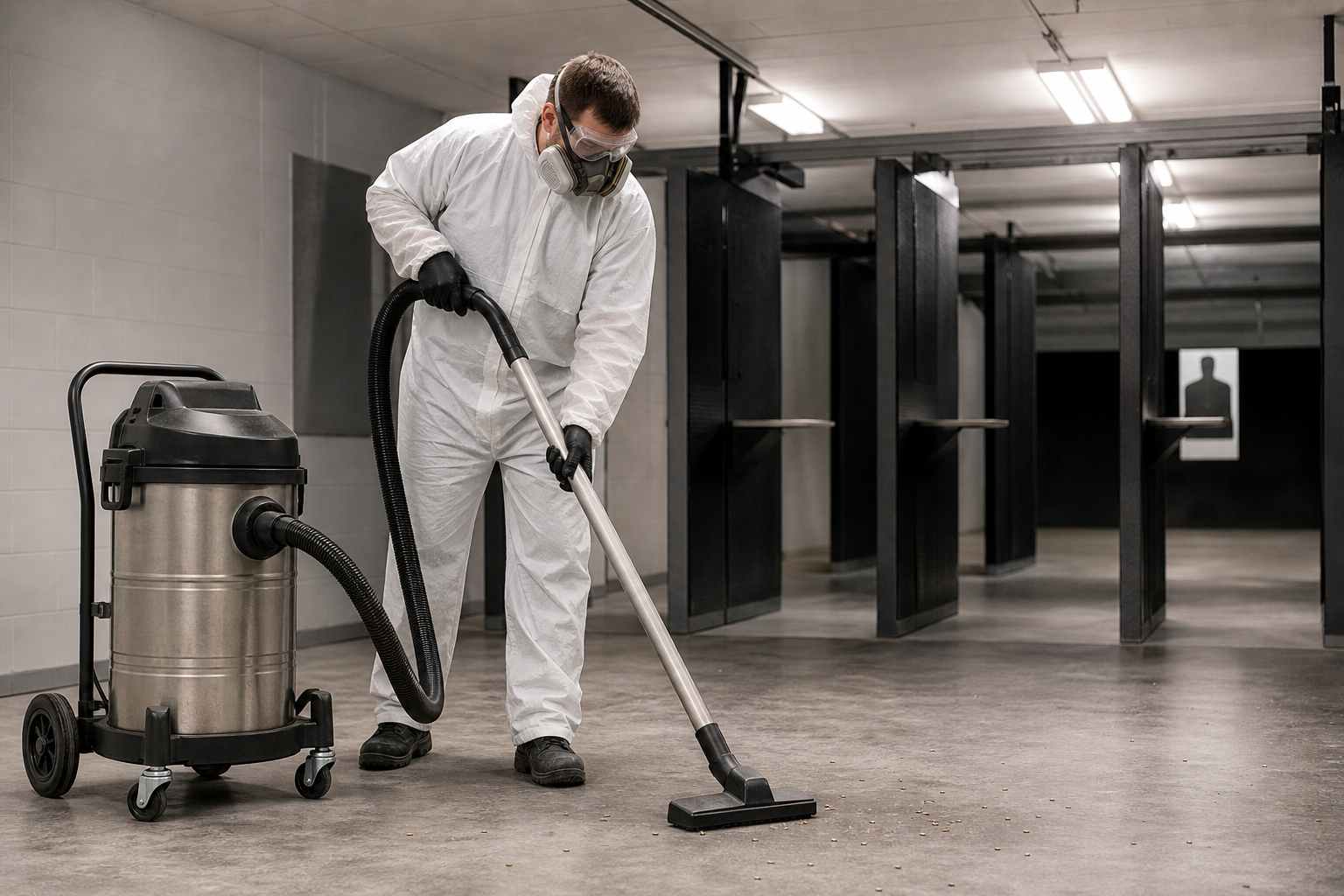
HEPA vacuum cleaning shooting ranges depend on removes settled lead dust without relaunching it into the air.
Why Lead Dust Control Matters
Lead is a toxic metal. The Occupational Safety and Health Administration regulates employee lead exposure, so range operators have real obligations to their workers. Dust on floors and ledges can be tracked out of the range or inhaled when disturbed.
Regular HEPA cleaning therefore supports three goals. It reduces airborne lead, limits take-home contamination, and keeps the range compliant and safer to operate.
Which Range Areas Need Vacuuming?
Lead dust settles everywhere that air moves slowly. A thorough job covers each of these:
- Floors and the shooting area
- Walls and ceilings
- Baffles and ledges
- Traps and front troughs
- Shooter’s booths and benches
- Target tracks and carriers
Wynant Range Consulting (WRC) offers HEPA vacuum cleaning of the range and shooting area, plus target track cleaning, for indoor rifle, pistol, and shotgun ranges. You can see the wider scope on its range cleaning page.
HEPA Vacuuming vs. Rubber Berm and Steel Trap Service
Vacuuming is one part of range upkeep, not the whole job. Each task addresses a different source of contamination.
| Task | What it addresses |
|---|---|
| HEPA vacuum cleaning | Settled lead dust on surfaces and booths |
| Rubber berm processing | Lead, jacket fragments, and dust mixed into backstop rubber |
| Steel trap maintenance | Oil concentration, emptying traps and front troughs |
| Filter replacement | HEPA filters, filter bags, and pre-filters in ventilation |
For example, WRC processes rubber berm material and returns clean rubber to the range. Surface vacuuming alone cannot do that. Read more about lead contamination removal services.
How to Plan Range HEPA Cleaning: Step by Step
- Review your range layout and note every dust-collecting area and your trap type.
- Check HEPA filters, filter bags, and pre-filters, and record the last replacement dates.
- Pick a closure window so the shooting area is empty during service.
- Contact a certified provider with your range size, trap type, and cleaning history.
- Verify results with air monitoring, then set a recurring schedule.
Filters, Monitoring, and Safety Plans
Clean surfaces only help if ventilation works. Worn filters let dust recirculate, so filter condition deserves regular attention. Our HEPA filter bag replacement guide covers this in depth.
Air monitoring and exposure testing show whether your controls are working. WRC also prepares lead exposure safety plans for employees. Staff are described as trained and certified to OSHA and EPA standards.
Common Mistakes to Avoid
- Dry sweeping or blowing down surfaces with compressed air
- Using non-HEPA or damaged vacuums
- Skipping pre-filter and filter bag changes
- Cleaning while shooters are present
- Handling collected lead without a disposal plan
Each of these can spread the contamination you are trying to remove. The benefits of indoor range cleaning are lost if the method is wrong.
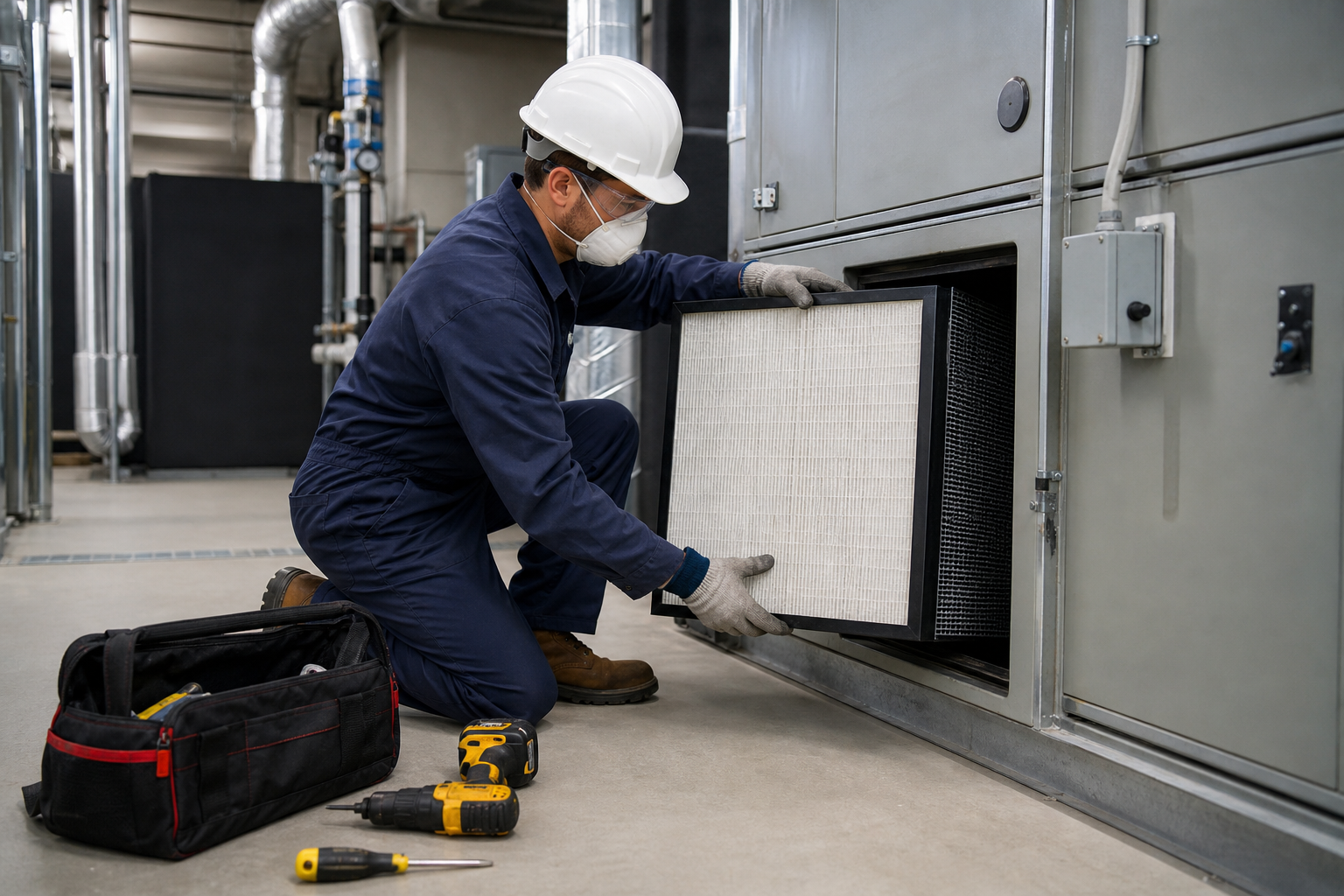
Filter upkeep supports every HEPA vacuum cleaning visit at an indoor range.
Choosing a Range Cleaning Provider
Look for OSHA and EPA training, proper hazardous waste handling, and experience with your trap type. Wynant Range Consulting serves indoor ranges across the Midwest and East Coast, including commercial, law enforcement, military, and private training facilities. Its site cites more than 75 years of combined team experience.
Frequently Asked Questions
What is HEPA vacuum cleaning for shooting ranges?
It is the use of vacuums with High-Efficiency Particulate Air filters to capture fine lead dust from range surfaces. The filters trap very small particles instead of blowing them back into the air.
Why can’t I just sweep or use a regular shop vacuum?
Sweeping and standard vacuums stir up fine lead particles and can exhaust them back into the room. A HEPA vacuum captures them instead.
What areas of an indoor range need HEPA vacuuming?
Floors, walls, baffles, traps, shooter booths, and target tracks all collect lead dust. The range and shooting area should be treated as a system.
How often should an indoor range be HEPA vacuumed?
The right frequency depends on round count, ventilation, and trap type. Busy ranges generally need more frequent cleaning, and air monitoring results can help set the schedule.
Does HEPA vacuuming replace rubber berm cleaning?
No. HEPA vacuuming handles dust on surfaces, while rubber berm cleaning processes the backstop rubber to separate lead, jacket fragments, and contaminants.
How often should HEPA filters be replaced?
Follow the equipment manufacturer’s guidance and your inspection results. Pre-filters typically need changing more often than final HEPA filters.
Is HEPA vacuum cleaning needed with steel trap systems?
Yes. Steel trap ranges still generate lead dust and fragments on floors, booths, and tracks. Trap upkeep such as oil checks and emptying is a separate task.
What happens to the lead that is collected?
Collected lead and hazardous material must be handled under applicable regulations. Qualified contractors arrange recycling or disposal.
Should air monitoring follow a cleaning?
Monitoring is a sound way to check conditions after cleaning. It gives operators data on airborne lead and supports employee safety plans.
What are common mistakes in range cleaning?
Common mistakes include dry sweeping, using non-HEPA equipment, skipping filter changes, and cleaning while the range is in use. Poor waste handling is another frequent problem.
Who provides HEPA vacuum cleaning for shooting ranges?
Specialized contractors such as Wynant Range Consulting offer HEPA vacuum cleaning of the range and shooting area for indoor rifle, pistol, and shotgun ranges in the Midwest and East Coast.
How do I schedule service?
Call (252) 764-1809 or use the contact form on the website. Hours are 9 AM to 5 PM, Monday through Saturday.
Conclusion
HEPA vacuum cleaning shooting ranges need is a core defense against lead dust, but it works best alongside filter maintenance, trap upkeep, rubber berm processing, and air monitoring. Avoid dry methods, document your schedule, and verify results with testing. To discuss your range, call (252) 764-1809 or contact Wynant Range Consulting.
