

Shooting range lead dust removal is the cleaning of lead particles from an indoor range’s floors, walls, baffles, traps, booths, and air handling system. Every shot releases fine lead and primer residue, so dust builds up quickly. Operators who control it protect staff, shooters, and the equipment that keeps the range running.
Quick answer: Effective lead dust control uses HEPA vacuuming instead of sweeping, regular trap or rubber berm cleaning, scheduled filter replacement, and air monitoring to confirm results.
What Is Shooting Range Lead Dust and Where Does It Come From?
Lead dust is a mix of tiny particles from bullets, primers, and fragments that break apart on impact. It settles on every surface and drifts through the air. Therefore, it reaches places far beyond the bullet trap.
Common sources include:
- Primer smoke and burned powder at the firing line
- Bullet impacts on steel traps and rubber berms
- Jacket and core fragments that break into fine particles
- Dust carried on clothing, boots, and equipment
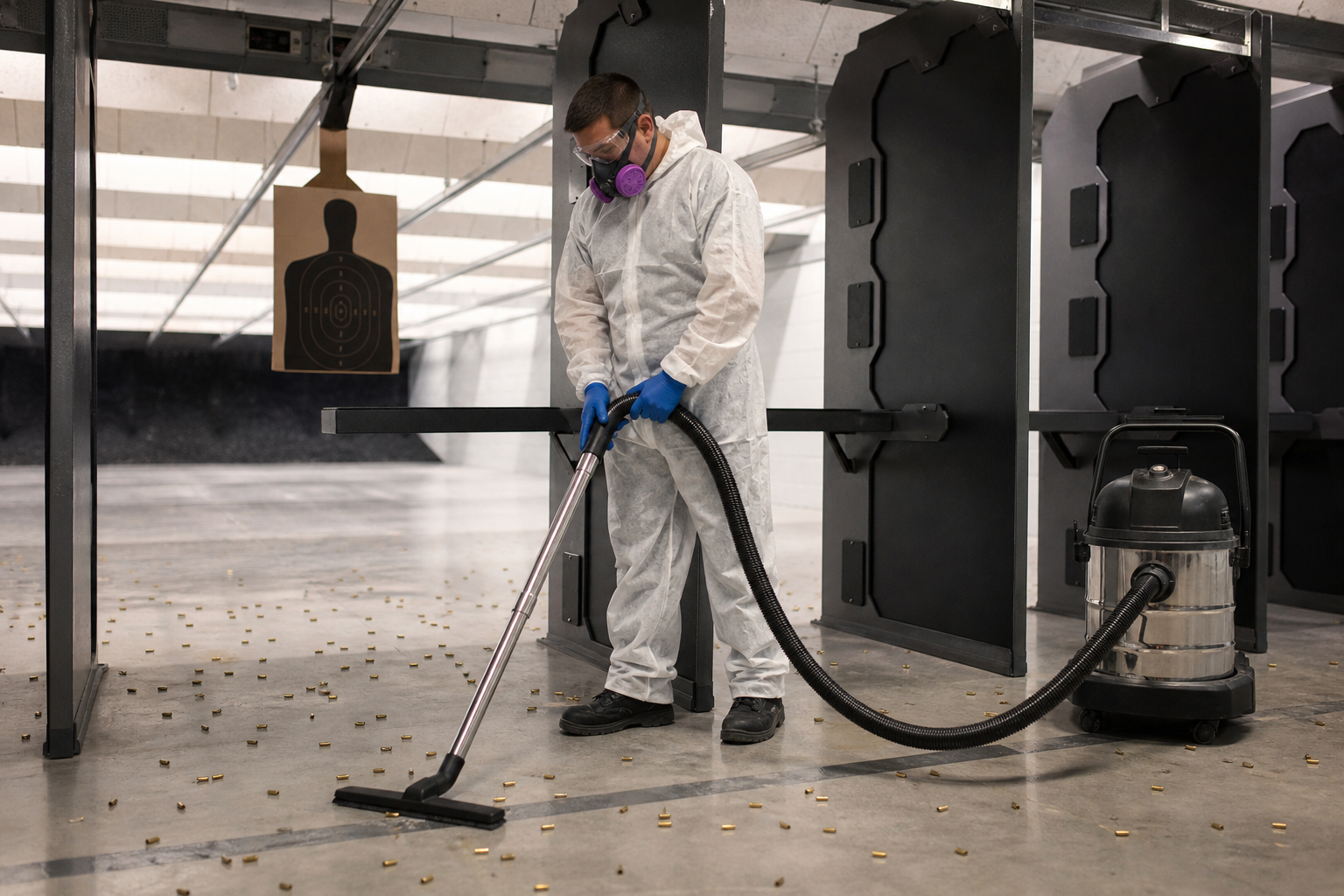
A technician handles shooting range lead dust removal with a HEPA vacuum on an indoor range floor.
Why Lead Dust Control Matters for Health and Compliance
Lead is toxic when inhaled or swallowed. The National Institute for Occupational Safety and Health provides guidance on lead exposure in workplaces, and ranges are a recognized source. Staff who clean, run lanes, or work long shifts face the greatest exposure.
In addition, regulators such as OSHA and the EPA set rules for lead in the workplace and for waste handling. Consequently, documented cleaning and monitoring help operators show due diligence. For a broader view, see this guide on managing lead at shooting ranges.
How to Remove Lead Dust From an Indoor Range Step by Step
The sequence below reflects common practice. Specific procedures vary by range design and local rules.
- Assess the range. Note dust buildup on floors, baffles, booths, and traps, and review any air monitoring results.
- Stop dry sweeping. Sweeping and compressed air push fine lead back into the air.
- HEPA vacuum every surface. Work from the top down, from baffles and walls to booths and floors.
- Service the trap system. Process the rubber berm or empty steel bullet traps and front troughs.
- Replace filters. Change pre-filters, filter bags, and HEPA filters on schedule.
- Verify with testing. Use air monitoring and exposure testing to confirm the result.
HEPA Vacuum Cleaning for Range Lead Dust
A HEPA vacuum is built to capture 99.97 percent of particles at 0.3 microns, according to the standard definition of HEPA filtration. Ordinary shop vacuums can blow fine lead through the exhaust. Therefore, HEPA equipment is the baseline for range cleanup.
Cleaning should cover the range and the shooting area, including booths, walls, baffles, and target tracks. Additional detail on scope is available in this overview of lead contamination removal services.
Rubber Berm and Steel Trap Cleaning
The trap is the largest lead reservoir on a range. How it is cleaned matters as much as how often.
Rubber berm processing
Granulated rubber berms trap bullets in rubber crumb. Over time, the rubber fills with lead, dust, and jacket fragments. Processing separates usable rubber from those contaminants, so clean rubber returns to the range and hazardous material leaves for recycling and disposal.
Wynant Range Consulting uses a patented machine for this work. The company states that it returns clean, reusable rubber rather than just the non-bullet material.
Steel trap upkeep
Steel trap systems need oil concentration checks and regular emptying of bullet traps and front troughs. Neglected traps add to dust and ricochet. For a deeper look, read the indoor range lead remediation guide.
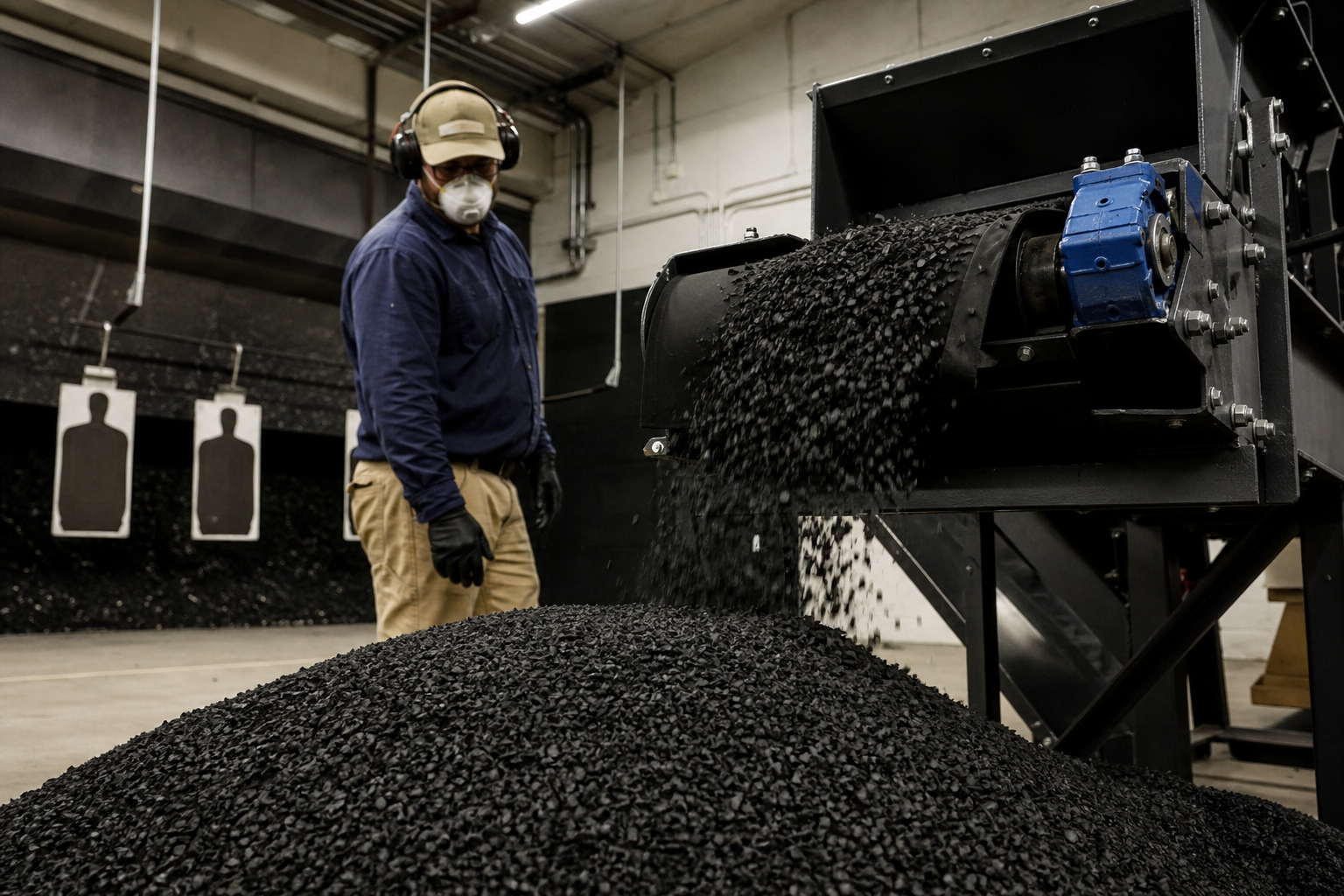
Processing rubber berm material separates lead and fines from rubber that can be reused.
Filters, Air Monitoring, and Safety Plans
Ventilation only works when filters are in good shape. Loaded pre-filters, bags, and HEPA filters reduce airflow and let dust build up. As a result, filter service should follow a schedule. This HEPA and filter bag guide covers the details.
Air monitoring and exposure testing show whether cleaning is working. A written lead exposure safety plan then sets out how employees are protected day to day.
What Happens to the Lead After Cleaning?
Recovered lead can be recycled, and other hazardous material must be disposed of under applicable rules. Operators should keep records of what was removed and where it went. If recycling is a priority, compare options in this article on lead recycling for shooting ranges.
Choosing a Range Cleaning Provider
Look for a provider that handles your trap type, uses HEPA equipment, and documents disposal. Staff training to OSHA and EPA standards matters as well. Wynant Range Consulting serves indoor rifle, pistol, and shotgun ranges in the Midwest and on the East Coast, including commercial, law enforcement, military, and private training facilities. Its team reports more than 75 years of combined experience.
To discuss your range, call (252) 764-1809 or email bwynant.roc@gmail.com. Hours are 9 AM to 5 PM, Monday through Saturday.
Frequently Asked Questions
What is shooting range lead dust removal?
It is the process of cleaning lead particles from indoor range surfaces, traps, and air systems. It typically combines HEPA vacuuming, trap or berm cleaning, and filter service.
Why is lead dust dangerous at a range?
Fine lead particles can be inhaled or swallowed, and lead exposure can harm the nervous system, kidneys, and blood. Employees and frequent shooters face the highest risk.
Can I just sweep or blow off the dust?
No. Dry sweeping and compressed air spread fine lead into the air. HEPA vacuums or wet methods are the accepted alternatives.
What is a HEPA vacuum?
A HEPA vacuum uses a high-efficiency particulate air filter rated to capture 99.97 percent of particles at 0.3 microns. This makes it suitable for fine lead dust.
How does rubber berm processing help remove lead dust?
Processing separates usable rubber from lead, dust, jacket fragments, and other contaminants. Clean rubber returns to the range, and hazardous material is removed for recycling and disposal.
Is the cleaned rubber reused in the trap?
Yes. After processing, clean rubber goes back into the berm, while contaminants are removed from the site.
What does steel trap maintenance include?
It includes checking oil concentration and emptying bullet traps and front troughs. Target track cleaning is often done at the same time.
How often should range filters be replaced?
It depends on usage and manufacturer guidance. Pressure readings and inspection results help set the schedule for pre-filters, filter bags, and HEPA filters.
What is air monitoring at a shooting range?
Air monitoring measures airborne lead levels in work areas. Results show whether controls are working and whether further action is needed.
What is a lead exposure safety plan?
It is a written plan covering how employees are protected from lead, including cleaning practices, testing, and hygiene procedures.
How are lead and hazardous materials handled after cleaning?
Recovered lead is sent for recycling, and other hazardous material is disposed of under applicable regulations. Operators should keep documentation of the process.
Which areas does Wynant Range Consulting serve?
The company serves indoor rifle, pistol, and shotgun ranges across the Midwest and East Coast. Call (252) 764-1809 to discuss your range.
Conclusion
Shooting range lead dust removal works best as a routine, not a one-time event. HEPA cleaning, trap or berm service, timely filter changes, and air monitoring each close a different gap. Together they protect people and keep the range compliant and operational. To plan a cleaning program, contact Wynant Range Consulting for a conversation about your range.
