

Indoor shooting range lead remediation is the process of removing, containing, and safely disposing of lead dust, bullet fragments, and other contaminants that build up inside rifle, pistol, and shotgun ranges. Every round fired adds microscopic lead particles to the air, floors, walls, and backstop material. Without a consistent remediation program, that lead accumulates and creates serious health risks for shooters, instructors, and range staff.
As a result, operators of commercial ranges, law enforcement facilities, military ranges, and private training centers are held to tight compliance standards. According to the Occupational Safety and Health Administration, lead exposure in poorly ventilated indoor ranges remains one of the most common occupational hazards tied to firearms training facilities.
Direct answer: Indoor shooting range lead remediation combines HEPA vacuum cleaning, rubber berm or steel trap processing, lead recycling, and air monitoring to bring lead dust levels back within safe, OSHA-compliant limits.
What Is Indoor Shooting Range Lead Remediation?
In short, it is a structured service that targets every surface where lead collects: the backstop, floors, walls, baffles, and ventilation system. Unlike a basic sweep-and-vacuum visit, true remediation processes the backstop material itself, whether that is a granulated rubber berm or a steel trap, so trapped lead does not keep recirculating into the air.
Specifically, the work addresses two problems at once. First, it removes existing contamination that has already settled into rubber, steel, dust, and soil. Second, it restores the range’s ability to safely absorb future rounds, which reduces ricochet and ongoing dust generation during live fire.
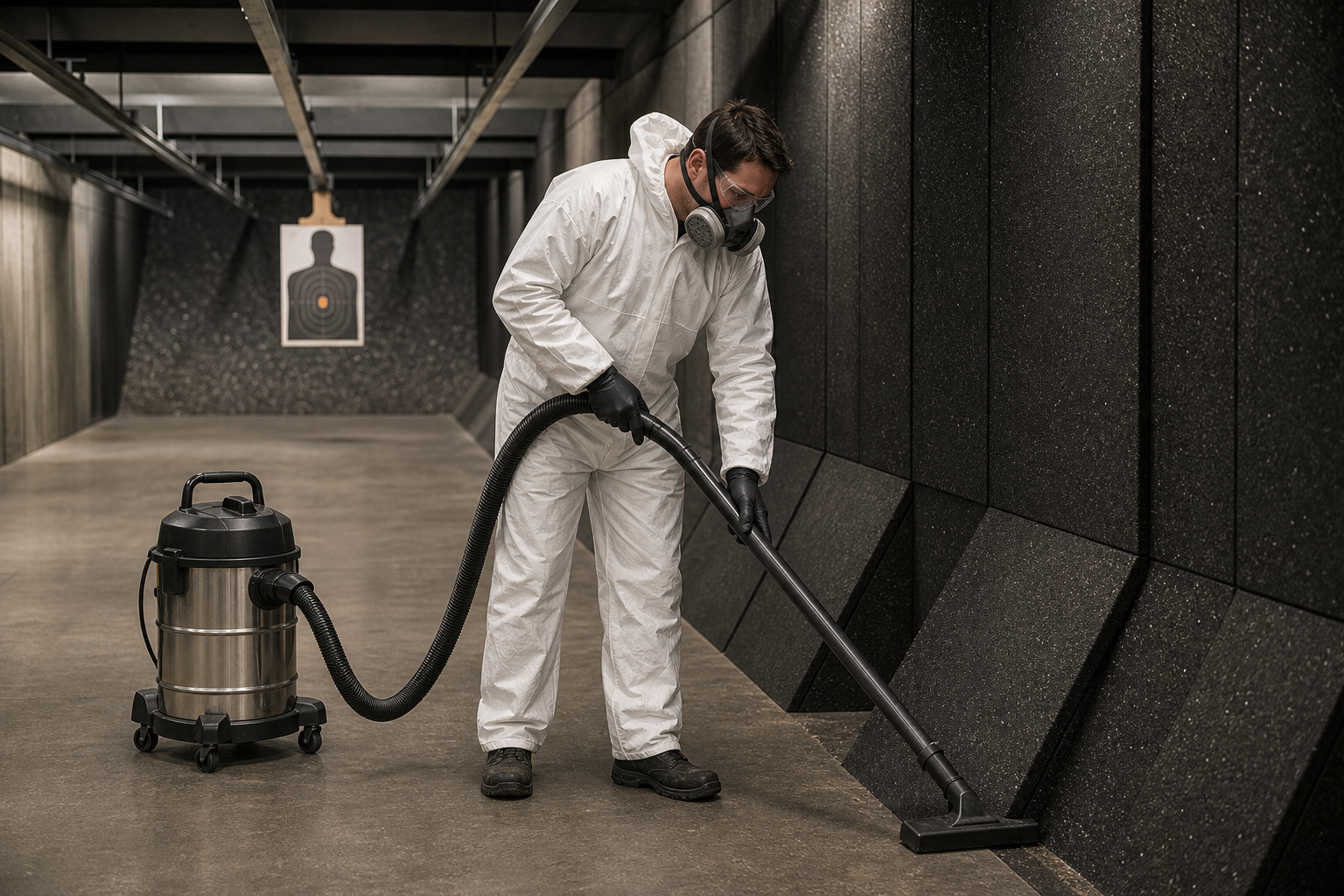
Careful HEPA vacuum work is a core part of any indoor shooting range lead remediation visit.
Why Lead Hazard Reduction Matters for Indoor Ranges
Lead exposure builds gradually, which makes it easy to underestimate. However, repeated exposure to airborne lead dust can cause elevated blood lead levels, and according to the Wikipedia entry on lead poisoning, even moderate chronic exposure is linked to neurological and cardiovascular effects over time.
For this reason, regulators treat indoor ranges as a distinct exposure category. The U.S. Centers for Disease Control’s NIOSH firing range program notes that poor ventilation combined with infrequent cleaning is a leading contributor to elevated employee blood lead readings at indoor facilities. Consistent lead hazard reduction work directly addresses that root cause rather than just the symptoms.
In addition, insurers and compliance auditors increasingly request documented remediation and air monitoring records. A facility that can show a regular service history is in a far stronger position during inspections than one relying on occasional in-house cleaning.
How Rubber Berm Processing Supports Lead Remediation
Rubber berm backstops, also known as granulated rubber backstops, catch bullets in loose rubber chips designed to absorb impact without excessive ricochet. Over months of use, however, lead, dust, and jacket fragments work their way deep into the rubber. Simply skimming the surface leaves most of that material in place.
A dedicated processing machine changes that equation. The granulated rubber is fed through equipment that separates clean rubber from lead, dust, and fragments, instead of just sifting the top layer. Wynant Range Consulting uses a patented machine developed with an engineer specifically for this task, which the company says recovers more lead than typical skim-cleaning methods and reduces the range’s overall downtime. You can see the process in more detail on the rubber berm cleaning page.
Afterward, the clean rubber goes straight back into the berm, so the range keeps its original cushioning without a full rubber replacement. The hazardous material removed during this step is then staged for lead recycling and disposal.
Steel Trap Maintenance and Lead Recycling
Steel trap ranges face a related, slightly different problem. Rounds strike angled steel plates and drop into a collection trough, where oil concentration and bullet fragment buildup both need regular attention. If oil levels run too low, fragments can spark or cause excessive wear on the trap surface.
Consequently, steel trap maintenance checks oil concentration, empties bullet fragments from the trap, and clears the front trough of accumulated debris. Similarly to rubber berm processing, the goal is removing contamination while keeping the trap functional for the next training session.
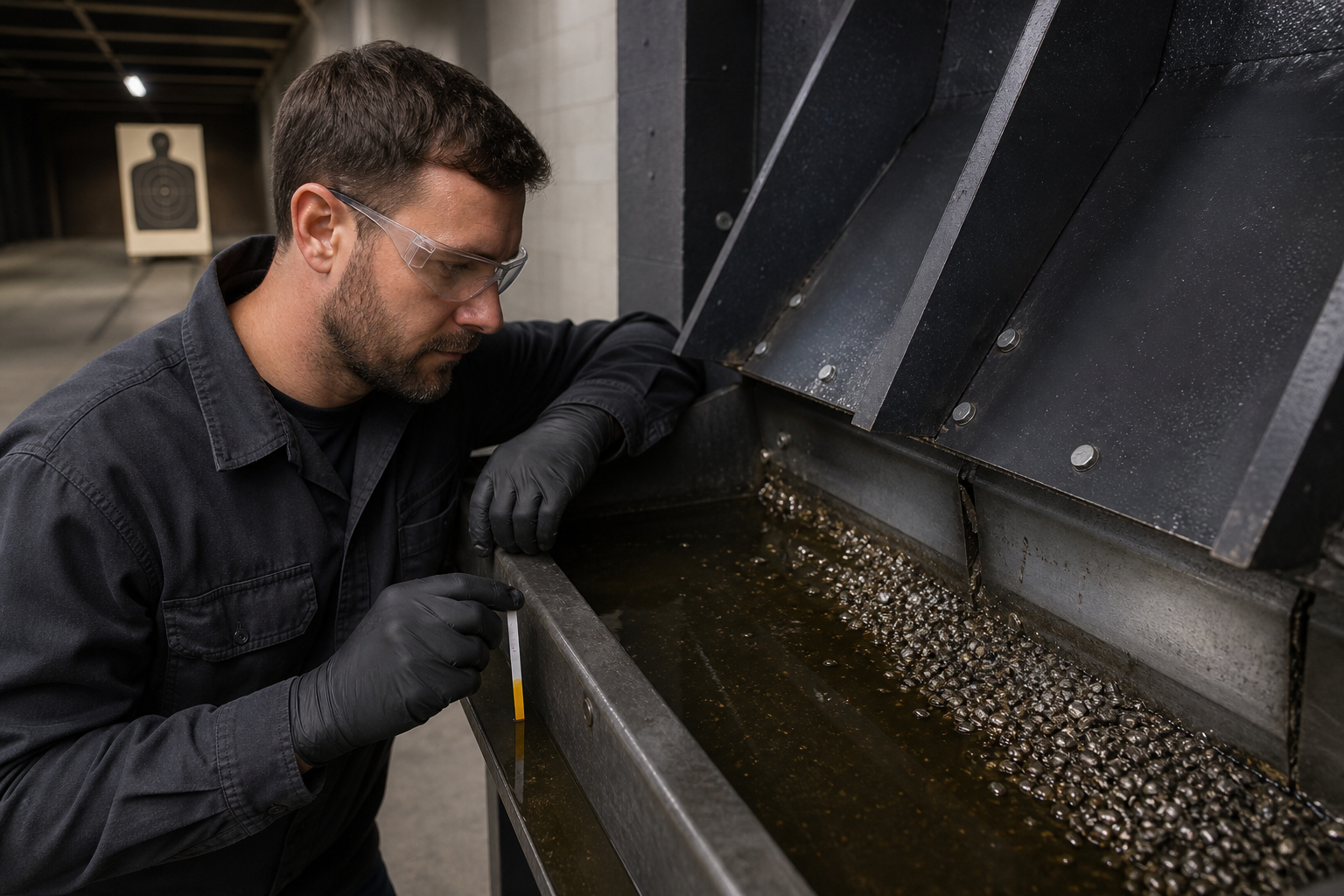
Routine steel trap maintenance keeps traps functioning safely between service visits.
Once collected, recovered lead from either backstop type moves into recycling channels rather than a landfill. Reclaimed lead is sorted, packaged, and sent to licensed smelters for reprocessing, which supports both compliance and sustainability goals. Indoor lead mining and soil remediation extend this same principle to older ranges where lead has migrated into subsurface soil beneath the firing line.
HEPA Filtration and Air Monitoring for Lead Exposure Control
Backstop processing handles the heaviest contamination, but airborne dust still needs separate attention. HEPA vacuum cleaning of the range and shooting area removes settled dust from floors, walls, target tracks, and shooter’s booths that ordinary cleaning tools would simply stir back into the air.
Equally important, the ventilation system itself needs scheduled attention. HEPA filter, filter bag, and pre-filter replacement keeps airflow moving contaminated air away from shooters instead of recirculating it. A clogged filter not only raises lead exposure risk but also reduces ventilation efficiency across the whole range.
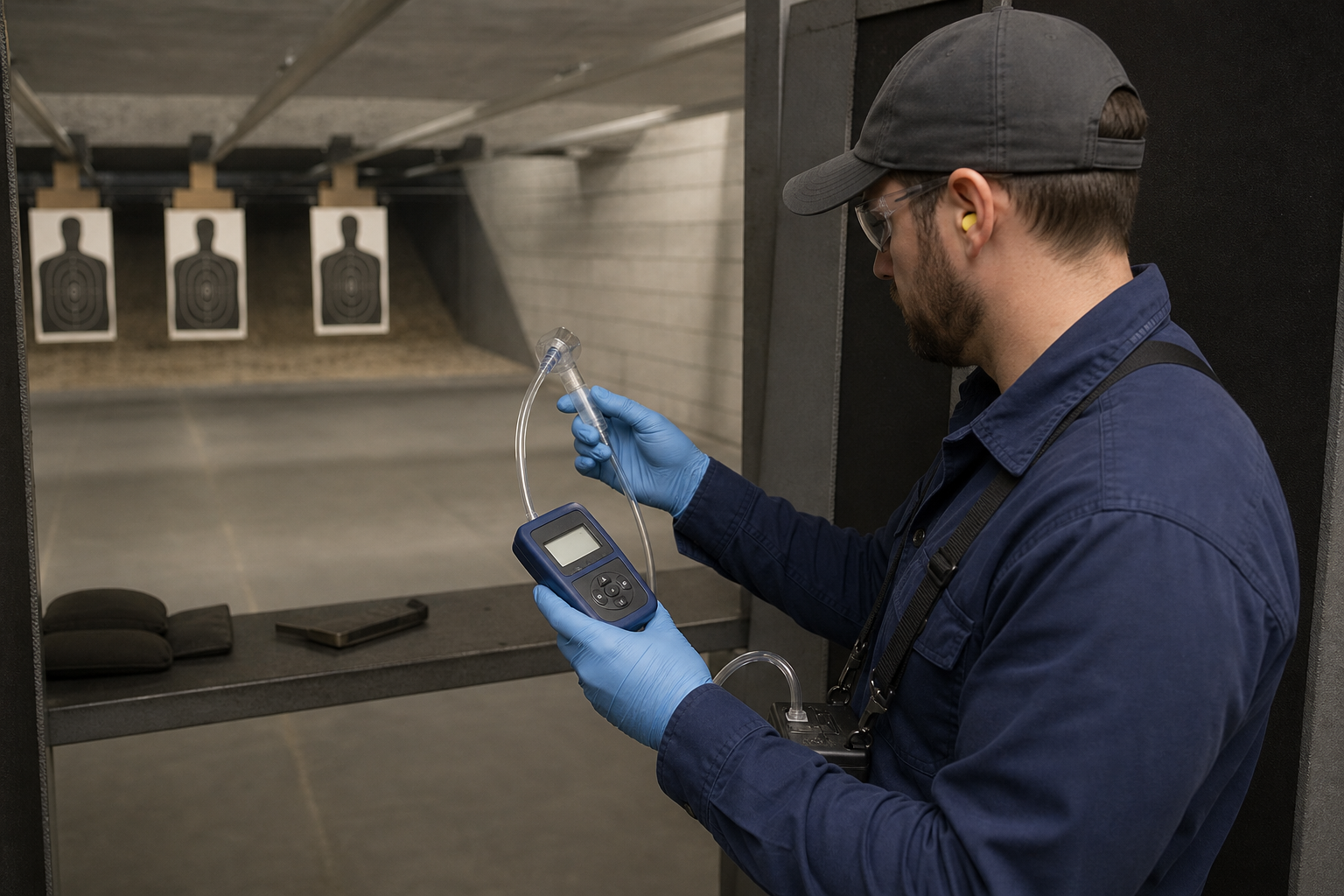
Air monitoring confirms whether lead levels meet OSHA exposure limits after cleaning.
Finally, air monitoring and exposure testing close the loop. Measuring airborne lead before and after a remediation visit confirms whether the work actually brought concentrations back within OSHA permissible exposure limits, and it gives management documented proof for an employee lead exposure safety plan.
Step-by-Step Lead Remediation Process
While every range differs slightly in layout and backstop type, a thorough remediation visit generally follows the same sequence from start to finish.
- Assess and test: Conduct a site walkthrough and baseline air monitoring to measure existing lead dust levels before any cleaning equipment enters the range.
- HEPA vacuum the range: Clean floors, walls, baffles, shooter’s booths, and target tracks with HEPA-filtered equipment so dust is captured, not redistributed.
- Process the backstop: Run rubber berm material through a processing machine, or empty and inspect steel traps and front troughs, separating lead from reusable material.
- Recycle recovered lead: Package lead, jacket fragments, and dust for transport to a licensed recycling facility, following EPA hazardous waste handling requirements.
- Replace filters and retest air: Swap HEPA filters, filter bags, and pre-filters, then run a final air monitoring pass to confirm compliance.
Watch the full remediation workflow in action on the video gallery page, which shows rubber processing and range cleaning side by side.
Choosing a Lead Contamination Control Partner for Your Range
Not every cleaning crew is equipped to handle hazardous lead waste safely. Therefore, it helps to compare providers on a few specific points before signing a service agreement.
| What to Check | Why It Matters |
|---|---|
| OSHA/EPA training | Confirms staff know exposure limits and waste handling rules |
| Backstop processing method | Determines how much lead is actually removed from the berm or trap |
| Air monitoring included | Provides documented proof of post-service lead levels |
| Filter and target track service | Prevents gaps between major remediation visits |
Wynant Range Consulting (WRC) covers each of these points for commercial ranges, law enforcement facilities, military ranges, and private training centers across the Midwest and East Coast. The team cites over 75 years of combined experience, a patented rubber processing machine, OSHA and EPA certified staff, and full-service range cleaning covering floors, walls, baffles, traps, and shooter’s booths.
For a closer look at service options and scheduling, visit the Wynant Range Consulting homepage or call (252) 764-1809 during business hours, 9 AM to 5 PM, Monday through Saturday.
Frequently Asked Questions
What is indoor shooting range lead remediation?
Indoor shooting range lead remediation is the process of removing, containing, and disposing of lead dust and fragments that build up from fired rounds. It includes cleaning floors, walls, baffles, traps, and processing rubber berm or steel backstop material.
How often should an indoor range schedule lead remediation service?
Most indoor ranges need remediation service every three to six months, depending on round count. High-volume law enforcement and military ranges often require monthly or quarterly service.
What is the difference between rubber berm cleaning and standard lead removal?
Standard lead removal typically skims bullet fragments off the surface and leaves most rubber in place. Rubber berm cleaning processes the entire granulated backstop through a machine that separates clean rubber from lead dust and jacket fragments.
Is the rubber recovered during remediation reused in the trap?
Yes. After processing, clean granulated rubber goes back into the berm so the range keeps its ricochet-absorbing backstop without buying full replacement rubber.
How is recovered lead recycled or disposed of?
Recovered lead is sorted, packaged, and shipped to licensed smelters or recycling facilities for reprocessing into new lead products. Disposal follows EPA hazardous waste handling requirements.
What does steel trap system maintenance include?
Steel trap maintenance includes checking oil concentration on the trap surface, emptying accumulated bullet fragments and dust from the front trough, and inspecting the trap for wear or damage.
How often should HEPA filters and filter bags be replaced?
Replacement frequency depends on round volume and airflow, but most ranges replace pre-filters monthly and HEPA filters every three to twelve months. Pressure-drop readings on the ventilation system help confirm the right schedule.
Do you provide air monitoring and lead exposure testing?
Yes. Air monitoring and exposure testing measure airborne lead concentrations during live-fire use and compare results against OSHA permissible exposure limits for range employees.
How much does indoor shooting range lead remediation typically cost?
Cost varies with range size, backstop type, and round volume, so pricing is usually quoted per visit after a site assessment. Ranges that schedule regular service generally spend less per visit than those addressing years of buildup at once.
What OSHA and EPA standards apply to range lead exposure?
OSHA sets permissible exposure limits and blood lead level action triggers for range employees, while EPA regulates lead waste handling, recycling, and soil contamination cleanup. Staff performing remediation should be trained to both standards.
Which areas does Wynant Range Consulting serve?
Wynant Range Consulting serves indoor rifle, pistol, and shotgun ranges across the Midwest and East Coast, including commercial ranges, law enforcement facilities, military ranges, and private training centers.
What are common mistakes ranges make with lead cleanup?
Common mistakes include dry sweeping instead of HEPA vacuuming, skipping filter replacement schedules, and never processing the rubber berm, which leaves lead dust trapped inside the backstop.
How long does a full range cleaning and remediation service take?
A full service visit usually takes one to three days depending on range size and whether rubber berm processing or soil remediation is included. Smaller single-lane ranges can often be completed in a single day.
Can lead remediation reduce ricochet and dust during shooting?
Yes. Removing dense lead and jacket fragments from rubber berm or steel traps restores the backstop’s intended cushioning, which lowers ricochet risk and reduces airborne dust generated by each shot.
Final Thoughts on Lead Remediation
Ultimately, indoor shooting range lead remediation is not a one-time cleanup, but an ongoing program that protects shooters, staff, and the surrounding facility. Processing the rubber berm or steel trap, recycling recovered lead, maintaining HEPA filtration, and running air monitoring together keep exposure levels low and the range operating safely.
In summary, ranges that treat remediation as routine maintenance, rather than an occasional emergency fix, avoid both compliance headaches and costly backstop replacement. For a site assessment or to discuss a tailored lead exposure safety plan, reach out to the Wynant Range Consulting team at (252) 764-1809 or bwynant.roc@gmail.com.
