

Lead reclamation services are specialized industrial processes that recover, separate, and recycle lead from indoor firing ranges, keeping rubber berms, steel traps, and air systems safe for shooters and staff. Because indoor ranges concentrate lead dust and bullet fragments in a confined space, regular reclamation work is not optional maintenance; it is a core part of running a compliant, safe facility. Many commercial ranges, law enforcement facilities, and training centers now rely on dedicated teams rather than in-house sweeping to handle this work properly.
Direct answer:
Lead reclamation services remove and separate lead, dust, and jacket fragments from rubber berms, steel traps, floors, and air systems at indoor ranges, then send the recovered lead for recycling while returning cleaned rubber or restoring trap components for continued use.
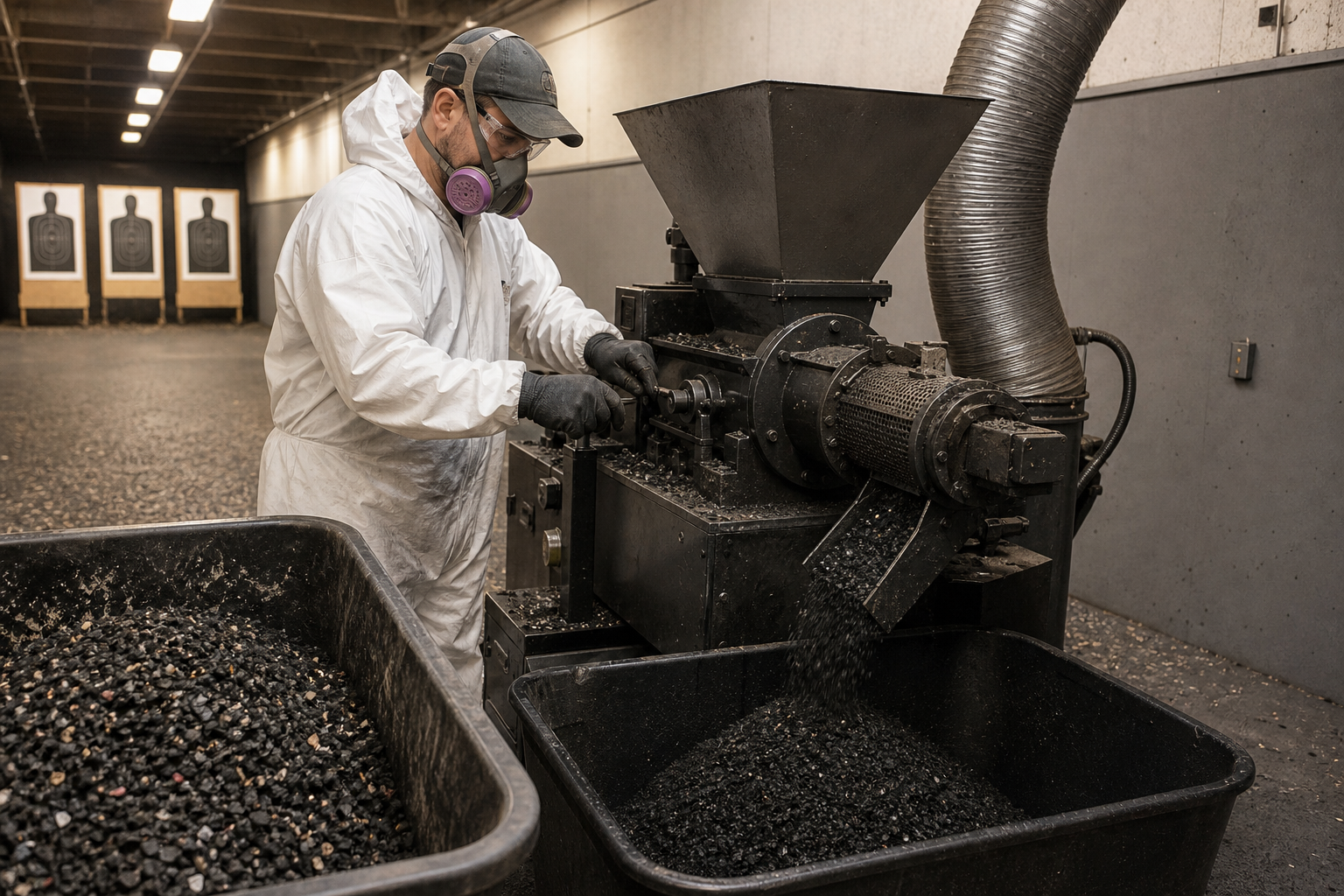
Lead reclamation services use dedicated equipment to separate lead from granulated rubber before it returns to the berm.
What Is Lead Recovery?
Lead reclamation services describe the combined work of extracting lead from range surfaces and backstops, sorting it from other debris, and routing it toward recycling instead of landfill disposal. In practice, this covers rubber berm processing, steel trap cleanout, floor and wall vacuuming, and sometimes soil remediation around outdoor-adjacent areas.
For indoor ranges specifically, the term also includes what some call indoor lead mining, meaning the systematic recovery of lead that has built up over months or years of use. Consequently, a thorough service goes beyond cosmetic cleaning and treats lead as a hazardous material that must be tracked, separated, and disposed of correctly.
Because lead exposure risk rises with accumulation, ranges that delay reclamation often see higher dust levels, more ricochet, and increased compliance risk. In contrast, ranges on a consistent schedule tend to report cleaner air and fewer maintenance surprises.
Why Lead Recycling and Recovery Matter for Indoor Ranges
Indoor ranges trap lead dust in a way outdoor ranges do not, since bullets strike a backstop just feet from shooters and staff. As a result, lead recycling and recovery are not just environmental concerns; they directly affect employee and customer health inside the building.
According to the Occupational Safety and Health Administration, workplace lead exposure is regulated because even low-level, repeated exposure can accumulate in the body over time. For this reason, agencies such as the Occupational Safety and Health Administration and the Environmental Protection Agency publish guidance on handling and disposing of lead-contaminated materials.
Beyond compliance, lead recovery also has a practical upside. Specifically, reclaimed lead has resale value when it is properly separated and sent to certified recyclers, which can help offset the cost of regular range maintenance.
How the Lead Reclamation Process Works
While exact steps vary by trap type, most lead reclamation services follow a similar sequence from assessment through final verification. Below is the general process used on rubber berm and steel trap ranges.
- Assess the range and trap system. A technician inspects the rubber berm or steel trap, floors, baffles, and shooter booths to estimate lead accumulation and plan the cleaning approach.
- Process the rubber berm material. Granulated rubber is run through a processing machine that separates usable rubber from lead, dust, and jacket fragments before clean rubber is returned to the berm.
- Service the steel trap and troughs. Technicians check oil concentration on the trap face, empty bullet traps and front troughs, and remove accumulated lead fragments from the catch areas.
- HEPA vacuum the range and shooting area. Floors, walls, target tracks, and shooter booths are cleaned with HEPA-filtered vacuum equipment to remove fine lead dust without redistributing it into the air.
- Recycle recovered lead and verify air quality. Reclaimed lead and contaminated debris are sent for recycling, filters are replaced as needed, and air monitoring confirms exposure levels before the range reopens.
Notably, steps two and three are where equipment quality matters most. A machine that only skims surface debris leaves far more lead behind than one engineered to process rubber thoroughly.
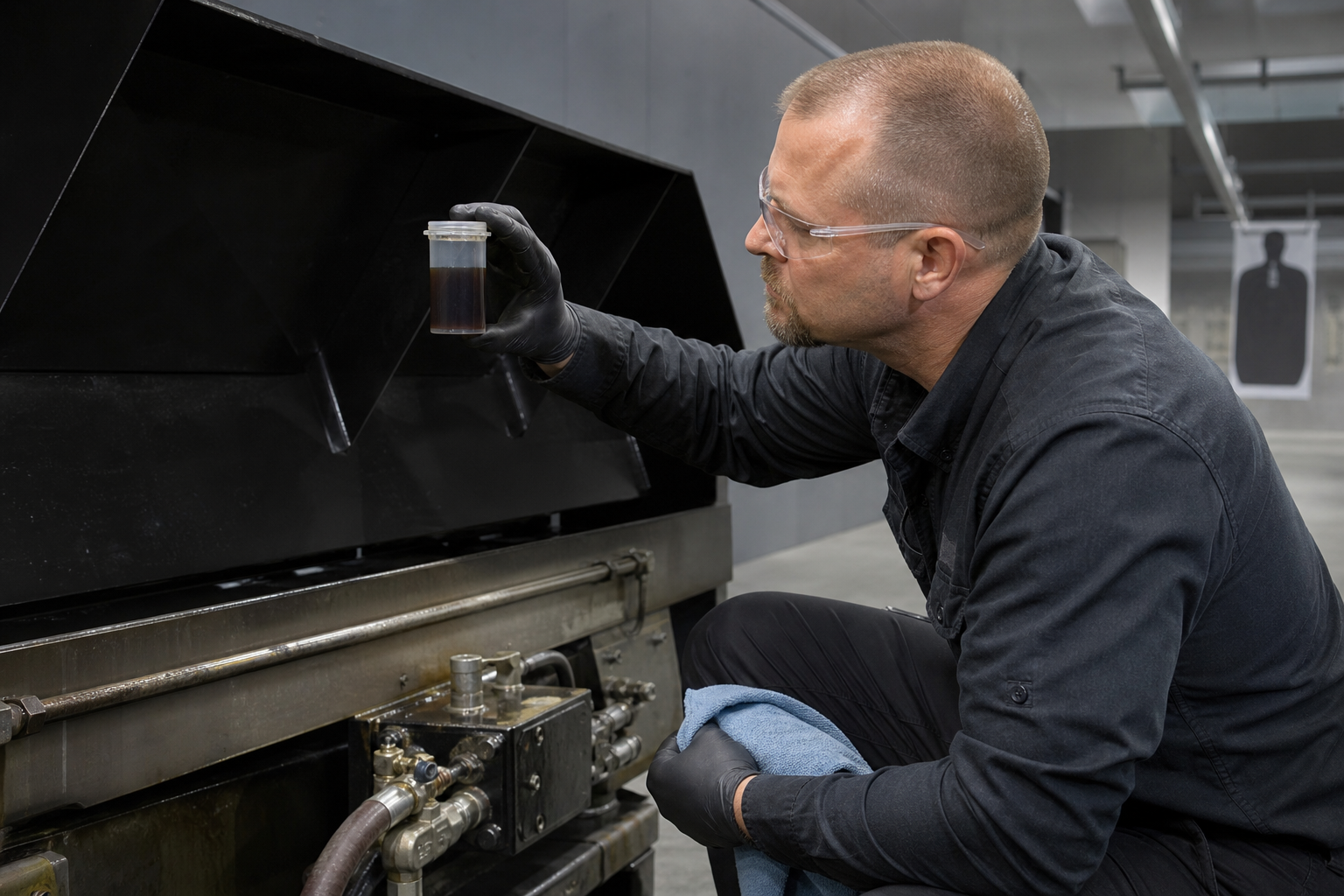
Steel trap maintenance, including oil checks and trough cleanouts, is a core part of complete lead reclamation services.
Rubber Berm Processing vs. Standard Lead Removal
Standard lead removal often means scooping visible debris out of a rubber berm and calling the job done. However, this leaves fine lead particles, dust, and jacket fragments trapped inside the rubber granules, where they continue shedding contaminants into the air every time a bullet strikes the backstop.
Processing the rubber instead means running it through equipment built to separate rubber from lead at a granular level. Clean rubber then goes back into the berm, while the hazardous material moves toward recycling and disposal channels designed for lead.
This distinction explains why some providers, including Wynant Range Consulting, developed purpose-built processing equipment rather than relying on generic vacuuming alone. The approach is designed to recover more lead per visit and reduce how often a range needs to shut down for deep cleaning.
Steel Trap Maintenance and Lead Recovery Services
Steel trap ranges rely on a curved or angled plate to catch and redirect bullets into a collection trough. Over time, lead buildup on the trap surface changes how bullets deflect, which can increase splash-back toward the firing line.
Routine lead recovery services for steel traps typically include checking oil concentration on the trap face, since the right oil film helps control dust and reduce wear. In addition, technicians regularly empty bullet traps and front troughs so accumulated lead does not interfere with bullet capture.
Target track cleaning is often bundled into the same visit, since tracks and pulley systems collect lead dust just like the rest of the range. Addressing all of these areas together, rather than one at a time, tends to be more efficient for range operators.
Air Monitoring, Exposure Testing, and Lead Safety Plans
Physical cleaning answers part of the lead exposure question, but air quality data closes the loop. Air monitoring measures airborne lead concentration during live-fire use, while exposure testing can track lead levels in staff over time.
Together, this data supports a written lead exposure safety plan that outlines protective equipment, hygiene practices, and monitoring schedules for employees who work on or near the firing line. For reference, the National Institute for Occupational Safety and Health publishes guidance on recognizing and managing occupational lead exposure.
Facilities that pair cleaning with monitoring generally catch problems earlier. As a result, they can adjust ventilation, filter replacement schedules, or cleaning frequency before exposure levels become a compliance issue.
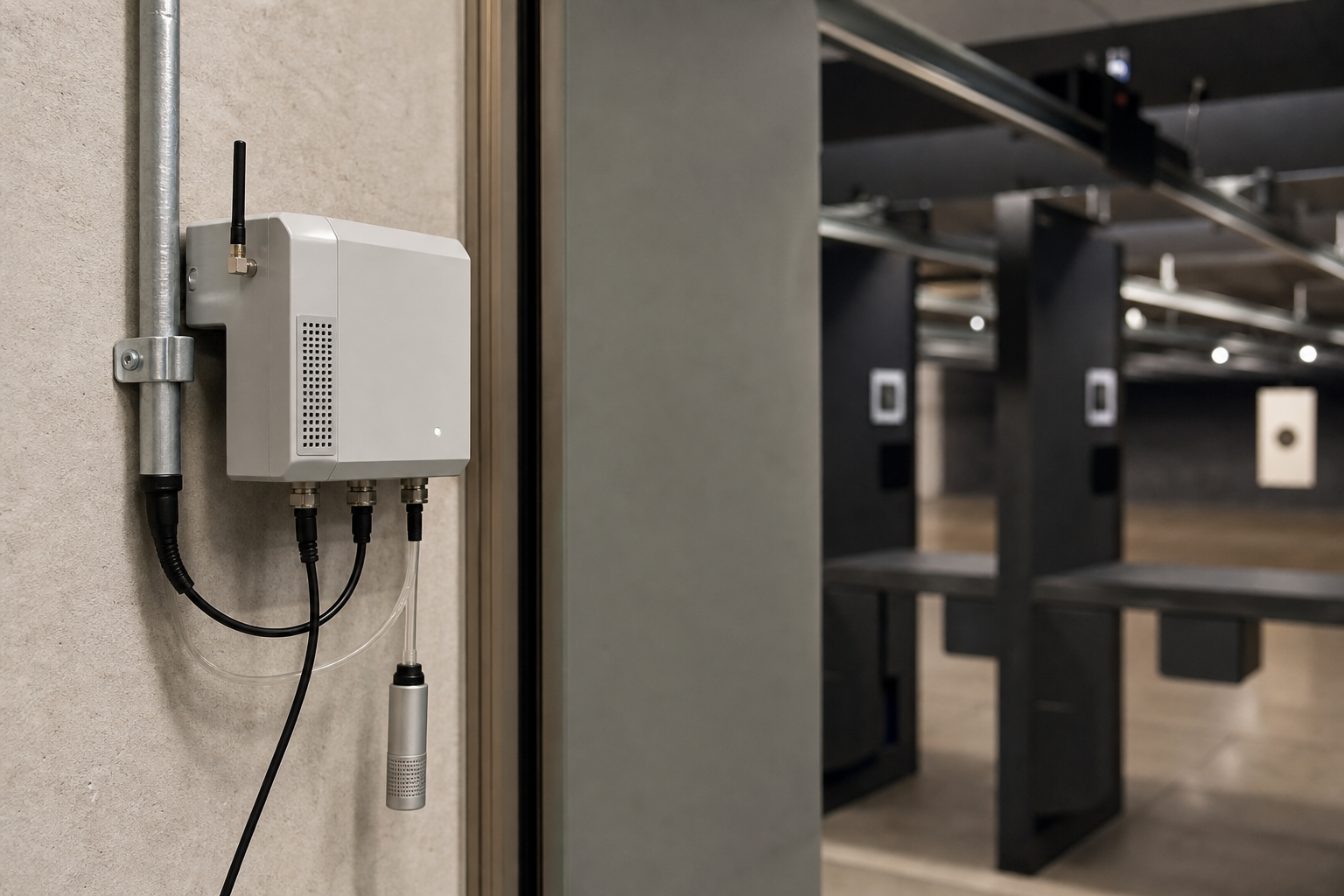
Air monitoring data helps verify that lead reclamation services are keeping exposure levels within safe limits.
Choosing the Right Lead Reclamation Services Provider
Not every cleaning crew is equipped to handle lead properly, so range operators should ask specific questions before hiring a provider. In particular, it helps to confirm how rubber berm material is processed, where recovered lead goes, and whether staff hold OSHA and EPA-related training.
Wynant Range Consulting works with indoor rifle, pistol, and shotgun ranges across the Midwest and East Coast, including commercial ranges, law enforcement facilities, military ranges, and private training centers. The team brings over 75 years of combined experience and uses a patented machine, developed with an engineer, to separate usable rubber from lead, dust, and jacket fragments rather than simply screening out larger debris.
You can review examples of the rubber berm cleaning process, see equipment in action on video, or browse the full range cleaning service list to compare against current maintenance routines. For a broader look at available services, visit wynantrangeconsulting.com directly.
Frequently Asked Questions About Lead Reclamation Services
What are lead reclamation services?
Lead reclamation services are specialized processes that recover lead from indoor firing range backstops, traps, floors, and air systems, then separate it for recycling. The goal is to reduce airborne and surface lead hazards while recovering value from the reclaimed material.
How do lead reclamation services differ from simply removing lead?
Simple removal often just scoops out visible debris, leaving fine lead dust embedded in rubber or soil. True lead reclamation services process the material through screening or washing equipment to separate lead from rubber, dust, and jacket fragments at a much finer level.
Is the rubber from a rubber berm reused after lead reclamation?
Yes, cleaned rubber from a properly processed berm is returned to the range for continued use as a backstop. Only the contaminated lead, dust, and fragments are removed for recycling and disposal.
How often should indoor ranges schedule lead reclamation services?
Frequency depends on round count, caliber mix, and range type, but many facilities schedule reclamation every six to twelve months. High-volume law enforcement or training ranges may need service more often to control dust buildup and ricochet risk.
What happens to the lead that is recovered during reclamation?
Recovered lead is separated from debris and sent to certified recycling facilities rather than landfilled. This supports both environmental compliance and the recovery of a reusable commodity.
How much do lead reclamation services typically cost?
Cost varies with range size, trap type, rubber berm volume, and how long it has been since the last cleaning. Most providers quote after an on-site assessment of the backstop, trap system, and overall lead accumulation.
What does steel trap maintenance include during lead reclamation?
Steel trap maintenance typically includes checking oil concentration on the trap surface, emptying bullet traps and front troughs, and clearing accumulated lead fragments. Regular upkeep reduces splash-back and extends the life of the trap.
How often should HEPA filters and filter bags be replaced?
HEPA filters, filter bags, and pre-filters should be inspected regularly and replaced based on airflow resistance and usage, often every few months for busy ranges. Delayed replacement reduces ventilation effectiveness and can raise airborne lead levels.
Do lead reclamation services include air monitoring and exposure testing?
Many full-service providers pair physical cleaning with air monitoring and exposure testing to confirm lead levels are within safe limits. This data also supports written lead exposure safety plans for employees.
What are common mistakes ranges make with lead management?
Common mistakes include skipping scheduled cleanings, using dry sweeping instead of HEPA vacuuming, and ignoring filter replacement schedules. These shortcuts allow lead dust to accumulate and increase exposure risk for staff and shooters.
What safety standards govern lead reclamation services?
Lead reclamation services are generally performed in line with OSHA workplace exposure limits and EPA guidance on lead handling and disposal. Qualified technicians are trained and certified to these standards before working on live ranges.
Which areas does Wynant Range Consulting serve for lead reclamation services?
Wynant Range Consulting serves indoor rifle, pistol, and shotgun ranges throughout the Midwest and East Coast, including commercial ranges, law enforcement facilities, military ranges, and private training centers.
How can I schedule lead reclamation services for my range?
Most ranges start with a call or contact form request to discuss trap type, rubber berm size, and current cleaning history. From there, a provider can recommend a cleaning and maintenance schedule tailored to the facility, and the team at (252) 764-1809 or bwynant.roc@gmail.com is available Monday through Saturday, 9 AM to 5 PM.
Final Thoughts on Lead Reclamation Services
Ultimately, lead reclamation services protect people first and equipment second, reducing dust, ricochet, and long-term exposure risk inside indoor ranges. Whether a facility runs a rubber berm, a steel trap, or both, consistent processing, recycling, and monitoring keep the range operating safely and in line with OSHA and EPA expectations.
Because every range has a different trap type, round count, and layout, it is worth working with a provider that understands rubber berm processing, steel trap upkeep, and air quality together rather than treating them as separate jobs. Reach out to discuss a lead reclamation schedule that fits your facility’s specific needs.
