

Rubber berm maintenance is the routine process of inspecting, processing, and restoring the granulated rubber backstop that catches rounds inside an indoor shooting range. Without it, lead dust, jacket fragments, and bullet debris build up inside the rubber until the berm stops absorbing impacts cleanly and starts throwing dangerous ricochet back toward shooters. As a result, range owners who skip this work often face higher lead exposure readings, slower trap performance, and costly compliance problems down the line. This guide walks through what proper rubber berm maintenance involves, how often it should happen, and why the process matters for every commercial range, law enforcement facility, and private training center.
What Is Rubber Berm Maintenance?
Rubber berm maintenance refers to the scheduled cleaning, processing, and repair of a granulated rubber backstop so it continues capturing bullets safely while limiting airborne lead. In short, it combines mechanical rubber processing, lead recovery, HEPA vacuuming, and periodic hardware checks into one ongoing program rather than a single cleanup.
Specifically, the rubber itself is run through equipment that separates usable granulated rubber from lead, dust, and copper jacket fragments. Consequently, the clean rubber goes back into the berm, while the hazardous material is set aside for lead recycling and disposal. This is quite different from simply skimming the surface of a berm, which leaves most of the fine dust trapped deep inside the granules.
Why Regular Rubber Berm Upkeep Protects Your Range
Indoor ranges are enclosed spaces, so lead dust that isn’t removed simply recirculates. Over time, this dust settles on floors, walls, and equipment, which raises exposure risk for both staff and shooters. Therefore, consistent rubber berm upkeep is less about appearance and more about controlling a known health hazard.
In particular, the Occupational Safety and Health Administration (OSHA) sets a permissible exposure limit for airborne lead at 50 micrograms per cubic meter of air, averaged over an eight-hour shift, with an action level of 30 micrograms triggering additional monitoring. For this reason, ranges that neglect berm servicing can quietly drift toward unsafe readings long before anyone notices a visible problem.
Beyond compliance, a well-maintained berm also performs better mechanically. Clean, properly graded rubber absorbs rounds more evenly, which reduces ricochet and extends the life of the backstop between full replacements.
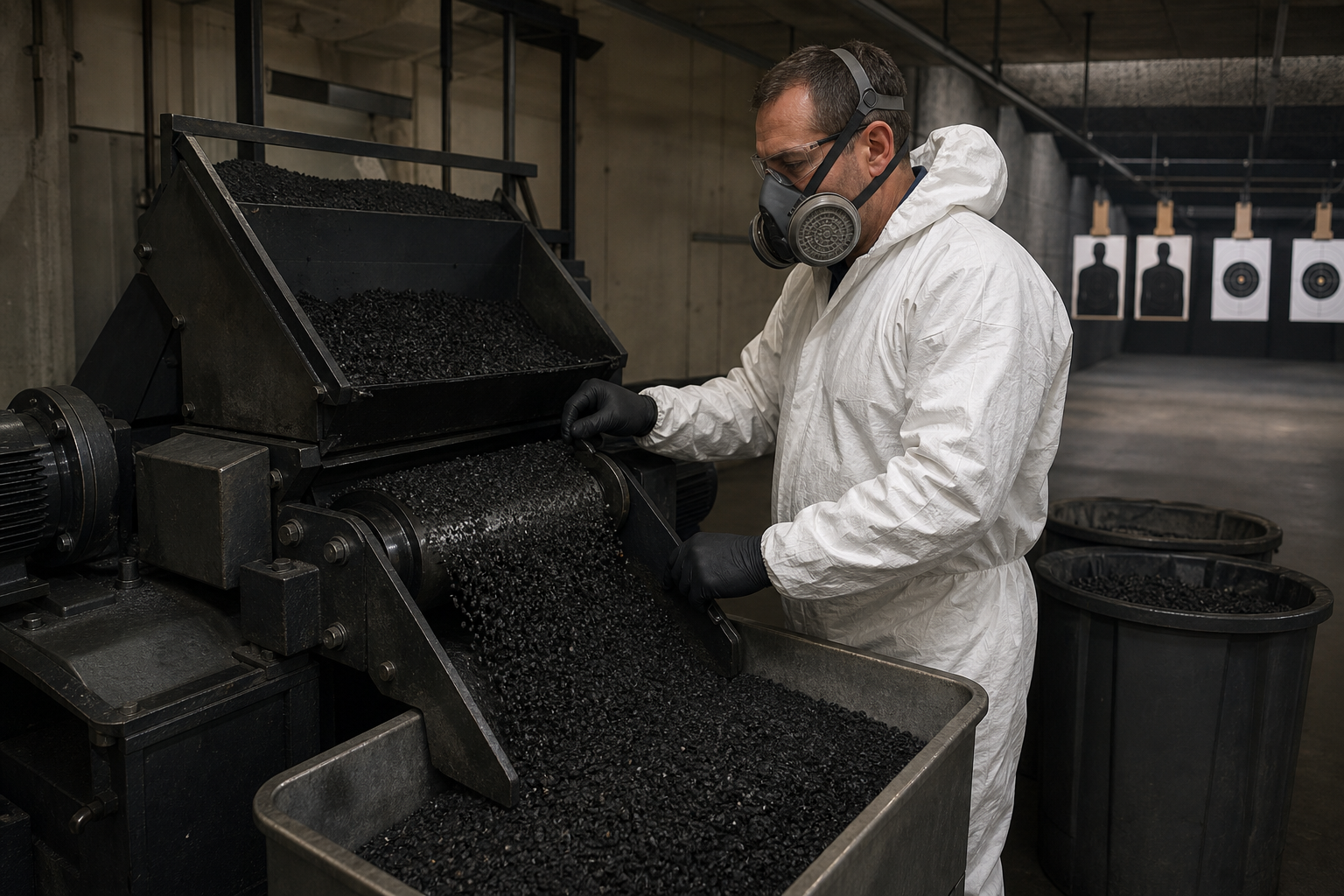
Rubber berm maintenance relies on processing equipment that separates usable rubber from lead and debris.
The Core Steps in a Rubber Berm Maintenance Program
Although every range differs slightly in size and layout, a thorough rubber berm maintenance visit generally follows the same sequence. The steps below outline what a trained crew typically completes during a service call.
- Inspect the berm and trap. Technicians inspect the rubber berm, backstop curtains, and trap hardware for buildup, tears, or uneven wear before any equipment runs, noting problem areas for the crew.
- Remove and process the rubber. Crews pull granulated rubber from the berm and run it through a processing machine that separates clean rubber from lead dust, jacket fragments, and other contaminants.
- Recover and recycle the lead. Recovered lead, dust, and metal fragments are collected, packaged, and sent to a licensed recycling facility instead of being left inside the berm or thrown away.
- Return clean rubber to the berm. Once processed, the clean rubber is returned to the berm so the range keeps consistent bullet capture without the cost of a full rubber replacement.
- HEPA vacuum and inspect the range. Floors, walls, baffles, booths, and the trap area receive HEPA vacuum cleaning, then filters and oil levels get checked before the range reopens for shooters.
For a closer look at how this sequence plays out on an active range floor, the video walkthroughs show the processing equipment and cleaning steps in action.
Rubber Berm Cleaning vs. Simple Lead Removal
Not every service labeled “rubber berm cleaning” actually processes the material. Some companies simply vacuum the surface or scoop out visible fragments, then return nearly all of the rubber, dust included, to the trap. The table below highlights the practical difference.
| Aspect | Standard Lead Removal | Rubber Berm Processing |
|---|---|---|
| Lead recovery | Surface-level, misses fine dust | Separates fine dust and fragments |
| Rubber reused | Mostly returned unprocessed | Returned cleaned and sorted |
| Dust control | Limited, dust remains trapped | Significantly reduced over time |
| Downtime | Shorter but repeated often | Longer per visit, fewer visits needed |
Signs Your Granulated Rubber Backstop Needs Attention
Several warning signs suggest a berm is overdue for service. Visible dust clouds after each firing session are one clear indicator. Likewise, shooters reporting more frequent ricochet or splash-back often points to compacted, saturated rubber. In addition, a buildup of fine gray dust on booth surfaces or target frames usually means airborne lead is accumulating faster than ventilation can clear it.
Finally, if it has been longer than a year since the last full service, it’s worth scheduling an inspection even without obvious symptoms. Lead accumulation is cumulative, so problems tend to compound quietly before they become visible.
Steel Traps, HEPA Filters, and Other Maintenance Tasks
Rubber berm maintenance rarely happens in isolation. Ranges with steel trap systems, for example, also need oil concentration checked regularly, since the oil helps capture fragments and reduce dust. Bullet traps and front troughs should be emptied on a set schedule rather than left to overflow.
Similarly, target tracks collect grime and lead residue from repeated use, so cleaning them prevents jams and keeps carriers moving smoothly. HEPA filters, filter bags, and pre-filters also need routine replacement, because a clogged filter loses suction and lets dust recirculate instead of being captured. A complete range cleaning service typically bundles these tasks together with berm or trap work during the same visit, which reduces the number of times a facility has to close its lanes.
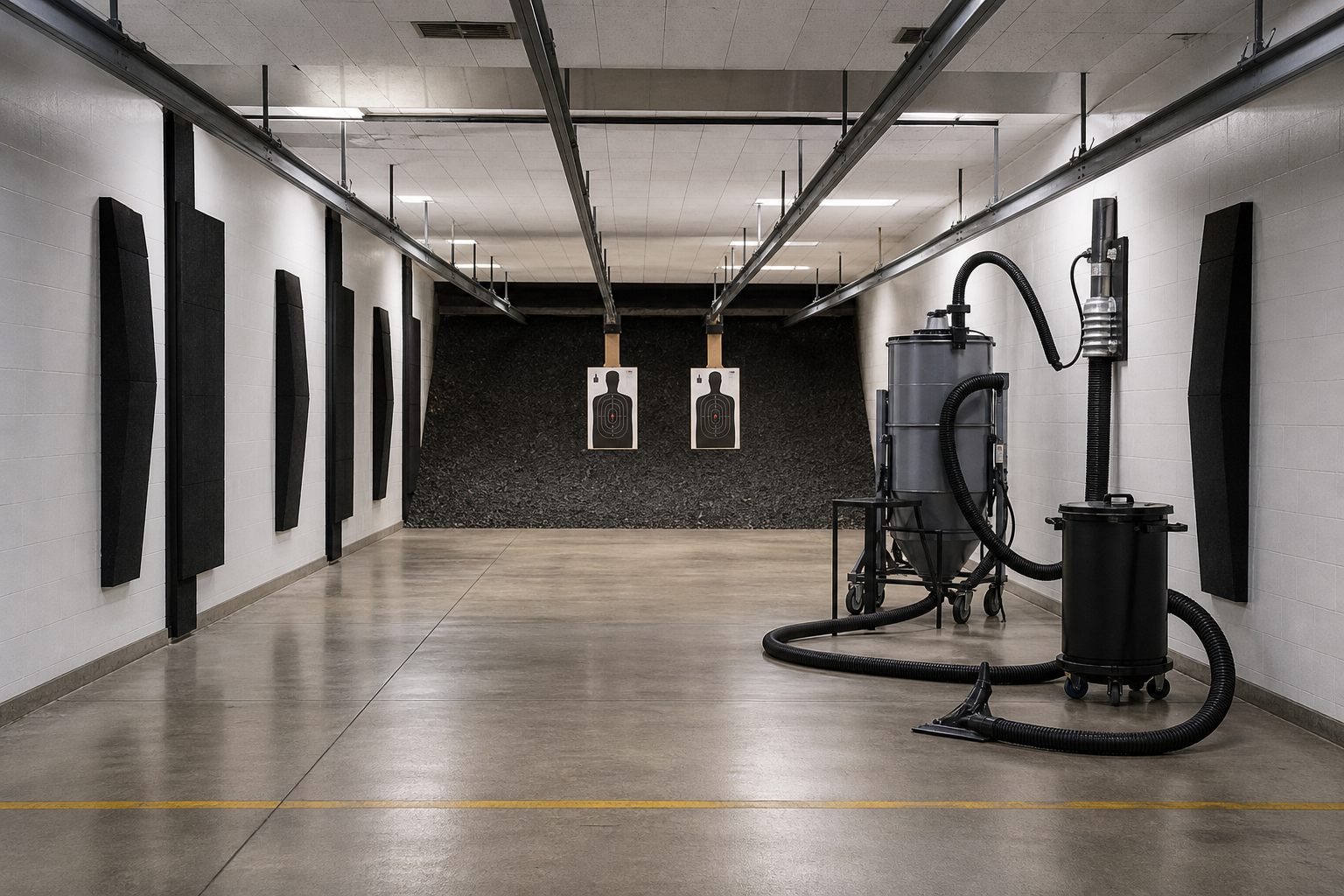
HEPA vacuuming the range floor, walls, and booths complements rubber berm maintenance work.
How Often Should Rubber Berm Servicing Happen?
There isn’t a single number that fits every facility, since round count, lane count, and ventilation all play a role. That said, most commercial and law enforcement ranges benefit from a full service somewhere between every six and twelve months. High-volume training centers, by contrast, may need attention every few months to stay ahead of dust accumulation.
Air monitoring results offer the most reliable guide. If exposure readings trend upward between visits, that’s a clear signal to shorten the interval. Conversely, a range with strong ventilation and lower round counts might safely stretch the schedule a bit further, as long as monitoring confirms exposure stays well under OSHA’s action level.
Air Monitoring, Exposure Testing, and Safety Compliance
Because lead dust is invisible at the particle sizes that matter most, air monitoring is the only reliable way to know whether a range’s ventilation and cleaning schedule are actually working. Exposure testing typically measures airborne lead near shooting positions and in common areas, then compares results against OSHA’s permissible exposure limit.
From there, those results feed directly into an employee lead exposure safety plan, which outlines monitoring frequency, protective equipment, and hygiene practices for staff. The Environmental Protection Agency (EPA) also provides broader guidance on lead hazards that ranges can reference when building internal policies. Facilities that combine regular berm processing with documented air monitoring tend to show measurably lower exposure trends over time compared to those relying on cleaning alone.
Choosing the Right Partner for Range Rubber Maintenance
Not every cleaning company processes rubber the same way. Some return most of the material to the berm with minimal separation, while others focus purely on surface-level lead pickup. For that reason, it’s worth asking specifically how a provider separates lead from rubber and where the recovered material ends up afterward.
Wynant Range Consulting (WRC) built its process around a patented machine developed with an engineer specifically to recover more lead while reducing range downtime. With a team carrying over 75 years of combined experience, staff trained and certified to OSHA and EPA standards, and service across the Midwest and East Coast, WRC works with commercial ranges, law enforcement facilities, military ranges, and private training centers. Those interested in the rubber berm processing service can review how the equipment works before scheduling a visit.
Facilities ready to discuss their specific range layout can reach the team directly through Wynant Range Consulting by phone at (252) 764-1809 or by email at bwynant.roc@gmail.com, during regular hours of 9 AM to 5 PM, Monday through Saturday.
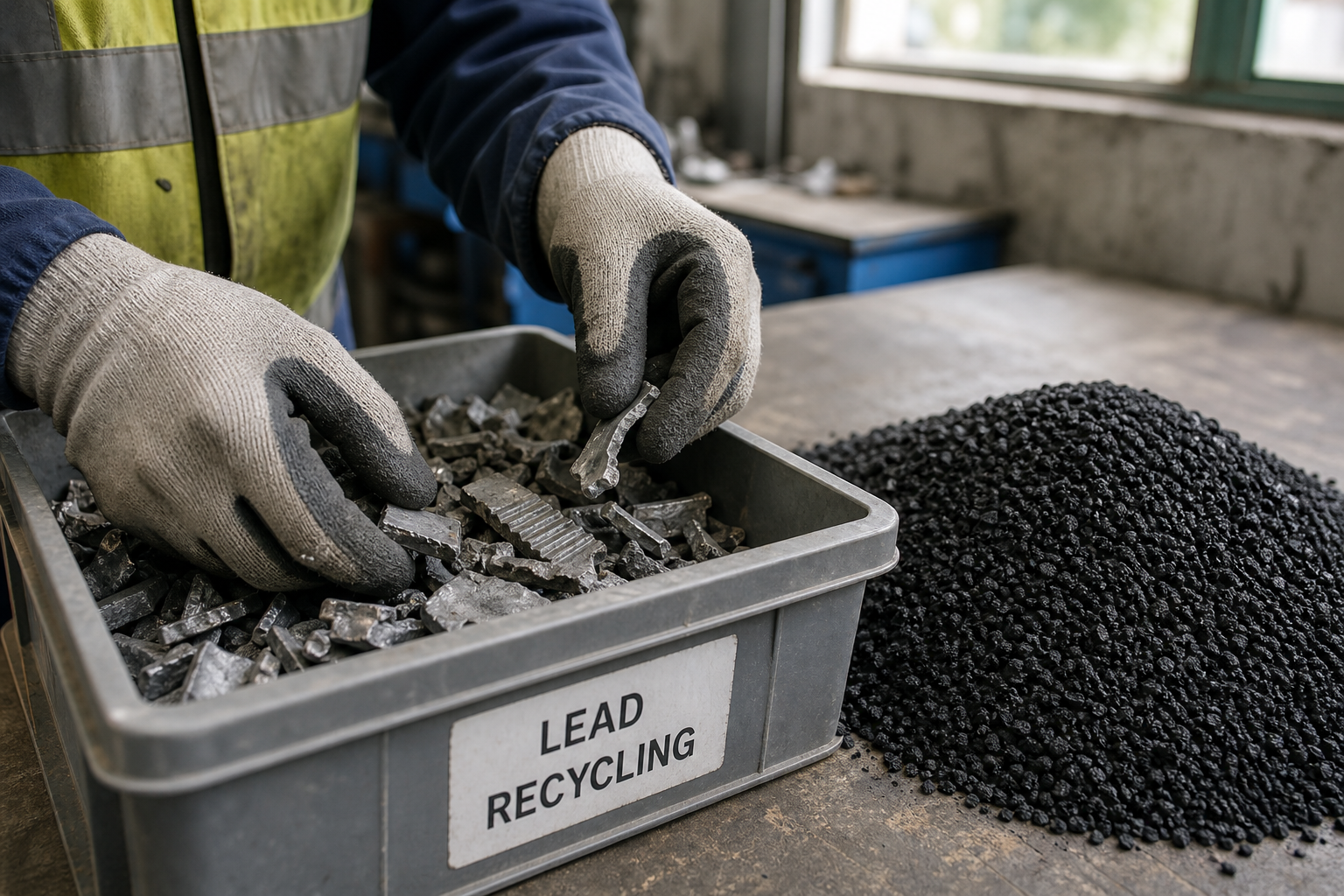
Separating lead and debris from clean rubber is the heart of effective rubber berm maintenance.
Frequently Asked Questions About Rubber Berm Maintenance
What is rubber berm maintenance?
Rubber berm maintenance is the scheduled cleaning, processing, and inspection of a granulated rubber backstop so it keeps catching rounds safely while releasing less lead dust. It usually combines rubber processing, lead recovery, and HEPA vacuuming.
How does rubber berm cleaning differ from simply removing lead?
Simple lead removal pulls out the heaviest bullet fragments but leaves fine dust and jacket material mixed into the rubber. Processing the rubber, on the other hand, separates clean granules from lead, dust, and debris at a much finer level.
Is the cleaned rubber reused in the trap?
Yes, once the rubber is processed and separated from contaminants, the clean granulated rubber is returned to the berm. This avoids the cost of buying an entirely new backstop.
How are lead and hazardous materials disposed of or recycled?
Recovered lead and metal fragments are collected, packaged, and sent to licensed recycling facilities rather than discarded on-site. This keeps hazardous material out of landfills and supports lead reclamation.
How often should filters be replaced?
HEPA filters, filter bags, and pre-filters should be checked at every scheduled cleaning visit and replaced based on usage volume and airflow readings. High-volume ranges often need replacement more frequently than low-traffic facilities.
Do you provide air monitoring and exposure testing?
Yes, air monitoring and exposure testing are offered alongside cleaning services to track airborne lead levels against OSHA limits. Results feed into an employee lead exposure safety plan.
Which areas do you serve?
Wynant Range Consulting serves indoor rifle, pistol, and shotgun ranges throughout the Midwest and East Coast. This includes commercial ranges, law enforcement facilities, military ranges, and private training centers.
What does steel trap maintenance include?
Steel trap maintenance includes checking oil concentration, emptying bullet traps and front troughs, and cleaning target tracks. These steps prevent buildup that leads to ricochet and reduced trap performance.
How much does rubber berm maintenance cost?
Cost depends on range size, berm volume, lane count, and how long it has been since the last service. Most providers quote after reviewing the range in person or through photos and measurements.
How long does a rubber berm maintenance service take?
A typical service for a mid-size range takes one to a few days, depending on lane count and how saturated the rubber is. Larger ranges or heavier contamination can extend the timeline.
What mistakes do range owners make with berm upkeep?
Common mistakes include waiting too long between services, skipping filter checks, and assuming visual cleanliness means low lead exposure. Dust can remain airborne and settle on surfaces long after a range looks clean.
What certifications should a range cleaning company have?
Look for staff trained and certified to OSHA and EPA standards for lead handling, hazardous waste, and respiratory protection. Certification signals the crew understands both safety rules and recycling requirements.
Can rubber berm maintenance reduce ricochet?
Yes, removing jacket fragments, dust, and compacted debris restores the rubber’s ability to absorb rounds evenly. This reduces splash-back and ricochet risk for shooters and staff.
What’s included in an employee lead exposure safety plan?
A lead exposure safety plan typically outlines monitoring schedules, blood lead level testing guidance, protective equipment rules, and hygiene practices for range staff. It’s built around the exposure data collected on-site.
Final Thoughts
Ultimately, rubber berm maintenance is one of the most effective ways an indoor range can control lead exposure while protecting its equipment investment. Whether a facility runs a rubber berm, a steel trap, or both, pairing regular rubber processing with HEPA cleaning, filter replacement, and air monitoring creates a safer environment for shooters and staff alike. Given the cumulative nature of lead exposure, waiting until problems become visible is rarely the safer choice. For ranges across the Midwest and East Coast looking to build a consistent maintenance schedule, reaching out to a team with documented OSHA and EPA training, like Wynant Range Consulting, is a practical next step toward a cleaner, more compliant range.
