

Steel trap system cleaning is the routine process of emptying, inspecting, and restoring a steel bullet trap so it keeps shooters, staff, and range visitors safe from lead dust. Indoor ranges that rely on steel backstops accumulate fine lead particles with every round fired, and without consistent maintenance, that buildup becomes a serious health and compliance risk. This guide explains what the service involves, how often it should happen, and why trained crews matter.
Quick answer: Steel trap system cleaning removes lead dust, bullet fragments, and debris from the trap, front trough, and surrounding surfaces, then checks oil concentration and ventilation filters so the range stays safe and compliant with OSHA and EPA lead standards.
What Is Steel Trap System Cleaning?
Steel trap system cleaning is the service that keeps a steel backstop functioning safely over time. It involves emptying accumulated lead from the bullet trap and front trough, checking the oil film that coats the trap plates, and vacuuming nearby surfaces with HEPA equipment. Because lead particles become airborne on impact, this work directly reduces the amount of lead dust that settles on floors, walls, and shooting booths.
A steel trap, sometimes called a bullet trap, catches rounds using angled steel plates instead of rubber granules. As a result, the cleaning approach differs slightly from rubber berm cleaning, which processes granulated rubber through a dedicated machine. However, both systems share the same goal: capturing bullets safely while limiting lead exposure for everyone on the range.
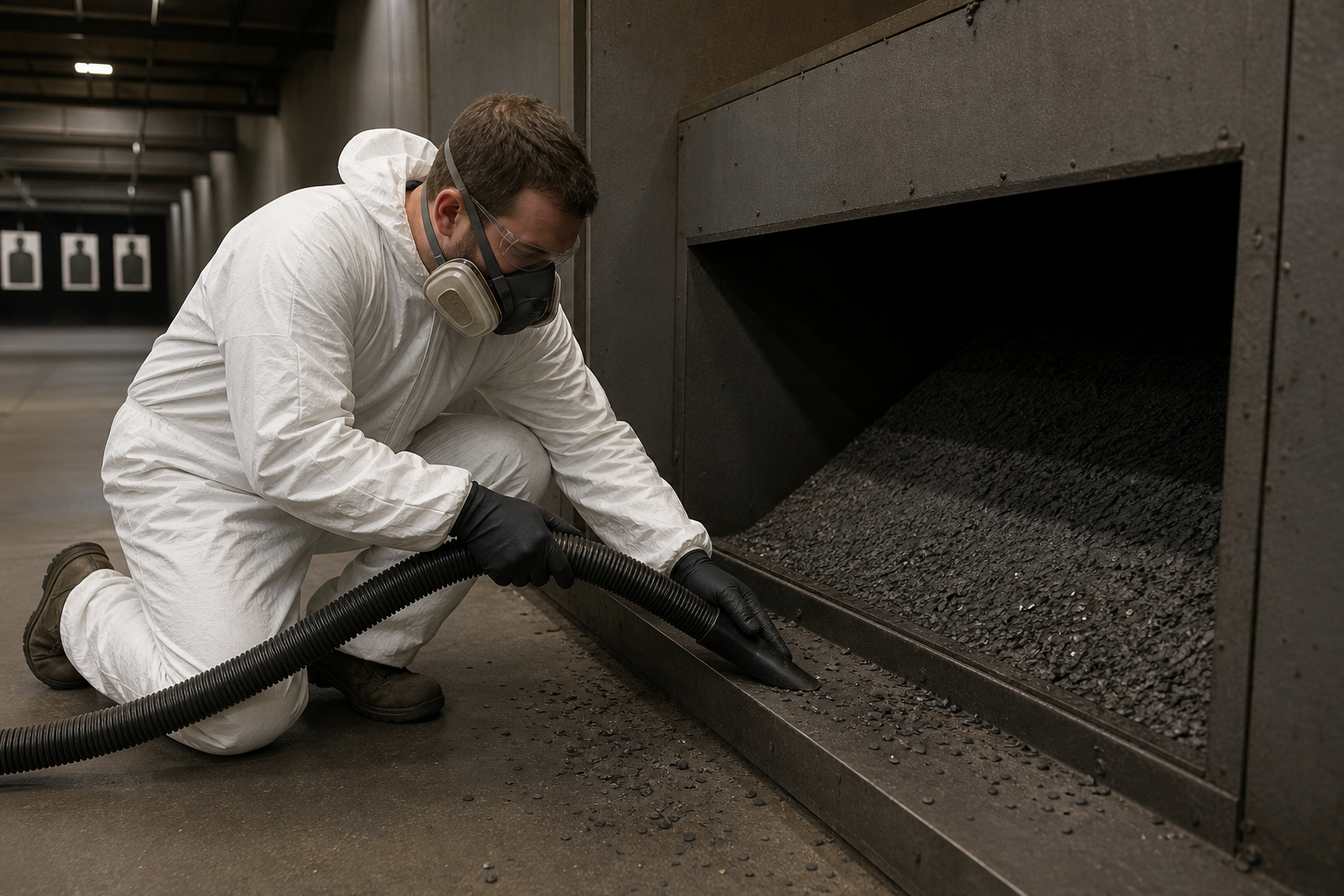
Steel trap system cleaning removes lead dust and debris before it spreads through the range.
Why Steel Trap Maintenance Matters for Range Safety
Steel trap maintenance matters because lead exposure is cumulative and largely invisible. Fine lead dust settles on surfaces long before it becomes visible to the naked eye, and repeated exposure can lead to elevated blood lead levels among range staff and frequent shooters. According to the National Institute for Occupational Safety and Health, indoor firing ranges remain one of the most commonly cited workplaces for elevated occupational lead exposure in the United States.
In addition, a poorly maintained trap increases the chance of ricochet, which raises safety risk for shooters and instructors. Therefore, regular maintenance protects both health outcomes and physical safety on the firing line. Specifically, keeping oil concentration at the correct level softens bullet impact and limits fragment bounce-back.
For a closer look at how oil levels are tested and adjusted, see this detailed steel trap oil concentration guide. It outlines the exact checks a trained crew performs during every visit.
Core Steps in a Steel Trap Cleaning Service
Although every range differs slightly, most steel trap system cleaning services follow a consistent sequence. The list below reflects the process used by trained crews on commercial, law enforcement, and military ranges.
- Inspect the steel trap, backstop, and front trough for lead buildup, bullet fragments, and ricochet damage before beginning work.
- Empty the bullet trap and front trough, separating recoverable lead for recycling from debris that cannot be reused.
- Check and adjust oil concentration levels in the steel trap to reduce ricochet and dust while protecting the trap surface from wear.
- HEPA vacuum the trap, baffles, walls, floor, and shooter’s booths to remove settled lead dust from every surface.
- Replace HEPA filters, filter bags, and pre-filters as needed, then run air monitoring to confirm lead exposure levels meet safety limits.
Consequently, each step builds on the last. Skipping the inspection stage, for example, often means missing early signs of trap wear that could cause a larger repair later.
Checking Oil Concentration in Steel Trap Systems
Oil concentration is a technical term that simply refers to how much lubricating oil coats the steel plates inside the trap. A proper oil film cushions bullet impact, which reduces fragmentation and dust release. Without it, bullets strike bare steel, and more lead disperses into the air.
During a steel trap system cleaning visit, technicians typically test the oil film using a concentration gauge, then redistribute or add oil as needed. In particular, this step is easy to overlook, yet it has an outsized effect on both dust control and plate longevity. Facilities that skip this check often see faster wear and higher cleaning costs over time.
HEPA Vacuum Cleaning and Filter Replacement
HEPA, short for High-Efficiency Particulate Air, refers to a filtration standard capable of capturing particles as small as 0.3 microns, which includes fine lead dust. HEPA vacuum cleaning targets the range floor, walls, baffles, and shooting booths, pulling settled dust out of fabric, cracks, and corners that a standard vacuum would miss.
Furthermore, HEPA filters, filter bags, and pre-filters inside the range’s ventilation system need periodic replacement. As filters load up with lead particles, airflow drops and recirculated dust can increase. For a full breakdown of replacement intervals, this HEPA filter bag replacement guide covers signs that a filter needs swapping sooner than scheduled.
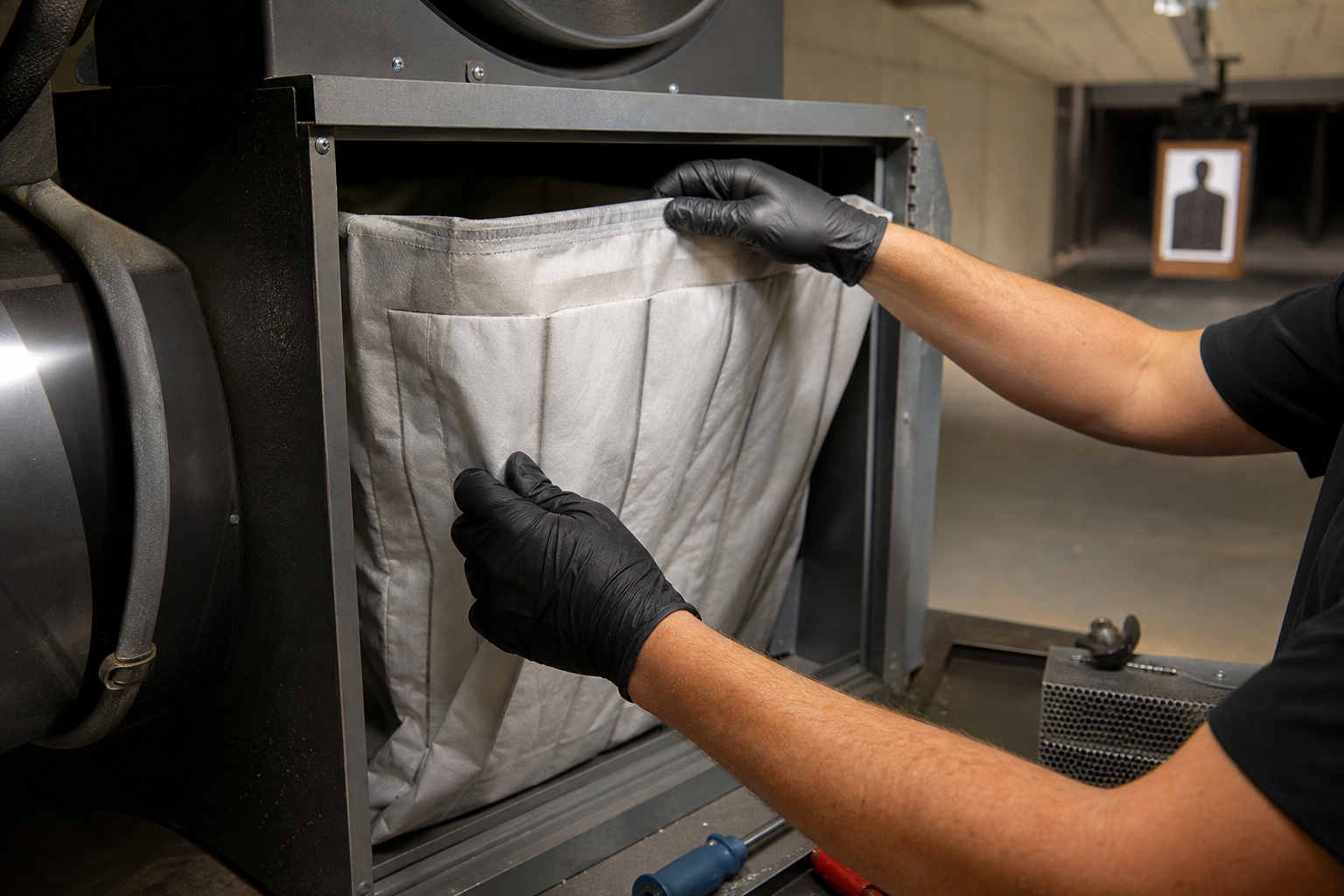
Routine filter replacement supports every steel trap system cleaning visit.
Lead Recycling After Steel Trap Cleaning
Lead recovered during steel trap system cleaning does not need to go to a landfill. Instead, it can be sorted, packaged, and sent to certified recycling facilities. This process, often called lead reclamation, reduces hazardous waste disposal costs and supports environmental compliance under EPA hazardous waste guidelines.
For ranges handling large volumes of spent lead, a related practice known as indoor lead mining can recover material from soil or substrate beneath older ranges. To learn more about how lead removal and recycling fit together, review this guide on lead contamination removal services, which explains disposal and reclamation in more depth.
Air Monitoring and Exposure Testing
Air monitoring measures airborne lead concentration in the range environment, while exposure testing can include blood lead level checks for employees. Together, these tools confirm whether cleaning and ventilation efforts are keeping lead levels within accepted limits set by OSHA’s lead standard.
According to OSHA guidance, the permissible exposure limit for airborne lead in general industry is 50 micrograms per cubic meter of air averaged over an eight-hour period. Ranges that pair steel trap system cleaning with regular air monitoring are better positioned to stay below that threshold consistently. An employee lead exposure safety plan then documents how the facility monitors, trains, and protects staff over time.
How Often Should Steel Trap Systems Be Cleaned?
Most ranges should schedule steel trap system cleaning every one to three months, depending on how many rounds pass through the facility. High-volume training centers and law enforcement ranges often need monthly service, while lower-traffic private ranges may extend intervals slightly.
That said, visible lead dust, reduced airflow, or a noticeable increase in ricochet are all signs that cleaning is overdue regardless of the calendar. Consequently, many facilities pair scheduled visits with periodic inspections to catch problems early.
Choosing a Steel Trap System Cleaning Provider
Because lead handling carries regulatory and health implications, the provider performing steel trap maintenance matters as much as the schedule itself. Look for crews trained and certified to OSHA and EPA standards, with documented experience on steel trap and rubber berm systems alike.
Wynant Range Consulting serves indoor rifle, pistol, and shotgun ranges across the Midwest and East Coast, including commercial ranges, law enforcement facilities, military ranges, and private training centers. Its team brings more than 75 years of combined experience to steel trap maintenance, rubber berm processing, lead recycling, and air monitoring. For a broader view of full-facility service, visit the range cleaning overview page, or reach out directly through Wynant Range Consulting’s website to discuss a specific facility’s needs.
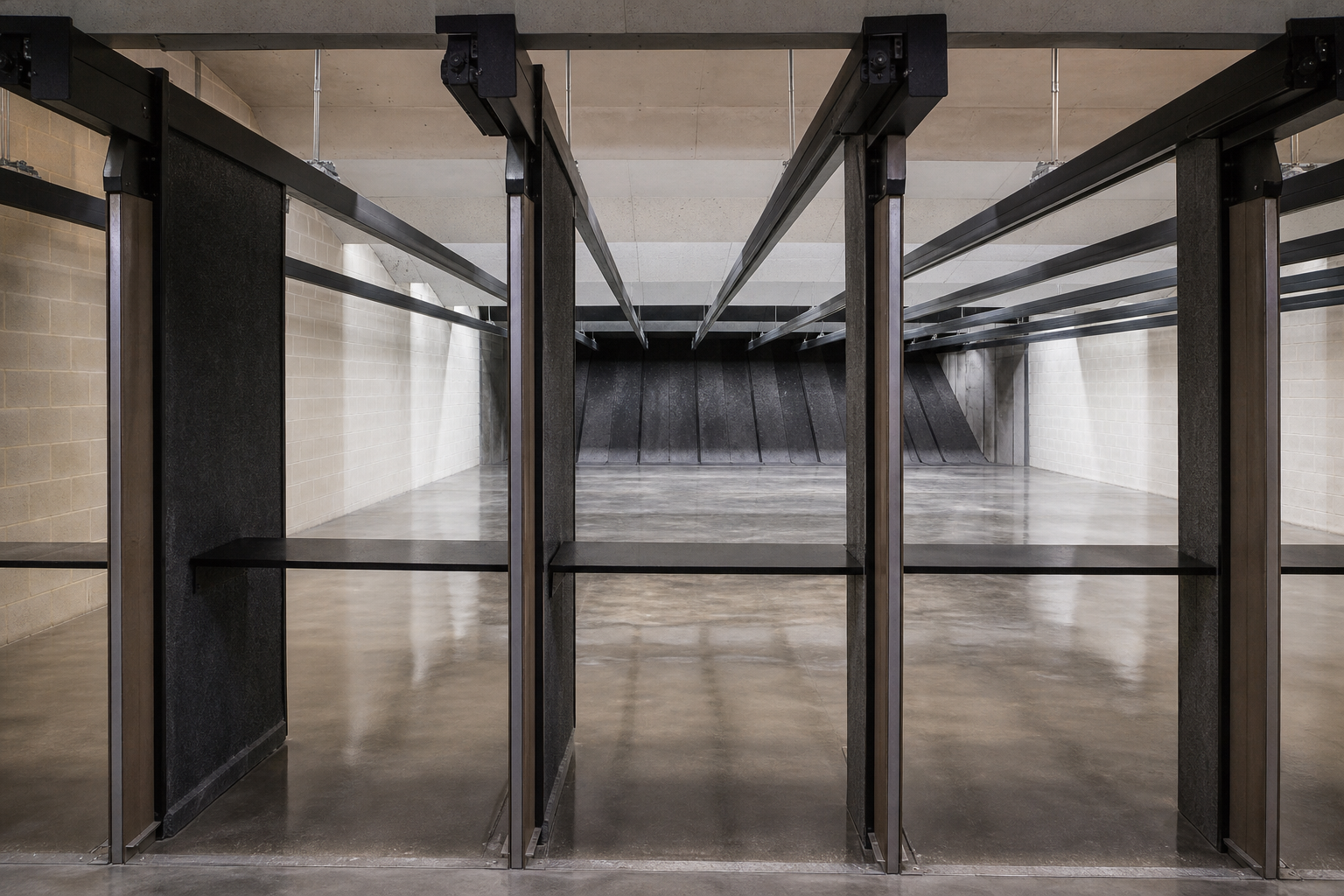
A well-maintained range reflects consistent steel trap system cleaning and filter care.
Frequently Asked Questions
What is steel trap system cleaning?
Steel trap system cleaning is the process of removing lead dust, bullet fragments, and debris from a steel bullet trap, front trough, and surrounding range surfaces. It also includes checking oil concentration so the trap keeps capturing rounds safely and reduces ricochet.
How often should a steel trap range be cleaned?
Most commercial and law enforcement ranges schedule service every one to three months, depending on round volume. High-use ranges often need monthly cleaning to control lead dust buildup.
What does steel trap maintenance include?
Steel trap maintenance covers emptying the bullet trap and front trough, checking and adjusting oil concentration, inspecting trap plates for wear, and HEPA vacuuming nearby floors, walls, and baffles. It can also include target track cleaning and filter replacement.
How is oil concentration checked in a steel trap?
Technicians test the oil film on the trap’s steel plates using a concentration gauge or visual inspection, then add or redistribute oil as needed. Correct oil levels reduce ricochet, dust generation, and premature plate wear.
Is cleaned lead from steel traps recycled?
Yes, lead recovered from steel trap cleaning is typically separated from debris and sent to certified recycling facilities. This lead reclamation reduces disposal costs and keeps hazardous material out of standard waste streams.
How does steel trap cleaning differ from rubber berm cleaning?
Steel trap cleaning focuses on emptying a hardened steel backstop and adjusting oil levels, while rubber berm cleaning processes granulated rubber through a machine to separate lead from reusable rubber. Both reduce lead dust, but the equipment and techniques differ.
Why does lead dust build up in steel trap ranges?
Lead dust forms when bullets strike the steel trap and fragment, releasing fine particles into the air and onto surfaces. Without regular cleaning, this dust accumulates on floors, baffles, and ventilation filters.
How long does a steel trap system cleaning service take?
A typical service takes a few hours to a full day, depending on range size and how long it has been since the last cleaning. Larger facilities with heavier lead buildup require more time.
Do you provide air monitoring after steel trap cleaning?
Yes, air monitoring and exposure testing can be scheduled after cleaning to confirm lead levels meet safety limits. This supports employee lead exposure safety plans and ongoing compliance.
What happens if a steel trap system is not cleaned regularly?
Neglected steel traps accumulate lead dust, increase ricochet risk, and can expose staff and shooters to unsafe lead levels. Over time, poor maintenance also accelerates wear on trap plates and ventilation filters.
Who should perform steel trap system cleaning?
Steel trap system cleaning should be performed by technicians trained and certified to OSHA and EPA standards for lead handling. Experienced crews understand proper containment, disposal, and recycling procedures.
What areas does Wynant Range Consulting serve for steel trap cleaning?
Wynant Range Consulting serves indoor rifle, pistol, and shotgun ranges across the Midwest and East Coast, including commercial ranges, law enforcement facilities, military ranges, and private training centers.
How much does steel trap system cleaning cost?
Cost varies based on range size, trap type, and how much lead and debris has accumulated. Facilities should request a site-specific quote rather than relying on a flat industry rate.
What safety standards apply to steel trap cleaning?
Steel trap cleaning crews typically follow OSHA lead exposure limits and EPA hazardous waste handling guidance. Certified providers combine these standards with HEPA filtration and air monitoring to protect workers and shooters.
Conclusion
In the end, steel trap system cleaning protects far more than equipment. It protects the health of every shooter, instructor, and employee who steps onto the range. From emptying the bullet trap and checking oil concentration to HEPA vacuuming and air monitoring, each step works together to limit lead dust and keep operations compliant with OSHA and EPA standards. Facilities that schedule this work consistently, rather than reactively, tend to see fewer ricochet issues, longer equipment life, and safer air quality overall. For ranges across the Midwest and East Coast looking for trained, certified support, Wynant Range Consulting offers steel trap maintenance alongside rubber berm processing, lead recycling, and full exposure safety planning.
