
Air quality monitoring shooting ranges rely on is the routine sampling of range air to measure airborne lead and dust, so operators know whether staff and shooters are protected. Indoor ranges generate lead particles every time a round is fired. Because those particles are often invisible, testing is the only reliable way to confirm that ventilation, filters, and cleaning are working.
Quick answer: Test range air at baseline, after any change to ventilation or cleaning, and on a regular schedule. Compare results with OSHA lead limits, fix the source of any problem, and retest.
What Is Air Quality Monitoring at an Indoor Range?
It is a structured program of air sampling and lab analysis. Samples are usually taken in the breathing zone of shooters and employees. The lab reports how much lead was present, and the operator compares the numbers with regulatory limits.
In addition, monitoring creates a record. That record helps you spot trends, prove due diligence, and decide when to clean or service equipment.
Why Lead Dust Exposure Matters
Lead is toxic, and repeated inhalation or ingestion can build up in the body. The Occupational Safety and Health Administration (OSHA) sets rules for workplace lead exposure, and the National Institute for Occupational Safety and Health (NIOSH) publishes guidance on lead in shooting ranges. Staff who work at the range every day face the highest risk.
Moreover, lead dust travels. It can settle on floors, booths, clothing, and break-room surfaces. Therefore, monitoring protects more than the person at the firing line.
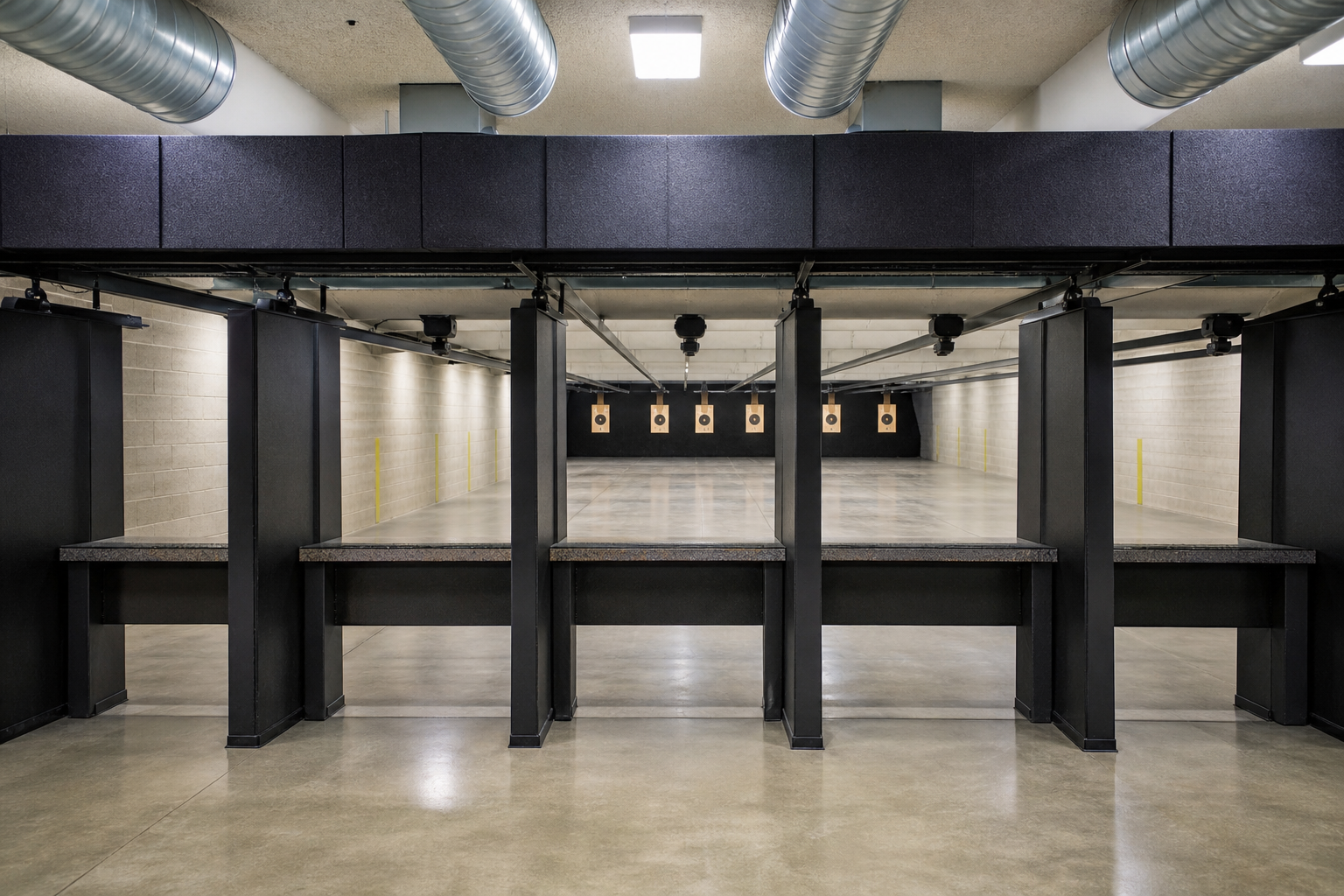
Ventilation design and airflow across the firing line shape the results of air quality monitoring at shooting ranges.
What Does Range Air Testing Measure?
Airborne lead is the primary measurement. Providers may also look at exposure for specific individuals and at dust on surfaces. Each tells a different part of the story.
- Area air samples: show conditions in a location, such as the firing line.
- Personal samples: track what a specific worker breathes during a shift.
- Surface checks: reveal where dust is settling and spreading.
How to Set Up Indoor Range Air Monitoring
Follow this process to build a program that produces usable results.
- Review the range layout, including supply air, exhaust, filters, and the bullet trap.
- Collect baseline samples in the breathing zones of shooters and staff.
- Compare the lab results with the OSHA lead action level and permissible exposure limit.
- Correct the sources of elevated readings, such as clogged filters, weak airflow, or contaminated rubber berm.
- Retest after corrections and document every result in your safety plan.
What Raises Airborne Lead Levels?
Loaded or Failing Filters
HEPA filters, filter bags, and pre-filters capture fine particles. When they clog, airflow drops and dust lingers. See how pre-filter replacement for indoor ranges fits into a maintenance routine.
Contaminated Rubber Berm
A rubber berm full of lead, jacket fragments, and fine dust can release particles on impact. Processing the rubber separates usable rubber from contaminants, which supports lower dust levels and less ricochet. Learn more about range cleaning.
Settled Dust and Poor Housekeeping
Dry sweeping can put settled lead back into the air. HEPA vacuum cleaning of floors, walls, baffles, and booths is the better approach.
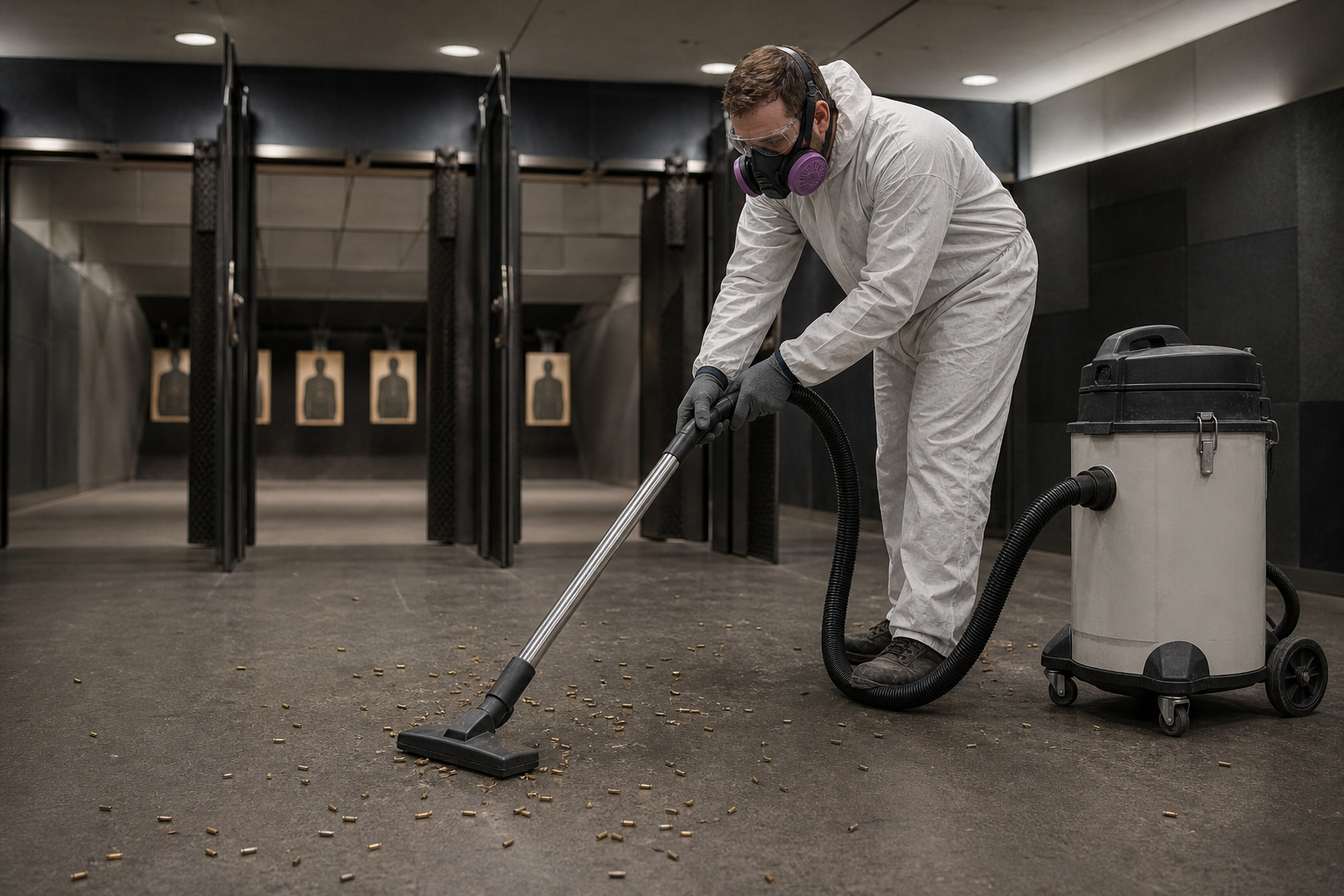
HEPA vacuum cleaning keeps settled lead from returning to the air.
Turning Test Results Into a Lead Exposure Safety Plan
Data only helps when it drives action. A written lead exposure safety plan connects testing to cleaning, filter service, and employee protection. For broader strategy, read this guide on how to manage lead at shooting ranges.
Furthermore, keep records of every test and corrective step. The U.S. Environmental Protection Agency (EPA) also provides resources on lead management and disposal.
Choosing a Provider for Range Air Monitoring
Wynant Range Consulting specializes in indoor range cleaning and maintenance. Its services include air monitoring, exposure testing, and employee lead exposure safety plans, alongside rubber berm cleaning, steel trap maintenance, and HEPA filter replacement. The company states that its staff are trained and certified to OSHA and EPA standards and that it serves ranges across the Midwest and East Coast. See its Midwest range services and its approach to lead recycling at shooting ranges.
Whichever provider you choose, ask about sampling methods, lab accreditation, reporting format, and how findings connect to corrective work.
Frequently Asked Questions
What is air quality monitoring at a shooting range?
It is the sampling and testing of range air to measure airborne lead and dust. The results show whether ventilation and cleaning practices protect people.
Why do indoor ranges need air monitoring?
Firing releases lead particles that stay airborne and settle on surfaces. Monitoring shows actual exposure so operators can protect staff and shooters.
What contaminants are measured?
Airborne lead is the main target. Providers may also assess settled dust and surface contamination.
How often should a range test its air?
Frequency depends on shooting volume, results, and regulatory requirements. Test at baseline, after any change in ventilation or cleaning, and on the schedule your safety plan sets.
What is exposure testing?
Exposure testing measures how much lead an individual is actually exposed to, often through personal air samples. It complements area readings.
Does a clean-looking range mean the air is safe?
No. Lead dust is often invisible, so only testing confirms the air is within limits.
How do HEPA filters affect air quality?
HEPA filters capture fine particles, including lead dust. Loaded or damaged filters lose effectiveness, so timely replacement matters.
Can a dirty rubber berm raise airborne lead?
Yes. A berm loaded with lead and fragments can release dust on impact. Processing the rubber removes contaminants and helps reduce dust.
What is a lead exposure safety plan?
It is a written plan that sets how a range controls, monitors, and responds to lead exposure for employees. It typically covers testing, cleaning, protective practices, and record keeping.
What are common mistakes in range air monitoring?
Common errors include testing once and never again, ignoring filter schedules, and failing to act on elevated results. Poor record keeping is another frequent problem.
Does Wynant Range Consulting offer air monitoring?
Yes. The company offers air monitoring, exposure testing, and employee lead exposure safety plans for indoor ranges in the Midwest and East Coast.
How do I schedule monitoring for my range?
Call (252) 764-1809 or use the contact form to discuss your range. Work hours are 9 AM to 5 PM, Monday through Saturday.
Conclusion
Effective air quality monitoring shooting ranges depend on is simple in principle: measure, compare, correct, and retest. Pair testing with HEPA filter upkeep, clean rubber berm or trap systems, and a written safety plan. To discuss testing and cleaning for your facility, call Wynant Range Consulting at (252) 764-1809 or reach out through the contact form.
