

Bullet trap maintenance services are the routine cleaning, inspection, and upkeep tasks that keep an indoor range’s bullet trap safe and effective. Consequently, without them, lead dust builds up, traps lose performance, and employees face avoidable exposure. Therefore, this guide explains what the work includes, how often it is needed, and how to choose a provider.
Quick answer: A solid service plan empties the trap and front trough, checks oil concentration on steel traps, cleans the range with HEPA vacuums, and replaces filters on schedule. Schedule it around round count and manufacturer guidance, not the calendar alone.
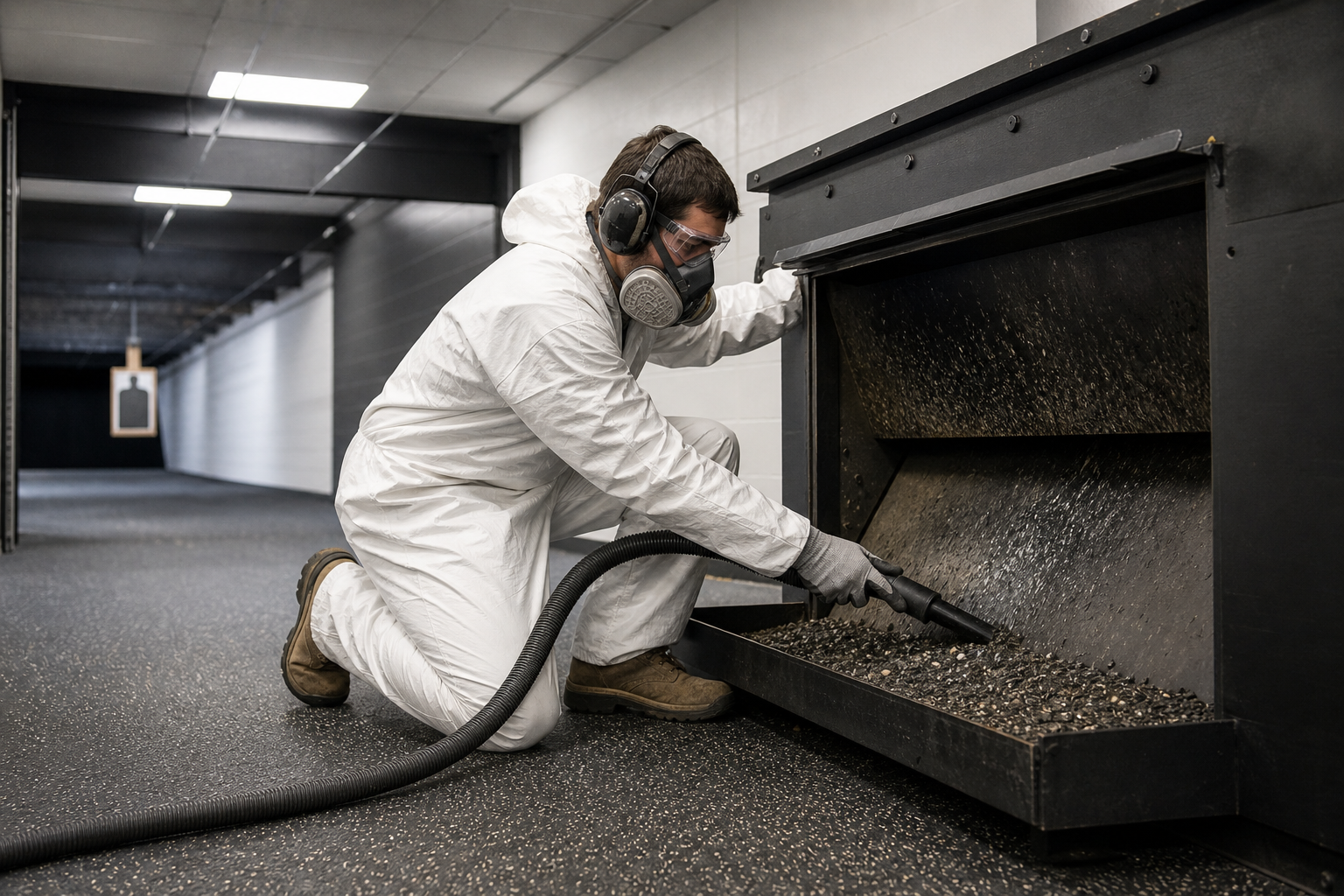
A technician inspects a steel trap during scheduled bullet trap maintenance services.
What Are Bullet Trap Maintenance Services?
They are scheduled tasks that keep a bullet trap capturing rounds as designed. In addition, they limit the lead dust that escapes into the shooting area. Therefore, they protect both shooters and staff.
A bullet trap is the backstop that stops and contains fired rounds. Steel traps deflect bullets into a containment area. Rubber berms, in contrast, absorb them in granulated rubber. Both designs collect lead, so both need regular attention.
Why Steel Trap Upkeep Matters
Lead is a toxic metal, and indoor ranges generate fine lead dust every time someone fires. The Occupational Safety and Health Administration (OSHA) regulates workplace lead exposure, so operators carry real responsibility. Meanwhile, the U.S. Environmental Protection Agency sets rules for hazardous waste handling.
Neglected traps also cause practical problems. Excess buildup can increase dust and affect how the trap performs. As a result, a clean trap supports safer operation and less downtime.
What Steel Trap System Maintenance Includes
Emptying the Trap and Front Trough
Spent bullets and fragments collect in the trap and the front trough. Technicians remove this material and handle it as lead-bearing waste. Consequently, the trap has room to work and less dust is generated.
Checking Oil Concentration
Some steel trap designs rely on oil to help capture dust and fragments. Technicians check the concentration and correct it when needed. For a deeper walkthrough, see this guide to range oil concentration checks.
Cleaning the Range and Shooting Area
Dust settles on floors, walls, baffles, and booths. HEPA vacuuming captures fine particles instead of spreading them. Wynant Range Consulting offers this as part of its indoor range cleaning services, including target track cleaning.
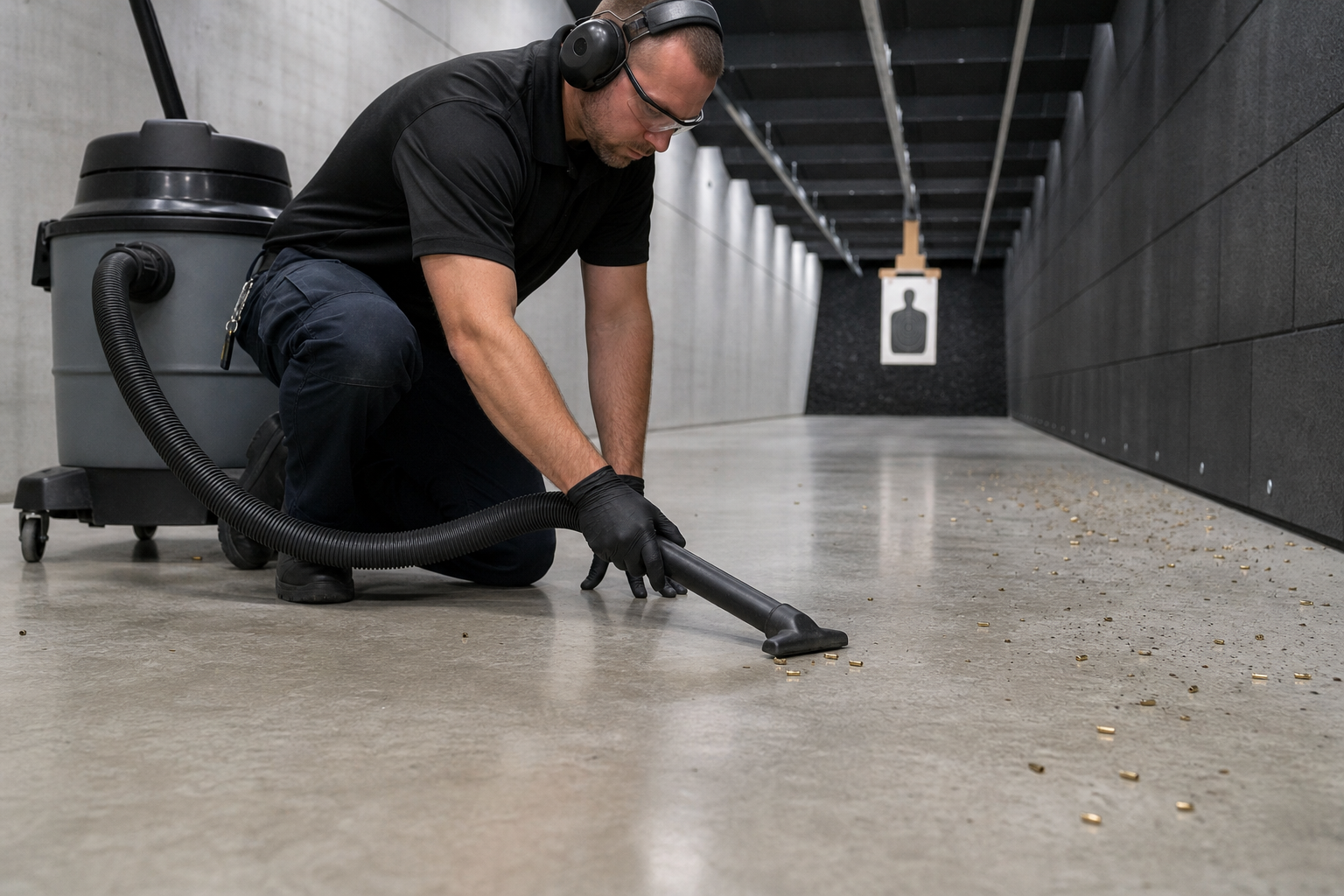
HEPA vacuuming removes fine lead dust that standard cleaning would spread.
How Often Should a Bullet Trap Be Serviced?
There is no single interval that fits every range. Round count, caliber mix, and the trap manufacturer’s guidance all matter. High-volume commercial ranges therefore need service more often than a lightly used private facility.
| Task | What drives timing |
|---|---|
| Emptying trap and trough | Round count and visible buildup |
| Oil concentration check | Trap design and manufacturer guidance |
| HEPA, bag, and pre-filter replacement | Ventilation readings and usage |
| Air monitoring | Exposure plan and regulatory needs |
Filters deserve special attention. A clogged filter weakens airflow and lets dust linger. This HEPA and filter bag replacement guide explains the details.
Steel Traps vs. Rubber Berm Upkeep
Steel traps need emptying, oil checks, and trough cleaning. Rubber berms need processing, which separates lead, dust, and jacket fragments from reusable rubber. Wynant Range Consulting uses a patented machine for this and returns clean rubber to the range. Likewise, operators can learn more in this article on how often rubber berms should be maintained.
Steps to Prepare for a Trap Service Visit
- Review your records. Check the last service date, oil readings, and material removed.
- Schedule a closure window. Close the range to shooters during the work.
- Confirm the scope. Ask for a written task list covering trap, trough, oil, and HEPA cleaning.
- Verify disposal and recycling. Request documentation for lead and hazardous material.
- Plan follow-up monitoring. Arrange air monitoring and update your safety plan.
Choosing a Range Maintenance Provider
Look for staff trained to OSHA and EPA standards. Ask what is recycled, what is disposed of, and how the provider documents it. In addition, confirm that air monitoring and exposure testing are available.
Wynant Range Consulting serves indoor rifle, pistol, and shotgun ranges across the Midwest and East Coast. Its work covers steel trap maintenance, HEPA cleaning, filter replacement, lead recycling, air monitoring, and employee lead exposure safety plans. The team reports over 75 years of combined experience.
Frequently Asked Questions
What are bullet trap maintenance services?
Bullet trap maintenance services are scheduled tasks that keep a range’s bullet trap working safely. They include emptying the trap, cleaning the front trough, checking oil concentration on steel traps, and controlling lead dust.
How often should a steel bullet trap be serviced?
Frequency depends on round count, caliber mix, and the trap manufacturer’s guidance. High-volume ranges generally need more frequent service than low-use ranges.
What does an oil concentration check involve?
It measures how much oil is in the trap system, since oil helps capture dust and fragments in some designs. Technicians adjust levels so the trap performs as intended.
Why does the front trough need to be emptied?
Spent bullets and fragments collect in the front trough. Buildup can reduce trap performance and add to lead dust.
How do steel traps differ from rubber berm systems?
Steel traps deflect bullets into a containment area, while rubber berms absorb them in granulated rubber. Each needs different upkeep, and rubber berms require processing to separate lead from reusable rubber.
Is lead from the trap recycled?
Often, yes. Reclaimed lead can be recycled, and remaining hazardous material is removed for proper disposal.
Do maintenance services include HEPA vacuuming?
They can. HEPA vacuuming of the range and shooting area removes fine lead dust that ordinary vacuums would spread.
When should HEPA filters and filter bags be replaced?
Replace them according to the manufacturer’s schedule and pressure readings in your ventilation system. Pre-filters are usually changed more often.
Is air monitoring part of range maintenance?
It is a related service. Air monitoring and exposure testing show whether employees are exposed to lead and whether your controls work.
What are common mistakes in bullet trap upkeep?
Common mistakes include skipping service intervals, dry sweeping lead dust, and ignoring oil levels. Poor record keeping is another frequent problem.
Who performs bullet trap maintenance services?
Specialist range contractors with OSHA and EPA training should do the work. Wynant Range Consulting serves indoor ranges across the Midwest and East Coast.
How do I schedule service?
Call (252) 764-1809 or use the contact form on the website. Work hours are 9 AM to 5 PM, Monday through Saturday.
Conclusion
Regular bullet trap maintenance services protect your trap, your staff, and your shooters. The essentials are emptying the trap and trough, checking oil concentration, HEPA cleaning, timely filter changes, and follow-up air monitoring. To discuss your range, call (252) 764-1809 or contact the team through Wynant Range Consulting.
