
Law enforcement range cleaning services are professional lead removal and upkeep programs for indoor ranges used by police, sheriff, and other agency training units. Indoor ranges collect lead dust, bullet fragments, and jacket material with every session. Without regular cleaning, that buildup raises exposure risks for officers, instructors, and staff.
Quick answer: A good provider cleans the trap, floors, walls, baffles, and booths, maintains filtration, and documents how lead was handled. For rubber berm ranges, look for processing that returns clean rubber to the range.
What Are Law Enforcement Range Cleaning Services?
They are specialized maintenance services built for agency ranges. The work goes beyond sweeping. It removes hazardous lead material and keeps ventilation equipment working.
Agencies often run high round counts and tight qualification schedules. As a result, they need a provider who can work in planned closure windows and supply clear records. Wynant Range Consulting (WRC) focuses on this type of work for indoor rifle, pistol, and shotgun ranges.
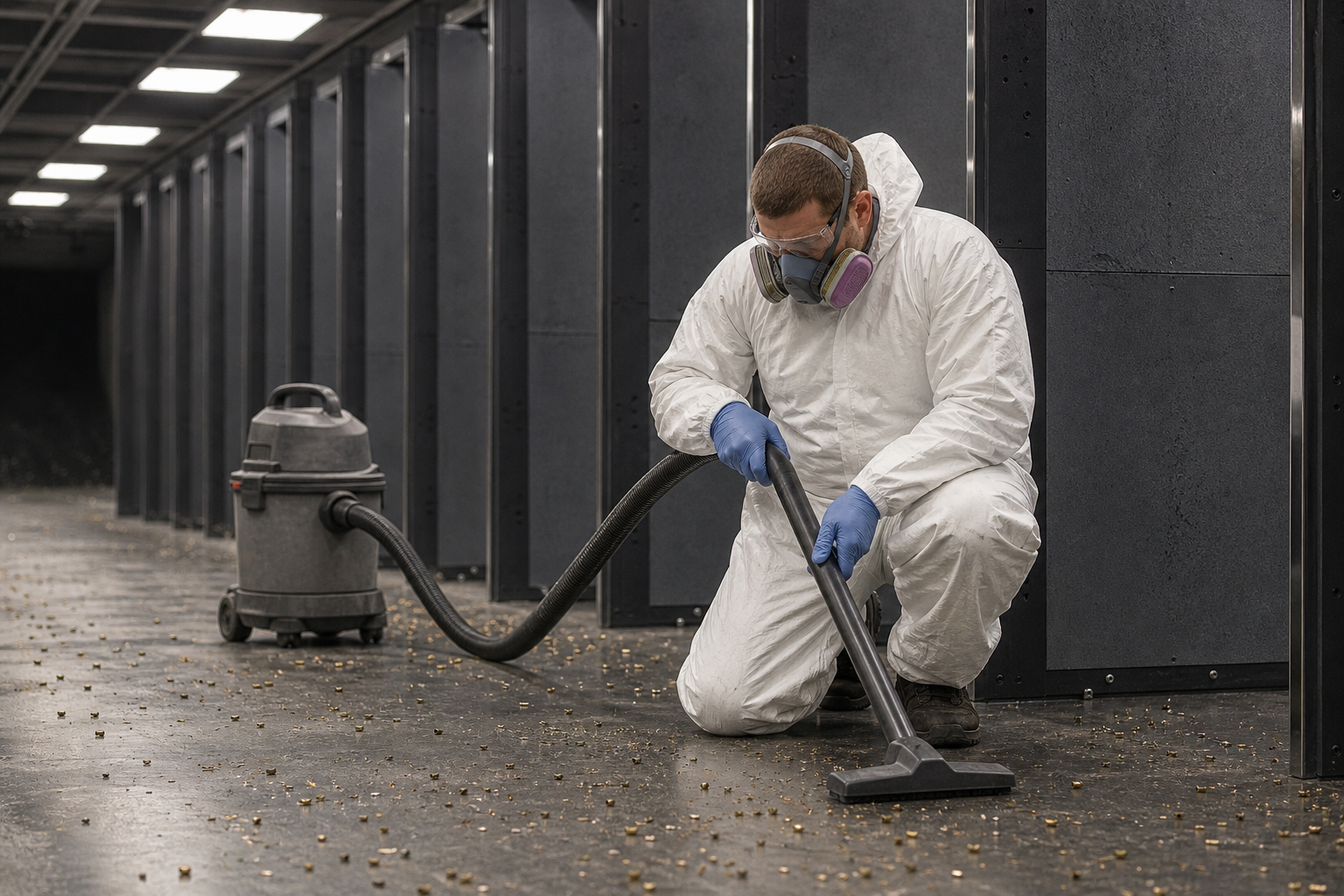
Technicians use HEPA vacuums to remove lead dust during law enforcement range cleaning services.
Why Agency Ranges Need Professional Lead Control
Lead is a toxic metal. The National Institute for Occupational Safety and Health (NIOSH) publishes guidance on lead exposure at firing ranges. Likewise, OSHA sets workplace lead rules that range employers must follow.
Dust also settles on surfaces and can travel home on clothing. Consequently, regular cleaning protects more than the people on the line. It also protects families and other facility staff.
For more on the value of outsourcing, see this overview on whether professional range cleaning is worth it.
What a Full Range Cleaning Covers
Floors, Walls, Baffles, and Booths
Cleaning covers the floor, walls, baffles, trap, and shooters’ booths. HEPA vacuum cleaning is used for the range and the shooting area. Target track cleaning is also part of the scope. You can read about the full range cleaning service for details.
Filter and Ventilation Upkeep
Filtration only works when it is maintained. WRC replaces HEPA filters, filter bags, and pre-filters. Replacement timing should follow manufacturer guidance and your air monitoring results.
Air Monitoring and Safety Plans
WRC also offers air monitoring, exposure testing, and lead exposure safety plans for employees. These services help agencies verify that cleaning is working. In addition, they support written compliance records.
Rubber Berm vs. Steel Trap Systems
The right service depends on your trap. The table below compares the two common systems.
| System | Typical Service |
|---|---|
| Rubber berm (granulated rubber backstop) | Rubber is processed to separate lead, dust, and jacket fragments; clean rubber returns to the range |
| Steel trap | Oil concentration checks; emptying the bullet trap and front trough |
WRC states that its patented machine processes the rubber and removes contaminated material, rather than returning most non-bullet material. Learn more about rubber berm range cleaning.
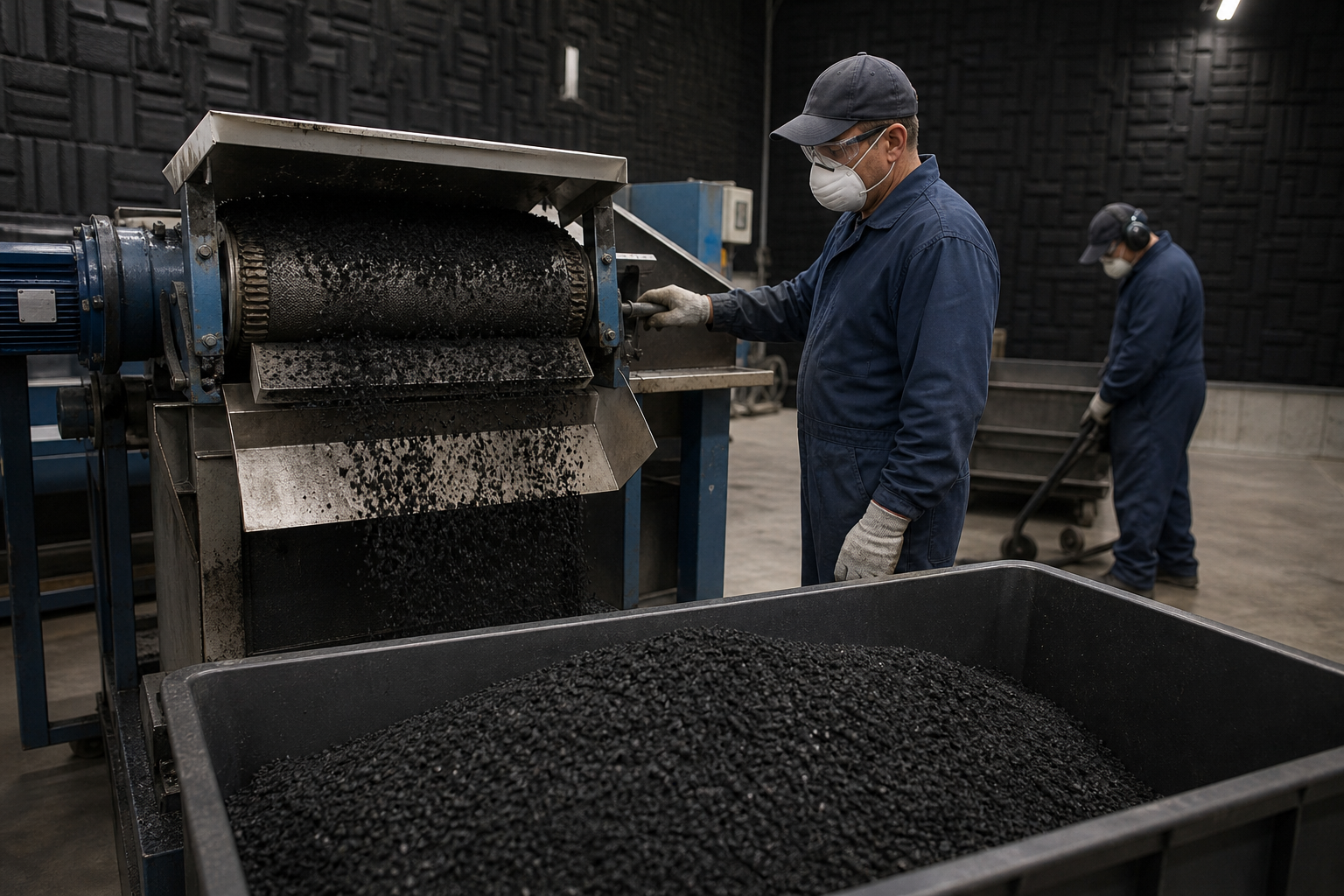
Processing separates reusable rubber from lead and other contaminants.
Lead Recycling and Reclamation
Recovered lead should not simply be dumped. WRC offers lead recycling, reclamation, indoor lead mining, and soil remediation. Hazardous material is removed for recycling and disposal. Therefore, ask for written documentation of how your material was handled.
How to Prepare for a Range Cleaning
- Identify your trap type and the date of the last full cleaning.
- Gather filter change dates, air monitoring results, and exposure records.
- Define the scope: floors, walls, baffles, traps, booths, and target tracks.
- Schedule a closure window that avoids qualification cycles.
- Request documentation of waste handling, recycling, and monitoring.
Choosing a Range Cleaning Provider
Start with credentials. WRC states its staff are trained and certified to OSHA and EPA standards, and that its team has over 75 years of combined experience. You can verify standards on the EPA website.
Next, ask these questions of any vendor:
- Is the rubber processed or only screened?
- Where does recovered lead go?
- Do you offer air monitoring and safety plans?
- Do you serve my region?
WRC serves the Midwest and East Coast. Review the benefits of indoor shooting range cleaning to build your case internally.
Frequently Asked Questions
What are law enforcement range cleaning services?
They are professional lead removal and maintenance for indoor ranges used by police and other agencies. They cover traps, floors, walls, baffles, booths, and air filtration.
How often should an indoor police range be cleaned?
It depends on round count, ventilation, and trap type. Heavily used ranges need more frequent service, so set a schedule based on your usage and air monitoring results.
What is the difference between rubber berm processing and standard cleaning?
Rubber berm processing separates usable rubber from lead, dust, and jacket fragments and returns the clean rubber to the range. Standard cleaning may only remove bullets and return most other material.
Is the cleaned rubber reused in the trap?
Yes. WRC says clean rubber goes back to the range while hazardous material is removed for recycling and disposal.
What does steel trap maintenance include?
It includes checking oil concentration and emptying the bullet trap and front trough. Regular upkeep keeps the trap working as designed.
How often should HEPA filters be replaced?
There is no single interval for every range. Follow the manufacturer’s guidance and your air monitoring data, and replace filters, filter bags, and pre-filters on schedule.
Do you provide air monitoring and exposure testing?
Yes. WRC offers air monitoring, exposure testing, and lead exposure safety plans for employees.
How is lead from a range disposed of or recycled?
Recovered lead and hazardous material are removed for recycling and disposal. Ask any provider for written documentation of how the material was handled.
Which areas does WRC serve?
WRC serves indoor rifle, pistol, and shotgun ranges across the Midwest and East Coast.
Does cleaning reduce dust and ricochet?
Yes. Removing lead, dust, and fragments from the trap and range surfaces helps reduce airborne dust and ricochet risk.
What common mistakes do agencies make with range cleaning?
Common mistakes include waiting too long between cleanings, skipping filter changes, and not tracking air or exposure results. Another is hiring a provider without confirming OSHA and EPA training.
How do I schedule a range cleaning with WRC?
Call (252) 764-1809 or use the contact form on the website. The team is available 9 AM to 5 PM, Monday through Saturday.
Conclusion
Law enforcement range cleaning services protect officers and staff by removing lead, maintaining filtration, and documenting every step. Match the service to your trap type, verify OSHA and EPA training, and insist on clear records. To discuss your range, call WRC at (252) 764-1809 or reach out through wynantrangeconsulting.com.
