
Military range cleaning contractors are specialists who remove lead dust, bullet fragments and contaminated media from indoor firing ranges, then service the traps, filters and ventilation that keep those ranges safe. Choosing the right one protects personnel, keeps training on schedule and supports compliance. This guide explains what the work involves and how to judge a provider.
Quick answer: A qualified contractor should clean every range surface, process or empty the trap system, replace filters, recycle recovered lead, and verify results with air monitoring. Ask for OSHA and EPA training, a written scope and a clear return-to-service date.
What Are Military Range Cleaning Contractors?
They are outside firms that handle the specialized upkeep of indoor ranges used by military units and training facilities. Routine janitorial staff are not equipped for this. Lead dust is a hazardous material, so the work needs proper equipment, training and disposal methods.
Providers such as Wynant Range Consulting focus on indoor rifle, pistol and shotgun ranges. Their work covers rubber berm and steel trap systems across the Midwest and East Coast.
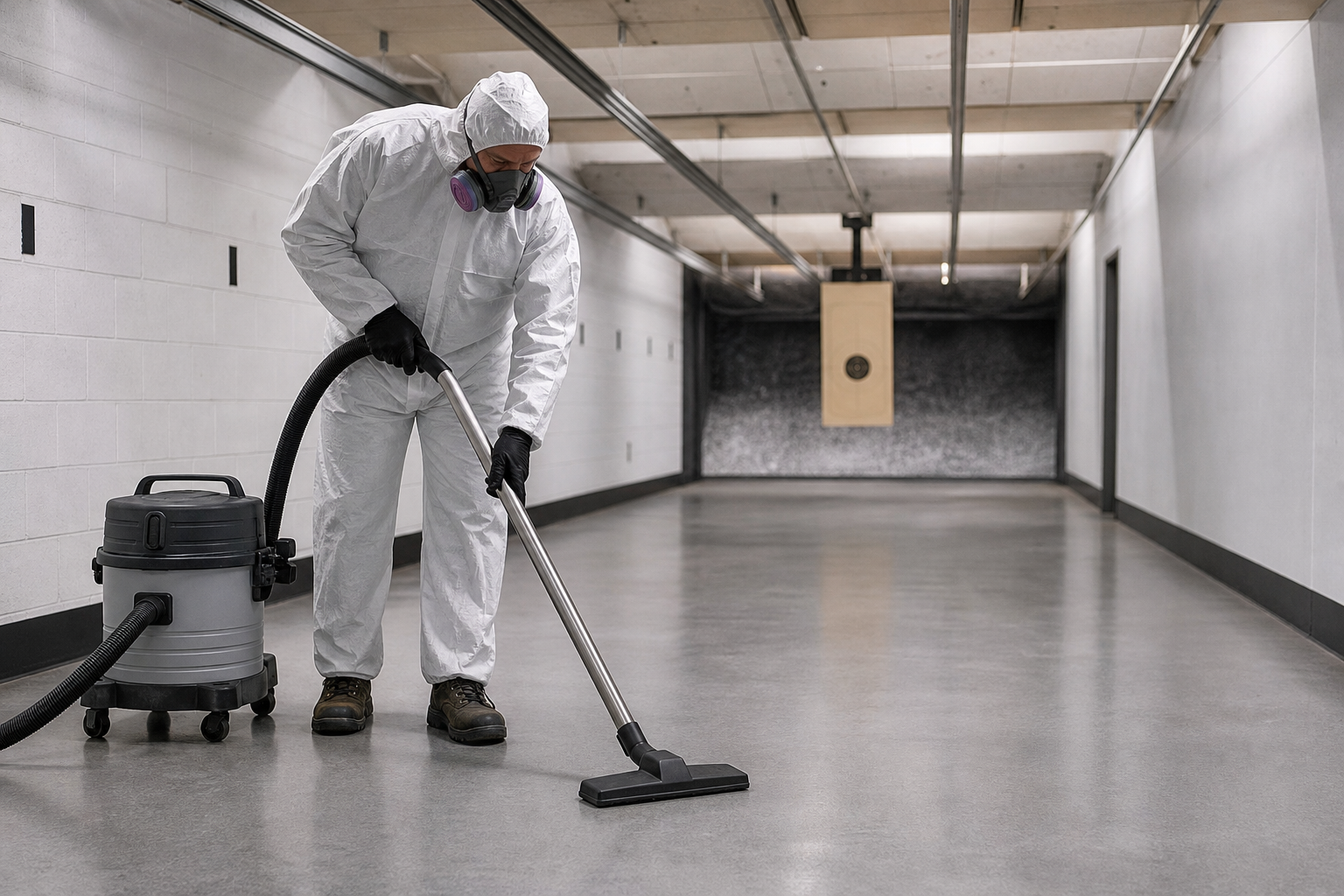
Military range cleaning contractors use HEPA vacuum equipment to remove lead dust from lanes and shooting areas.
Why Indoor Military Ranges Need Specialized Cleaning
Every round fired releases lead particles and jacket fragments. Over time, these settle on floors, walls, baffles and booths. They also build up in the backstop.
As a result, uncontrolled dust can raise exposure risks for shooters and staff. It can also increase ricochet and put pressure on ventilation. The Occupational Safety and Health Administration (OSHA) sets workplace lead rules, and the U.S. Environmental Protection Agency (EPA) addresses lead waste. Therefore, handling and disposal should follow documented procedures.
For a broader look at the value of outside help, see whether professional range cleaning is worth it.
What a Complete Range Cleaning Scope Includes
| Area | Typical Work |
|---|---|
| Floors, walls, baffles | HEPA vacuum cleaning of lead dust and debris |
| Shooter booths and shooting area | HEPA vacuuming and surface cleaning |
| Rubber berm | Processing to separate rubber from lead and fragments |
| Steel trap | Oil concentration checks, emptying traps and front troughs |
| Air handling | HEPA, filter bag and pre-filter replacement |
| Target tracks | Cleaning of track systems |
You can review the full range cleaning service to compare against any proposal.
Rubber Berm Processing vs. Standard Cleaning
Many ranges use a rubber berm, which is a granulated rubber backstop that catches bullets. Standard cleaning often removes bullets and returns most remaining material to the trap. In contrast, processing separates usable rubber from lead, dust and jacket fragments.
WRC states that it uses a patented machine for this step. Clean rubber returns to the range, and hazardous material is removed for recycling and disposal. Learn more on the rubber berm cleaning page.
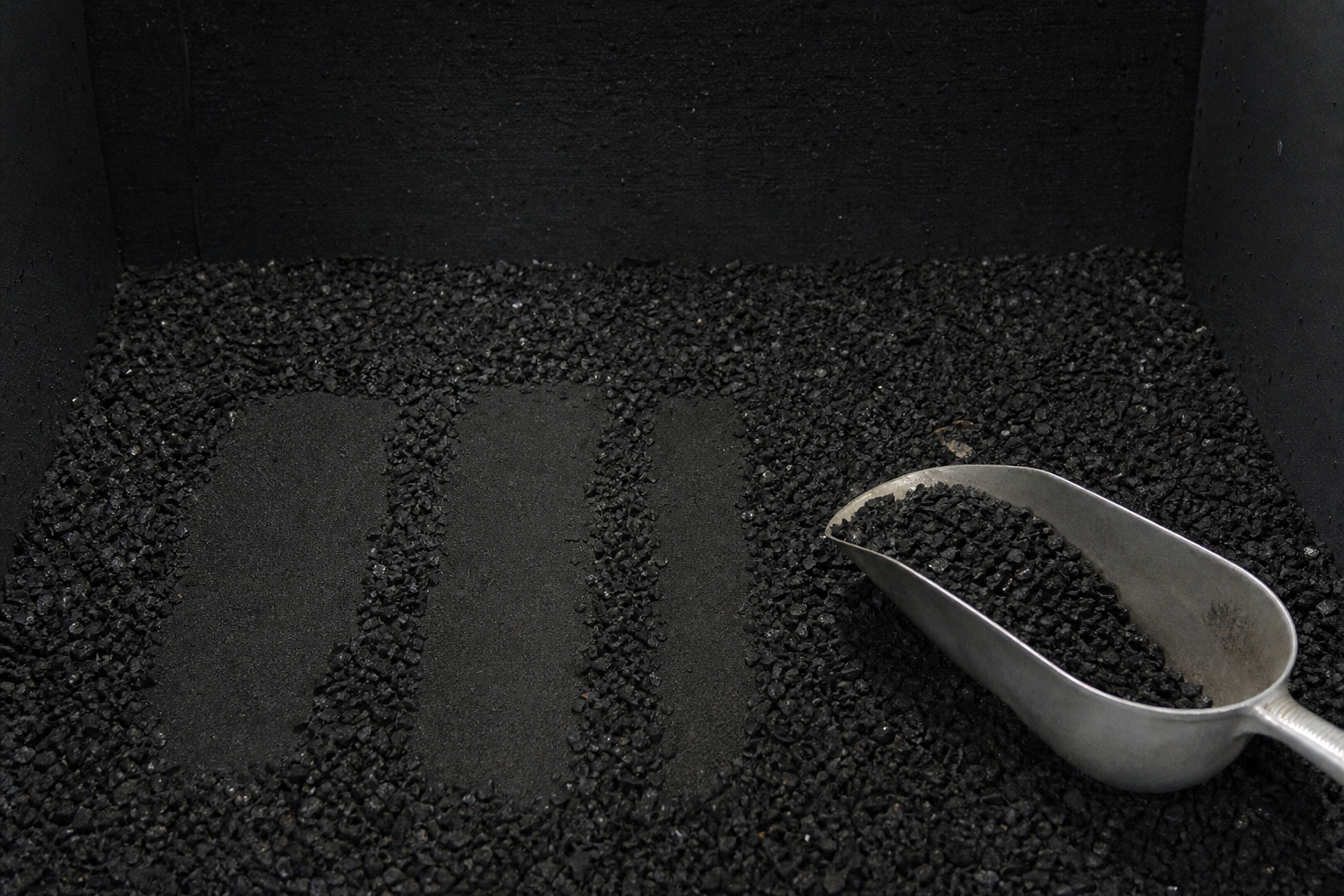
A rubber berm collects lead over time, so processing the material restores the backstop without discarding all of it.
How to Choose a Range Cleaning Contractor: Step by Step
- Define your range. Note the trap type, lane count, ventilation and last cleaning date.
- Verify credentials. Ask for proof of OSHA and EPA training and similar range experience.
- Review the written scope. Confirm surfaces, traps, filters and lead disposal are all covered.
- Plan downtime. Agree on dates that limit training disruption.
- Verify results. Request air monitoring or exposure testing and keep the records.
Lead Recycling, Air Monitoring and Safety Plans
Cleaning is only part of the job. Recovered lead should be recycled or disposed of properly, and the contractor should explain that chain clearly. WRC also lists lead recycling, reclamation, indoor lead mining and soil remediation.
In addition, air monitoring and exposure testing show whether controls are working. An employee lead exposure safety plan then documents procedures for staff. Finally, pricing questions are common, so see this overview of indoor range lead cleanup costs.
What Sets Strong Contractors Apart
- Processing of berm material, not just removal of bullets
- Staff trained and certified to OSHA and EPA standards
- Services that include monitoring, testing and safety planning
- Clear written scope, schedule and disposal documentation
WRC states its team has over 75 years of combined experience. Call (252) 764-1809 between 9 AM and 5 PM, Monday through Saturday, to discuss your range.
Frequently Asked Questions
What do military range cleaning contractors do?
Military range cleaning contractors remove lead dust, bullet fragments and debris from indoor ranges. They also service traps, filters and berms so the range stays safe and compliant.
How often should an indoor military range be cleaned?
Frequency depends on round count, ventilation and the trap system. Heavily used ranges need more frequent cleaning, so set a schedule with your contractor based on use and monitoring results.
What is rubber berm cleaning?
Rubber berm cleaning processes granulated rubber backstop material to separate usable rubber from lead, dust and jacket fragments. Clean rubber returns to the range.
Is the cleaned rubber reused?
Yes. With processing, clean rubber goes back into the trap, while lead and other hazardous material are removed for recycling and disposal.
What does steel trap maintenance include?
It includes checking oil concentration and emptying bullet traps and front troughs. Target track cleaning is often done at the same visit.
How often should HEPA filters be replaced?
Replacement depends on use and manufacturer guidance. Pre-filters, filter bags and HEPA filters should follow a documented schedule and be checked during each service.
What happens to the lead that is removed?
Recovered lead is recycled or disposed of as hazardous material under applicable rules. Ask any contractor to explain its handling chain in writing.
Do contractors provide air monitoring and exposure testing?
Some do. Wynant Range Consulting offers air monitoring, exposure testing and employee lead exposure safety plans.
What certifications should a contractor hold?
Look for staff trained and certified to OSHA and EPA standards. Also request relevant experience on comparable rifle, pistol or shotgun ranges.
How long is a range closed during cleaning?
Downtime varies with range size, trap type and contamination level. Ask for a written schedule and a return-to-service date before work begins.
How much does range cleaning cost?
Cost depends on range size, trap type, lead load and scope. A site assessment is the most reliable way to get an accurate quote.
Which areas do military range cleaning contractors like WRC serve?
Wynant Range Consulting serves indoor rifle, pistol and shotgun ranges across the Midwest and East Coast.
Conclusion
The best military range cleaning contractors combine full-surface cleaning, trap and filter service, proper lead recycling and verified results through air monitoring. Define your range, check credentials, insist on a written scope and plan downtime carefully. To discuss your range, call (252) 764-1809 or visit wynantrangeconsulting.com to request a consultation.
