
Shooting range hazardous waste disposal is the regulated process of collecting, packaging, transporting, and recycling or disposing of lead and lead-contaminated materials produced by a range. For indoor facilities, this includes spent bullets, lead dust, contaminated rubber, and used filters. Handling it correctly protects staff, shooters, and your operating record.
Quick answer: Identify each waste stream, test it, collect it with HEPA controls, package it in labeled containers, and send it to a recycler or permitted facility. Keep every manifest and receipt.
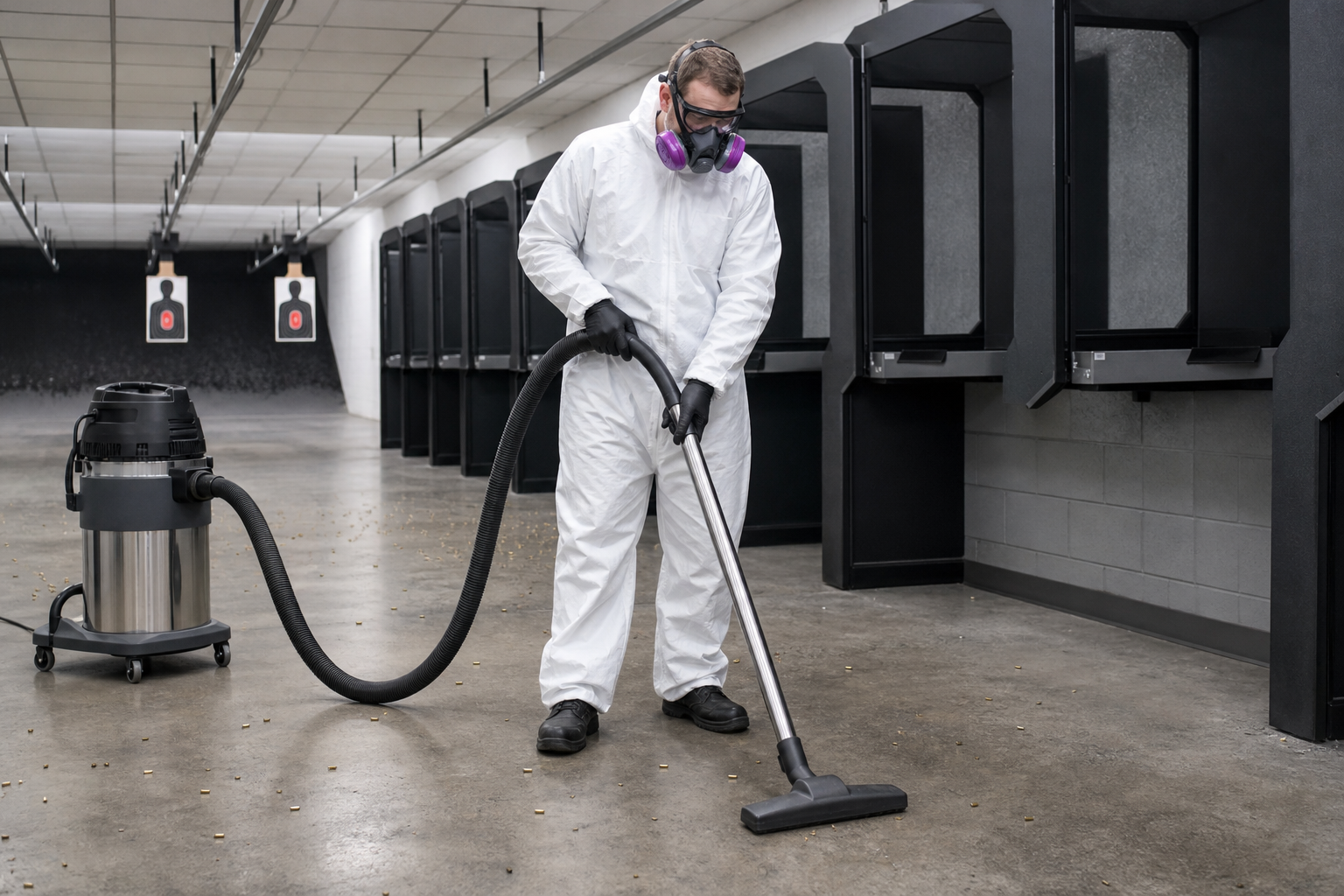
Trained crews use HEPA vacuums to collect lead dust before shooting range hazardous waste disposal begins.
What Is Shooting Range Hazardous Waste Disposal?
It is the end-to-end management of range waste that contains lead or other regulated contaminants. The goal is to move that material from your facility to a recycler or permitted site without exposing people or the environment.
The U.S. Environmental Protection Agency (EPA) regulates hazardous waste, and the Occupational Safety and Health Administration (OSHA) sets worker lead-exposure rules. Requirements can also vary by state, so confirm local rules before shipping anything.
Which Range Materials Count as Hazardous Waste?
Not every item is regulated the same way. However, most indoor ranges generate several lead-bearing streams.
| Waste stream | Typical handling |
|---|---|
| Spent bullets and fragments | Collect and send to lead recycling |
| Lead dust from floors, walls, baffles | HEPA vacuum, bag, label, ship |
| Contaminated rubber berm | Process to separate lead and debris |
| Used HEPA filters and filter bags | Seal and manage as lead-contaminated waste |
| Trap oil and residue | Test, then dispose per classification |
Lead Recycling Versus Landfill Disposal
Recycling is usually the preferred route for recovered lead. As a result, the metal returns to the supply chain instead of sitting in a landfill. Reclamation can also reduce long-term liability.
For a deeper look at providers, see this guide to the best company for lead recycling at shooting ranges. You can also review lead reclamation services for indoor shooting ranges.
How Rubber Berm Processing Reduces Waste
A rubber berm, or granulated rubber backstop, captures bullets in shredded rubber. Over time it fills with lead, dust, and jacket fragments. Simply removing the lead can leave contaminated rubber behind.
Wynant Range Consulting (WRC) processes the rubber with a patented machine. It separates usable rubber from lead, dust, and other contaminants, then returns clean rubber to the range. Hazardous material is removed for recycling and disposal. In practice, this means less waste leaves your site and less new rubber has to be bought.
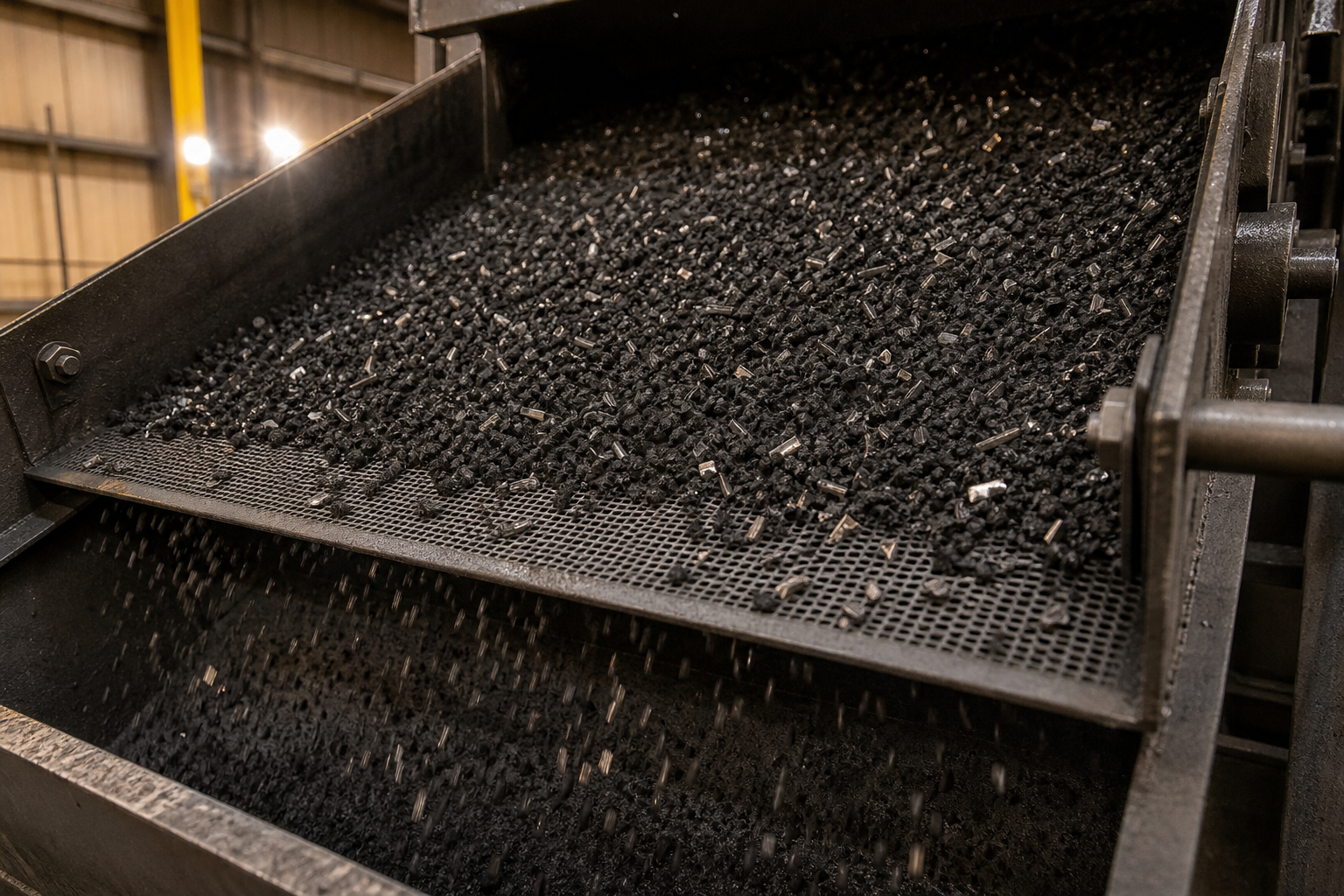
Processing separates reusable rubber from lead and contaminants, shrinking the volume of waste.
Step-by-Step Range Waste Disposal Process
- Identify waste streams. List every source, from traps and berm to floors and filters.
- Test and characterize. Use air monitoring and sampling to classify each stream.
- Collect with HEPA controls. Avoid dry sweeping, which spreads lead dust.
- Package and label. Use sealed, approved containers and store them securely.
- Recycle or dispose, then document. File manifests and receipts for your records.
Filters, Steel Traps, and Ongoing Maintenance
Waste volume depends on upkeep. Replacing HEPA filters, filter bags, and pre-filters on schedule keeps ventilation working and lead dust under control. Used filters then become a managed waste stream.
Steel trap systems need attention too. Checking oil concentration and emptying bullet traps and front troughs prevents buildup. For wider context, read the indoor shooting range lead remediation guide and this overview of lead contamination removal services.
Compliance, Records, and Worker Safety
Operators are generally responsible for their waste, even after a contractor hauls it away. Therefore, keep waste profiles, manifests, recycling receipts, and air monitoring results together.
Worker protection matters as much as paperwork. Exposure testing and a written lead exposure safety plan help show that employees are protected. WRC staff are described as trained and certified to OSHA and EPA standards, and the company offers air monitoring and safety plans.
Choosing a Range Cleaning Partner
Ask any provider how they process rubber, where lead goes, and what documentation you receive. Also confirm training and certifications. Wynant Range Consulting serves indoor rifle, pistol, and shotgun ranges across the Midwest and East Coast, including commercial, law enforcement, military, and private training facilities. Its team reports over 75 years of combined experience.
To discuss your range, call (252) 764-1809 or email bwynant.roc@gmail.com. Hours are 9 AM to 5 PM, Monday through Saturday.
Frequently Asked Questions
What is shooting range hazardous waste disposal?
It is the process of collecting, packaging, transporting, and recycling or disposing of lead and contaminated materials from a range. Regulations apply, so the work should follow EPA and OSHA requirements.
What waste does an indoor range produce?
Typical streams include spent bullets and fragments, lead dust, contaminated rubber, used HEPA filters, filter bags, pre-filters, and cleaning residue.
Can lead from a range be recycled?
Yes. Recovered lead is commonly sent for recycling, which keeps it out of landfills and may offset part of the cleaning cost.
Is rubber berm material hazardous waste?
Rubber contaminated with lead can be. Processing the rubber separates lead, dust and jacket fragments so clean rubber can return to the range.
Are used HEPA filters hazardous?
Filters that capture lead dust are generally handled as lead-contaminated waste. Bag and seal them, then manage them under applicable rules.
How often should a range remove lead waste?
Frequency depends on round count, trap type and ventilation. A professional assessment and air monitoring results help set a schedule.
Who is responsible for waste disposal at a range?
The range owner or operator is generally the waste generator and stays responsible, even when a contractor hauls it away.
Can staff clean up lead waste themselves?
Only with proper training, protective equipment and an exposure program. Many ranges use trained, certified contractors instead.
What is the difference between disposal and reclamation?
Disposal places waste in a permitted facility. Reclamation recovers the lead for reuse as raw material.
What records should a range keep?
Keep waste profiles, shipping manifests, recycling or disposal receipts, and air monitoring results for each cleaning.
What mistakes do ranges make with lead waste?
Common errors include mixing waste streams, skipping documentation, using dry sweeping, and delaying filter changes.
Does Wynant Range Consulting serve my area?
The company serves indoor rifle, pistol and shotgun ranges across the Midwest and East Coast. Call (252) 764-1809 to confirm availability.
Conclusion
Effective shooting range hazardous waste disposal comes down to knowing your waste streams, collecting them safely, recycling lead where possible, and documenting every step. Rubber berm processing, on-time filter changes, and steel trap upkeep all reduce what must be hauled away. To plan a compliant cleanup for your range, contact Wynant Range Consulting at (252) 764-1809.
