

Shooting range soil lead cleanup is the process of testing, removing, recycling and safely disposing of lead-contaminated soil on or around a firing range. Lead from bullets and dust builds up over years, so planning matters. This guide explains how the work is done and what range operators should prepare.
Quick answer: Soil cleanup starts with laboratory sampling. Contaminated soil is then excavated or screened, recovered lead goes to recycling, and confirmation tests verify the result. Documentation protects the operator.
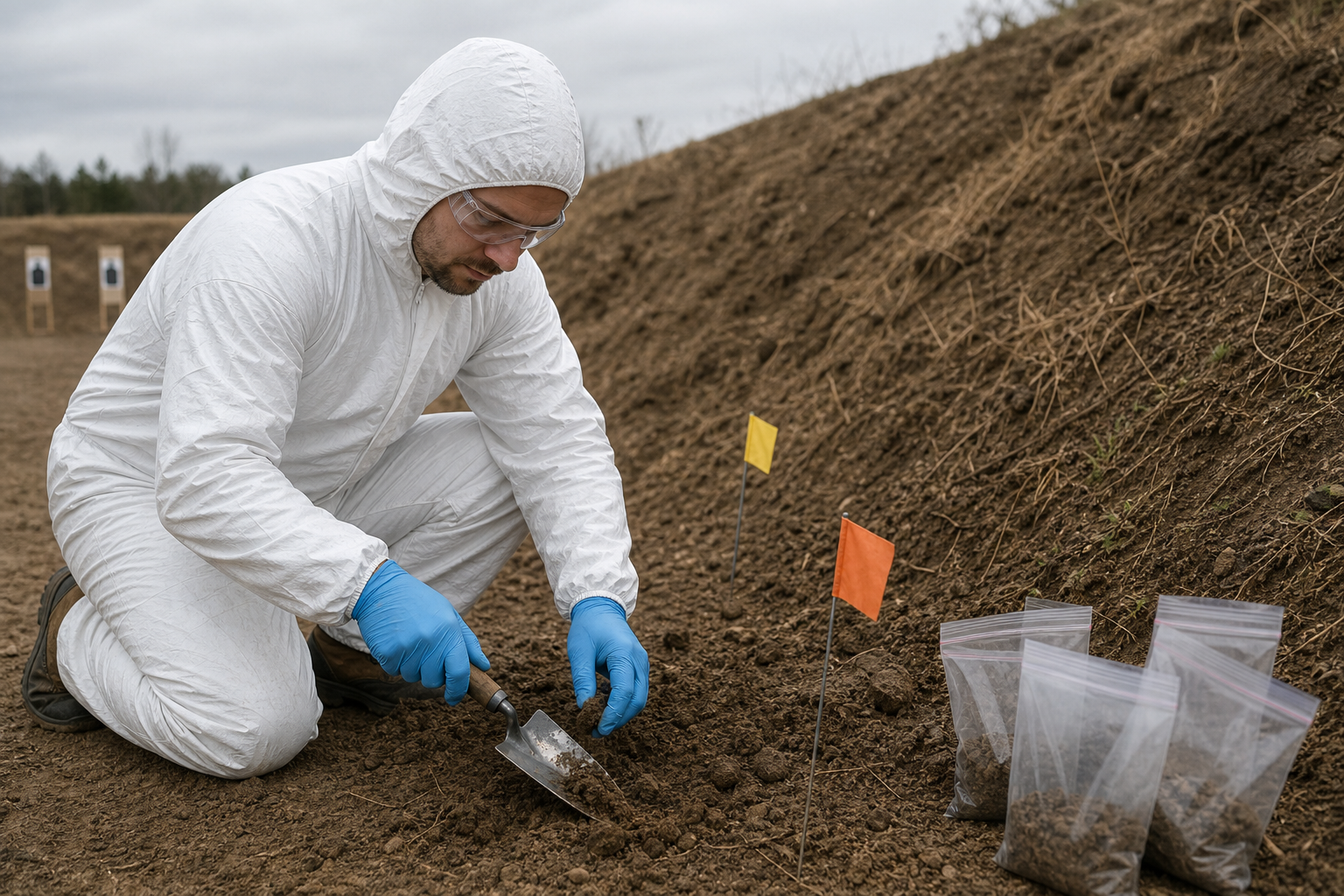
Soil sampling is the first step in any shooting range soil lead cleanup.
What Is Shooting Range Soil Lead Cleanup?
It is the remediation of soil where bullets, fragments and lead dust have accumulated. The goal is to reduce lead to levels that meet applicable standards and protect workers, shooters and neighbors.
Lead is a toxic metal, and the U.S. Environmental Protection Agency publishes guidance on managing lead at ranges. Requirements differ by state and site, so always confirm local rules.
Why Lead Contaminates Range Soil
Lead reaches soil in several ways. Bullets and jacket fragments land in or beside backstops. Dust settles from firing activity and ventilation exhaust. Rain then moves particles along drainage paths.
Indoor ranges are not exempt. Spent media stored outside, exhaust discharge and past spills can all affect ground near the building. For a broader view, see this indoor shooting range lead remediation guide.
Step-by-Step Lead Soil Remediation Process
- Assess the site. Review range layout, shooting history, drainage and nearby receptors.
- Sample the soil. Collect mapped samples and send them to a qualified laboratory.
- Plan the work. Pick excavation, screening or treatment, and confirm regulatory needs.
- Remove and separate lead. Excavate affected soil and separate bullets from soil while controlling dust.
- Recycle or dispose. Send recovered lead to a recycler and manage leftover soil through permitted disposal.
- Verify and document. Run confirmation sampling, backfill with clean material and keep records.
Soil Testing and Sampling
Testing defines the project. Without data, crews either miss contamination or dig more than necessary. Samples should cover high-impact zones such as areas near backstops, drainage paths and exhaust points.
Results guide the method. For that reason, it is worth hiring a team that understands range conditions, not only general excavation.
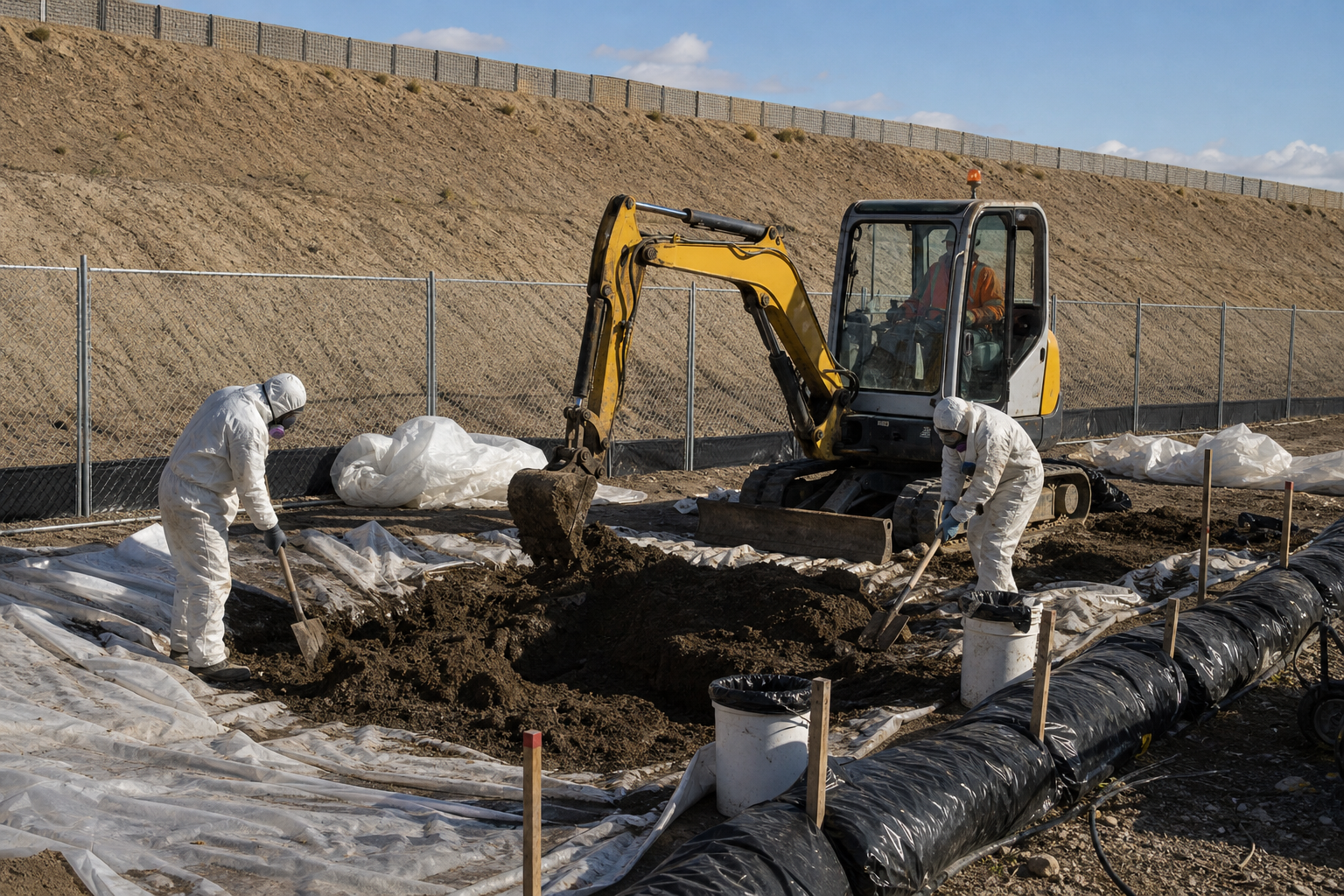
Containment and dust control keep excavation safe for crews and neighbors.
Lead Reclamation, Recycling and Disposal
Recovered bullets and fragments have value. Separating them from soil allows recycling, which reduces disposal volume. Soil that remains above standards goes to permitted disposal with manifests.
Learn more about lead reclamation for indoor ranges and how a lead recycling provider should be evaluated.
Worker Safety and Compliance
Lead work carries exposure risk. OSHA lead standards address exposure limits, protective equipment, air monitoring and training. A written lead exposure safety plan should be in place before digging begins.
Air monitoring and exposure testing confirm that controls work. Keep every record, since regulators and insurers may ask for them.
Choosing a Range Cleanup Partner
Look for range-specific experience, certified staff, clear disposal practices and documentation. Wynant Range Consulting specializes in indoor firing range cleaning, including rubber berm and steel trap systems, plus lead recycling, indoor lead mining and soil remediation. Its staff are described as trained and certified to OSHA and EPA standards, and it serves ranges across the Midwest and East Coast.
Its patented rubber berm machine separates lead, dust and jacket fragments from rubber and returns clean rubber to the range. See the full lead contamination removal services or visit Wynant Range Consulting.

A written plan and lab data keep remediation on schedule and on budget.
Frequently Asked Questions
What is shooting range soil lead cleanup?
Shooting range soil lead cleanup is the testing, removal, treatment and recycling or disposal of soil contaminated by bullets, fragments and lead dust. It ends with confirmation sampling to show the soil meets applicable standards.
Why does lead build up in range soil?
Bullets and fragments land in or near backstops, and lead dust settles and is carried by runoff, foot traffic and ventilation exhaust. Over years, it accumulates in nearby soil.
How do I know if my range soil is contaminated?
Only laboratory soil sampling can confirm it. A qualified team samples mapped areas and compares results with the standards that apply to your site.
Does an indoor range have soil lead problems?
It can. Indoor ranges mainly have lead in rubber berms, traps and dust, but exhaust discharge, outdoor storage of spent media and past spills can affect soil outside the building.
What are the main cleanup methods?
Common methods are excavation, soil screening to separate bullets, and treatment or stabilization where appropriate. The right choice depends on lab results and regulations.
Can recovered lead be recycled?
Yes. Bullets and fragments separated from soil can usually go to a lead recycler. Remaining contaminated soil is handled through permitted disposal.
How long does soil remediation take?
Timelines vary with the area, depth and lab turnaround. Small projects may take days, while larger sites can take weeks once planning and confirmation sampling are included.
How much does shooting range soil lead cleanup cost?
Cost depends on the volume of soil, contamination levels, access, disposal needs and testing. A site assessment is the reliable way to get a realistic quote.
What safety rules apply to workers?
OSHA’s lead standards cover exposure limits, protective equipment, monitoring and training. Crews should work under a written lead exposure safety plan.
How is soil cleanup different from rubber berm cleaning?
Rubber berm cleaning processes the granulated rubber backstop and returns clean rubber to the range. Soil cleanup addresses contaminated ground, usually outside the trap.
What are common mistakes to avoid?
Skipping sampling, letting dust spread during digging, mixing waste streams and failing to keep disposal records are the most common errors.
Which areas does Wynant Range Consulting serve?
The company serves indoor rifle, pistol and shotgun ranges across the Midwest and East Coast. Call (252) 764-1809 to discuss your range.
Conclusion
Effective shooting range soil lead cleanup follows a clear order: assess, sample, plan, remove, recycle or dispose, and verify. Good data, dust control and documentation protect your crew, your customers and your operating record. To discuss your range, call (252) 764-1809, Monday through Saturday, 9 AM to 5 PM, or reach out through wynantrangeconsulting.com.
